Gate Valve vs. Ball Valve: A Comprehensive Industrial Selection Guide
2026-09-18
Gate Valve vs. Ball Valve: A Comprehensive Industrial Selection Guide
1.Introduction
2.Q1: What is a gate valve? What are its structural characteristics and core advantages?
3.Q2: What is a ball valve? What are its structural characteristics and core advantages?
4.Q3: How do gate valves and ball valves differ in operating experience and maintenance costs?
5.Q4: In actual engineering projects, how should one choose between a gate valve and a ball valve based on working conditions?
6.Conclusion
7.FAQ
Gate Valve vs. Ball Valve: A Comprehensive Industrial Selection Guide
Introduction
In modern industrial piping and fluid control systems, valves play a vital role. Whether in petrochemicals, long-distance pipelines, water treatment engineering, or daily HVAC systems, choosing the right type of valve is directly related to the safety, efficiency, and operating costs of the entire system. Among the numerous industrial valves, Gate Valves and Ball Valves are two of the most common mainstays, often making it difficult for engineering designers and procurement professionals to choose during the selection process. These two types of valves have significant differences in structural principles, operating methods, and application scenarios. SJ will provide an in-depth analysis of the core characteristics of gate valves and ball valves to help you make the most scientific and efficient selection decision for your actual projects.
In modern industrial piping and fluid control systems, valves play a vital role. Whether in petrochemicals, long-distance pipelines, water treatment engineering, or daily HVAC systems, choosing the right type of valve is directly related to the safety, efficiency, and operating costs of the entire system. Among the numerous industrial valves, Gate Valves and Ball Valves are two of the most common mainstays, often making it difficult for engineering designers and procurement professionals to choose during the selection process. These two types of valves have significant differences in structural principles, operating methods, and application scenarios. SJ will provide an in-depth analysis of the core characteristics of gate valves and ball valves to help you make the most scientific and efficient selection decision for your actual projects.
Q1: What is a gate valve? What are its structural characteristics and core advantages?
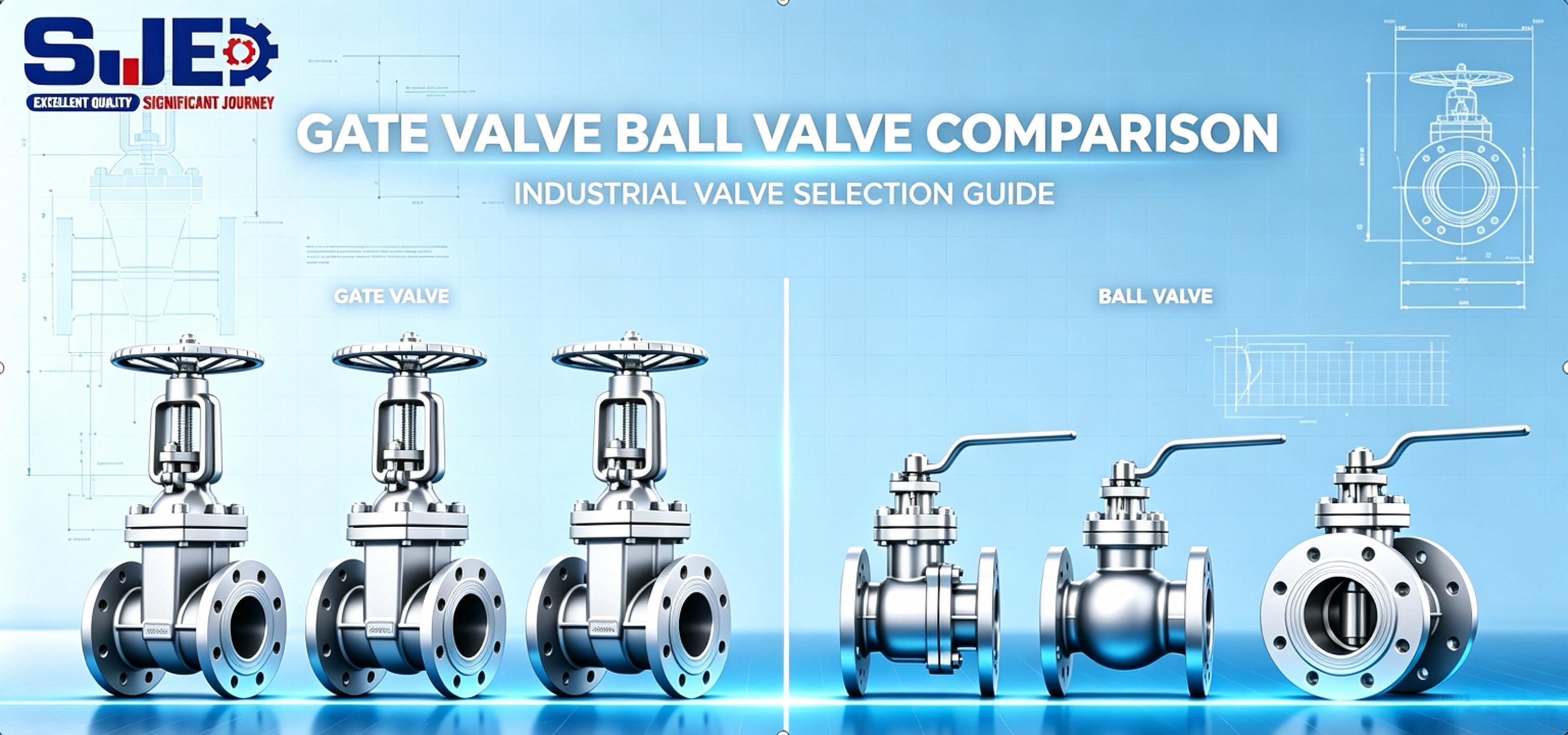
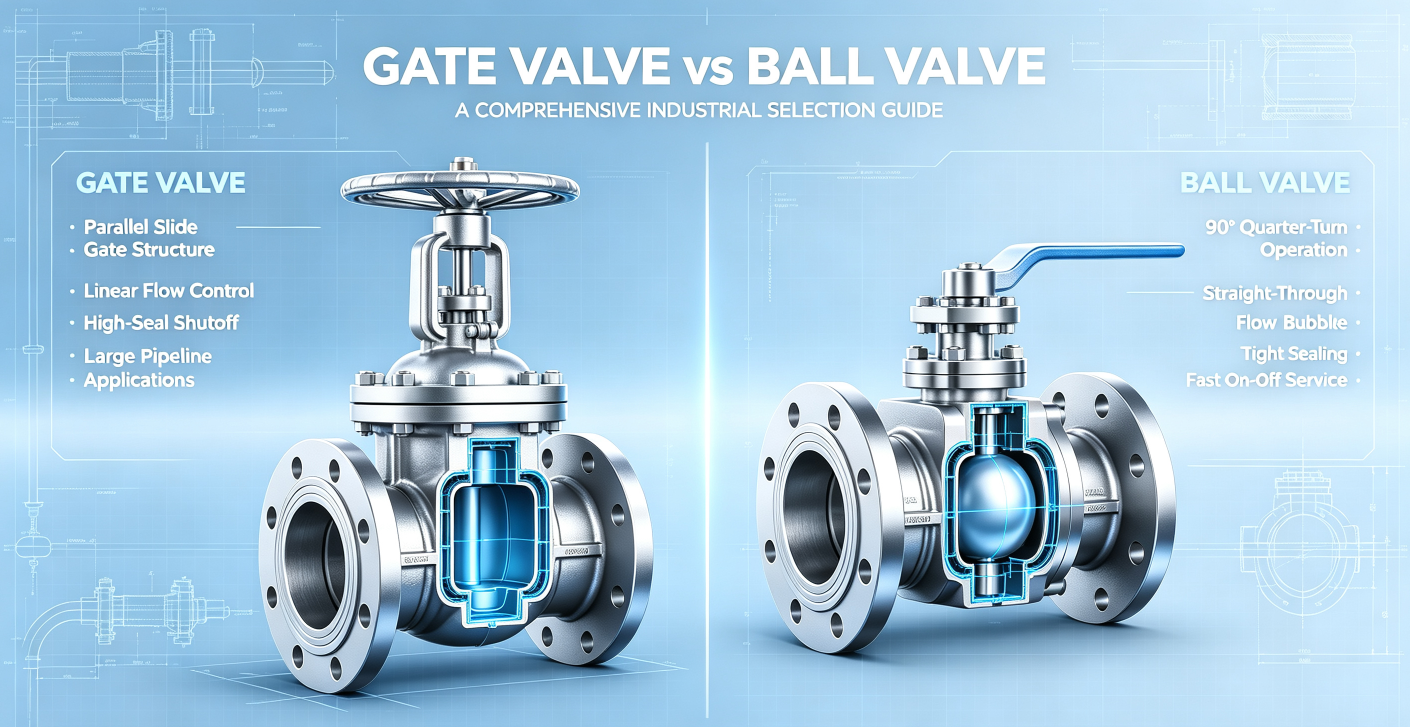
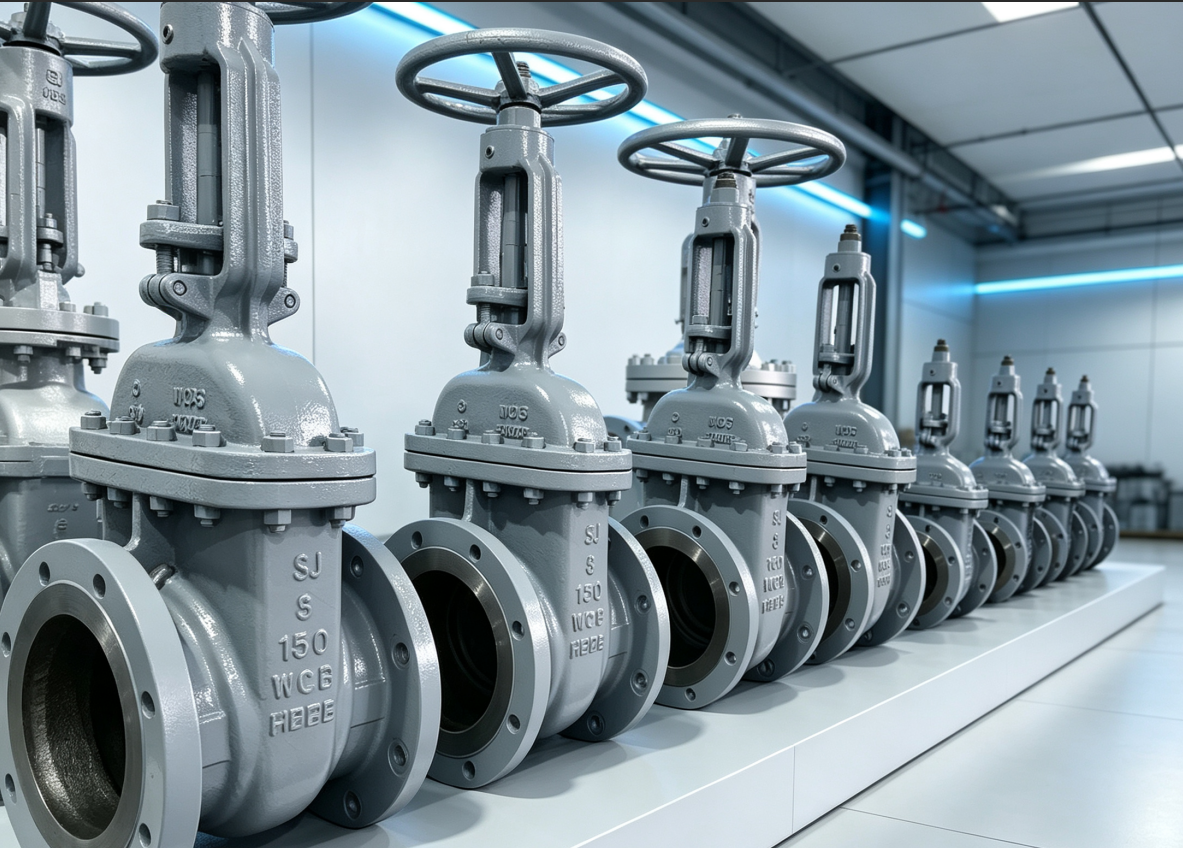
A: A gate valve is a valve that controls the flow of fluid in a pipeline by raising and lowering a gate (the opening and closing member). Its working principle is similar to a sluice gate, where rotating the handwheel drives the valve stem to move the gate vertically relative to the direction of the fluid.
Structural Characteristics: The fluid passage of a gate valve features a full-bore design. When the gate is fully open, there is no obstruction inside the passage.
Core Advantages:
-Extremely Low Flow Resistance: In the fully open state, the medium can pass almost in a straight line, resulting in minimal fluid resistance and thereby minimizing system pressure drop.
-Bidirectional Sealing and High-Pressure Adaptability: Gate valves typically adopt metal hard sealing, enabling them to withstand extremely high temperatures and pressures, making them ideal for high-temperature and high-pressure industrial working conditions.
-Strong Cut-off Capability: Suitable for large pipelines where full-opening or full-closing is required for extended periods.
SJ Perspective:SJ supply high-performance gate valves for heavy-duty industrial systems, ensuring reliable long-term shut-off capabilities and minimal flow resistance for critical high-pressure infrastructure.
Q2: What is a ball valve? What are its structural characteristics and core advantages?
A: A ball valve evolved from the plug valve, with its core opening and closing member being a sphere featuring a circular passage. The valve stem rotates the ball 90 degrees (a quarter turn) around the centerline of the valve body to open or close the valve.
A: A ball valve evolved from the plug valve, with its core opening and closing member being a sphere featuring a circular passage. The valve stem rotates the ball 90 degrees (a quarter turn) around the centerline of the valve body to open or close the valve.
Structural Characteristics: A through-hole is drilled in the center of the ball. The valve is open when the hole aligns with the pipeline direction and closed when it is perpendicular.
Core Advantages:
-Rapid Opening and Closing: Only a 90-degree rotation is required to fully open or close, making operation extremely light and fast.
-Exceptional Sealing Performance: When soft sealing structures (such as PTFE) are used, zero-leakage tight closure can be achieved.
-Compact Structure and Good Fluid Impurity Adaptability: Fluid passes through without directional constraints, and the wiping action of the ball during opening and closing provides good adaptability to media containing suspended solid particles.
SJ Perspective: For projects requiring fast emergency responses and tight shut-offs, SJ delivers premium ball valve solutions engineered with advanced sealing technologies to guarantee zero leakage and long service life.
Q3: How do gate valves and ball valves differ in operating experience and maintenance costs?
A: These two valves exhibit distinct characteristics in daily use and post-maintenance:
A: These two valves exhibit distinct characteristics in daily use and post-maintenance:
Operating Experience:
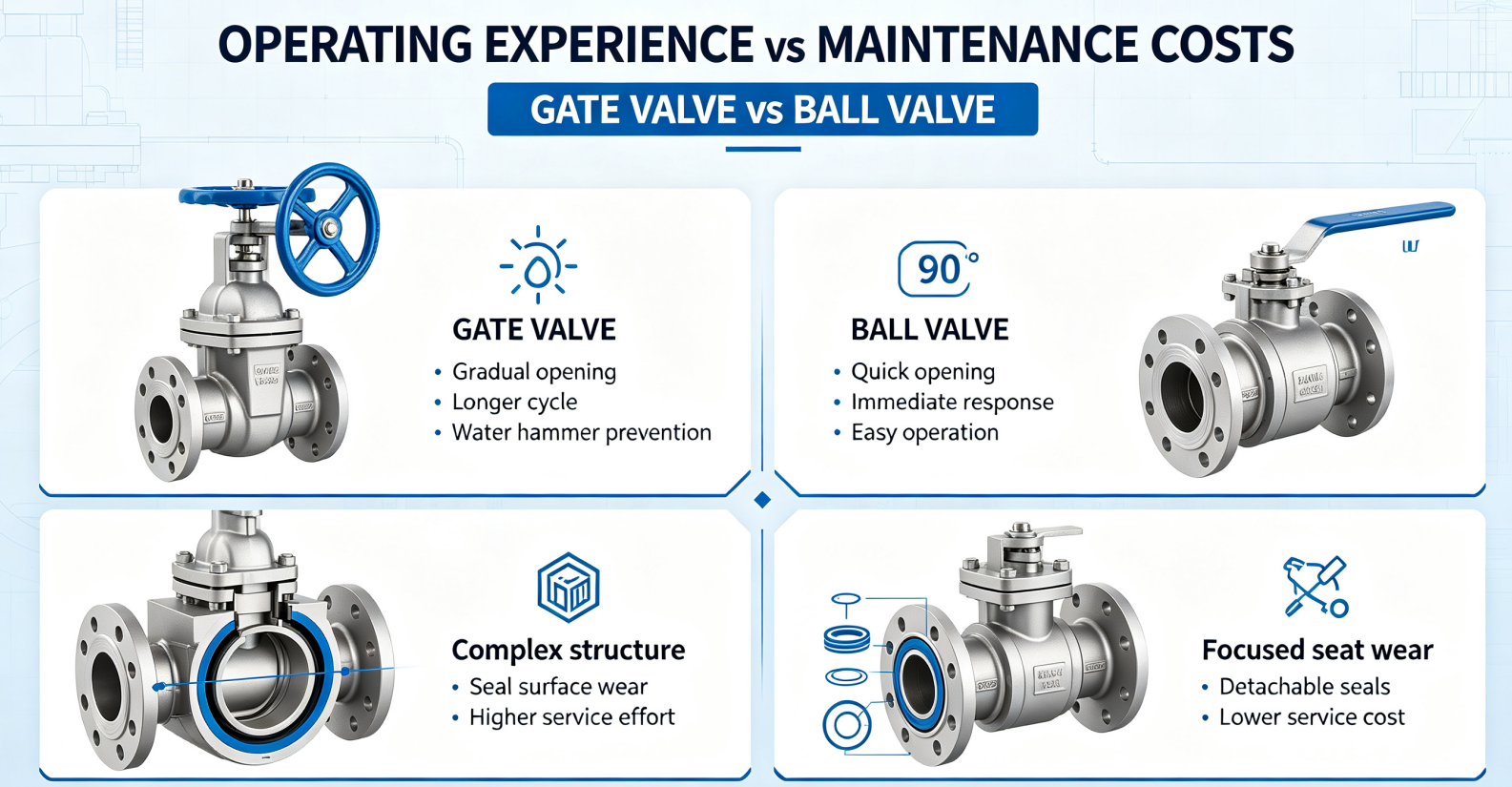
-Gate valves require multiple rotations of the handwheel to drive the gate up and down, resulting in a longer operating stroke and slower speed, which effectively prevents water hammer caused by instantaneous switching.
-Ball valves only require flipping a 90-degree handle or actuator to complete switching instantly, greatly improving emergency response speed and operational convenience.
Maintenance Costs:
-Gate valves have a relatively complex structure, and internal sealing surfaces are prone to wear or jamming under frequent long-term operations. Repairs often require removing the entire valve from the pipeline.
-Wear in ball valves is mainly concentrated on the seat sealing rings. Modern ball valves often adopt detachable or top-entry structures, making the replacement of seals simpler and faster, resulting in lower overall maintenance costs.
SJ Perspective: SJ helps clients optimize their maintenance strategies by carefully evaluating operational frequencies, ensuring that the selected valve minimizes lifecycle service costs and reduces downtime.
Q4: In actual engineering projects, how should one choose between a gate valve and a ball valve based on working conditions?
A: The key to selection lies in matching specific operating requirements:
-Scenarios for Choosing Gate Valves: Suitable for large-diameter, main pipelines that need to remain fully open or closed for a long time, and high-temperature, high-pressure systems with strict pressure drop requirements (e.g., power plant main steam networks, oil trunk pipelines).
-Scenarios for Choosing Ball Valves: Suitable for applications requiring frequent rapid opening and closing, small to medium pipe diameters, absolute leakage-free sealing, and automated control systems (e.g., gas transmission pipelines, chemical cut-off loops, automated production lines).