A Comprehensive Analysis of High-Performance Ball Valves
2026-04-10
A Comprehensive Analysis of High-Performance Ball Valves
- Q1: What are the main classifications and structural characteristics of ball valves?
- Q2: What are the core functions of ball valves in industrial systems?
- Q3: What are the main application areas and selection recommendations for ball valves?
- Conclusion
In modern industrial fluid control systems, ball valves, with their compact structure, reliable sealing, and ease of operation, have become one of the most widely used valve types. Whether in oil and gas, fine chemicals, or urban water supply and automated production lines, ball valves play an irreplaceable crucial role. This article will take you deeper into the core technology of this key component.
Q1: What are the main classifications and structural characteristics of ball valves?
A: Ball valves have evolved into various structural forms to meet different operating conditions. The main classifications and characteristics are as follows:
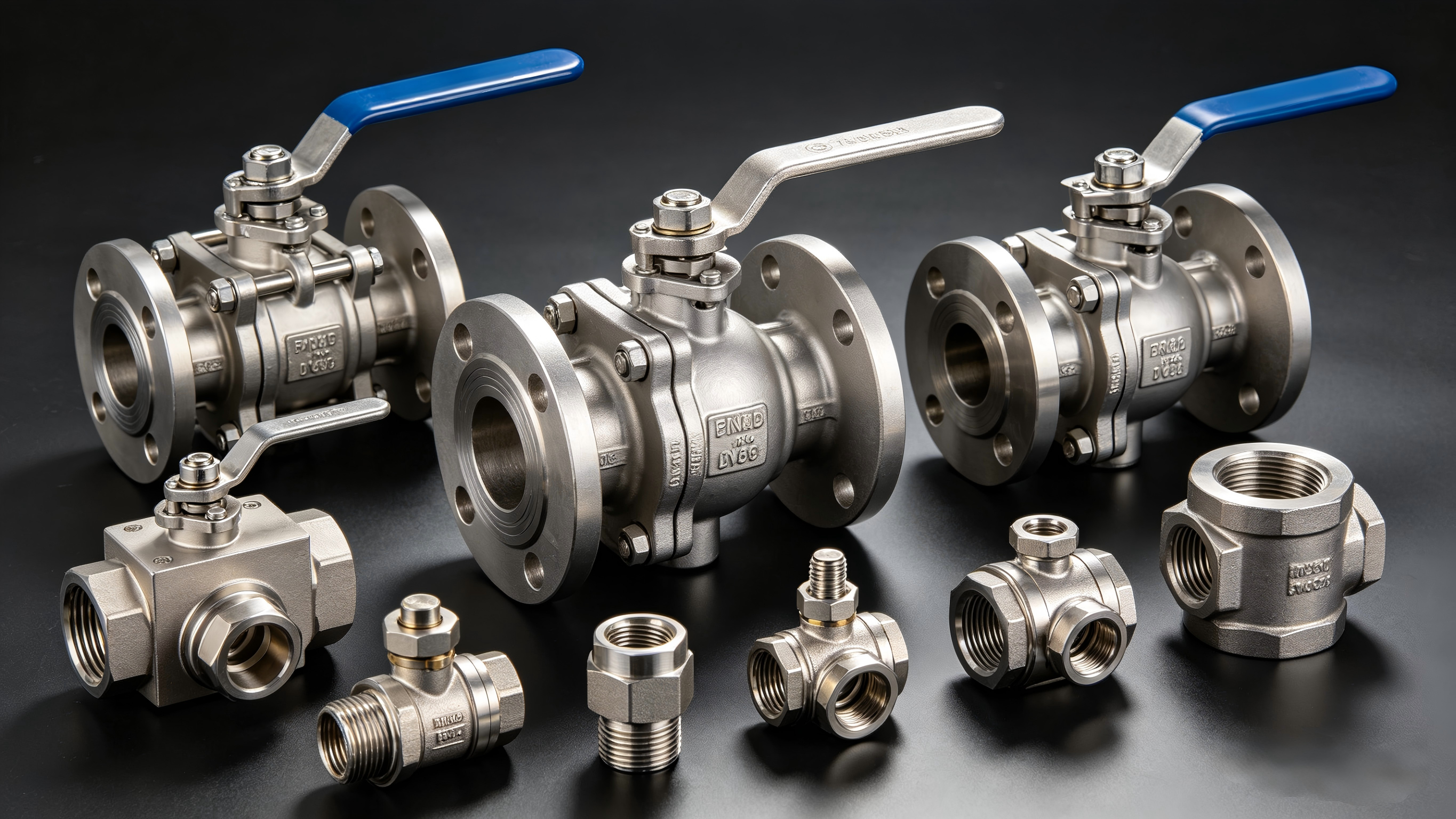
- Floating Ball: The ball can generate a certain displacement under the pressure of the medium, pressing it tightly against the sealing ring at the outlet end to ensure a seal. It has a simple structure and good sealing performance, but the entire load of the working medium borne by the ball is transferred to the outlet sealing ring.
- Trunnion Mounted: The ball is fixed by upper and lower bearings and does not move under pressure. This structure is suitable for high-pressure, large-diameter valves, with lower operating torque and longer service life.
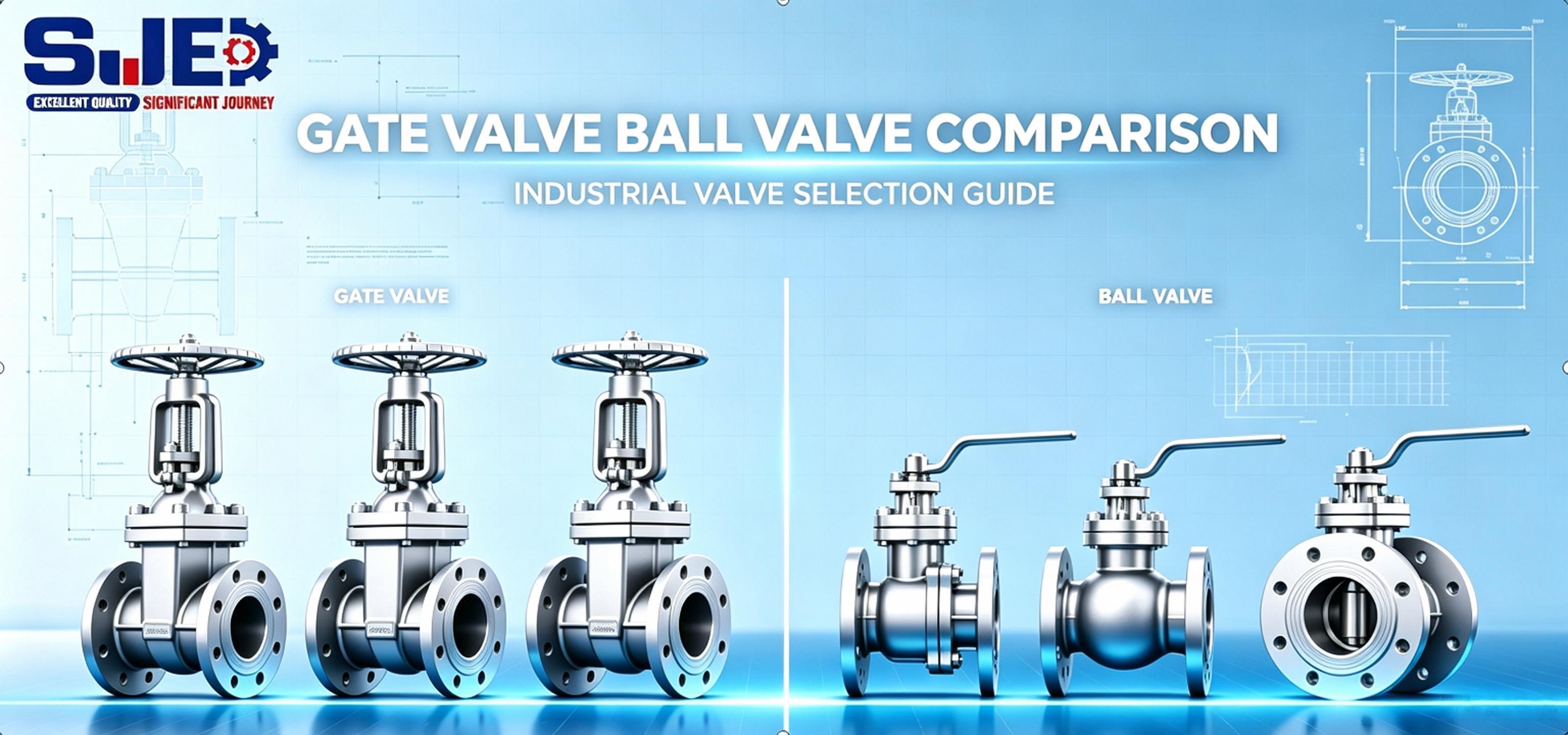
- Full Bore vs. Reduced Bore: Full-bore ball valves have a flow channel diameter equal to the pipe's inner diameter, resulting in minimal flow resistance; reduced-bore ball valves are lighter and less expensive.
- Versatile Connection Options: Including flange connections, butt welds, socket welds, and threaded connections, meeting the installation requirements of everything from precision instruments to large pipelines.
SJ VALVE is proficient in manufacturing various ball valves conforming to ASME and DIN standards. Whether it's a lightweight floating ball valve or a complex large-diameter fixed ball valve, we use high-precision CNC machining to ensure that the structural dimensions and sealing performance of every valve fully comply with stringent international standards.
Q2: What are the core functions of ball valves in industrial systems?
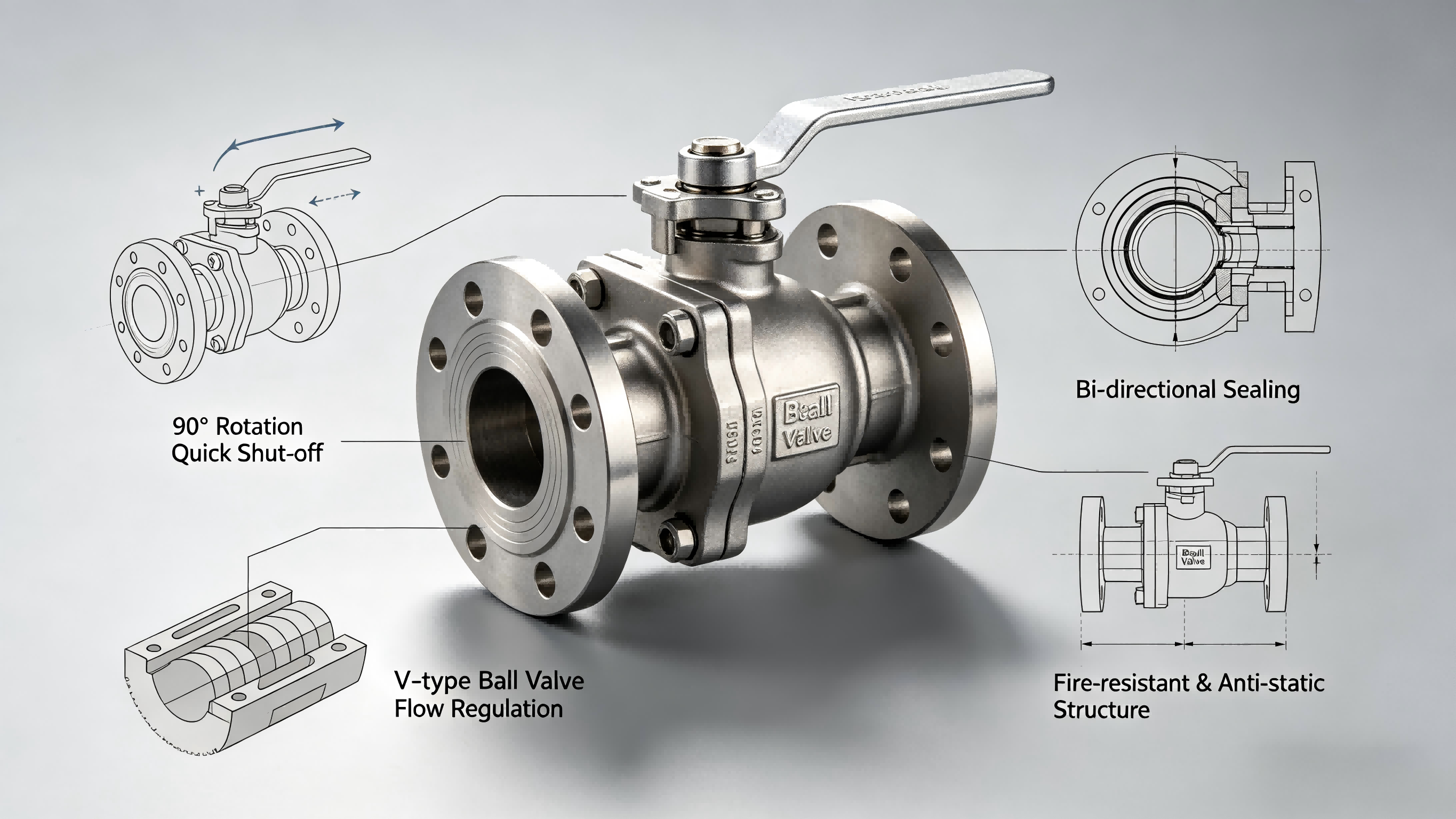
A: The functions of ball valves are not limited to simple "opening" and "closing." Their versatility is reflected in the following aspects:
Quick shut-off: Ball valves only need to rotate 90° to achieve full opening or full closing, greatly improving emergency response efficiency.
Two-way sealing: Excellent two-way sealing design ensures reliable zero leakage regardless of the direction of media flow.
Flow regulation: Specially designed V-Port ball valves can achieve precise percentage flow control, compensating for the shortcomings of ordinary ball valves in terms of regulation performance.
Fireproof and anti-static: Industrial-grade ball valves are typically equipped with anti-static devices and fire-safe designs. In the event of a fire causing seal failure, the metal auxiliary seal effectively prevents large-scale media leakage.
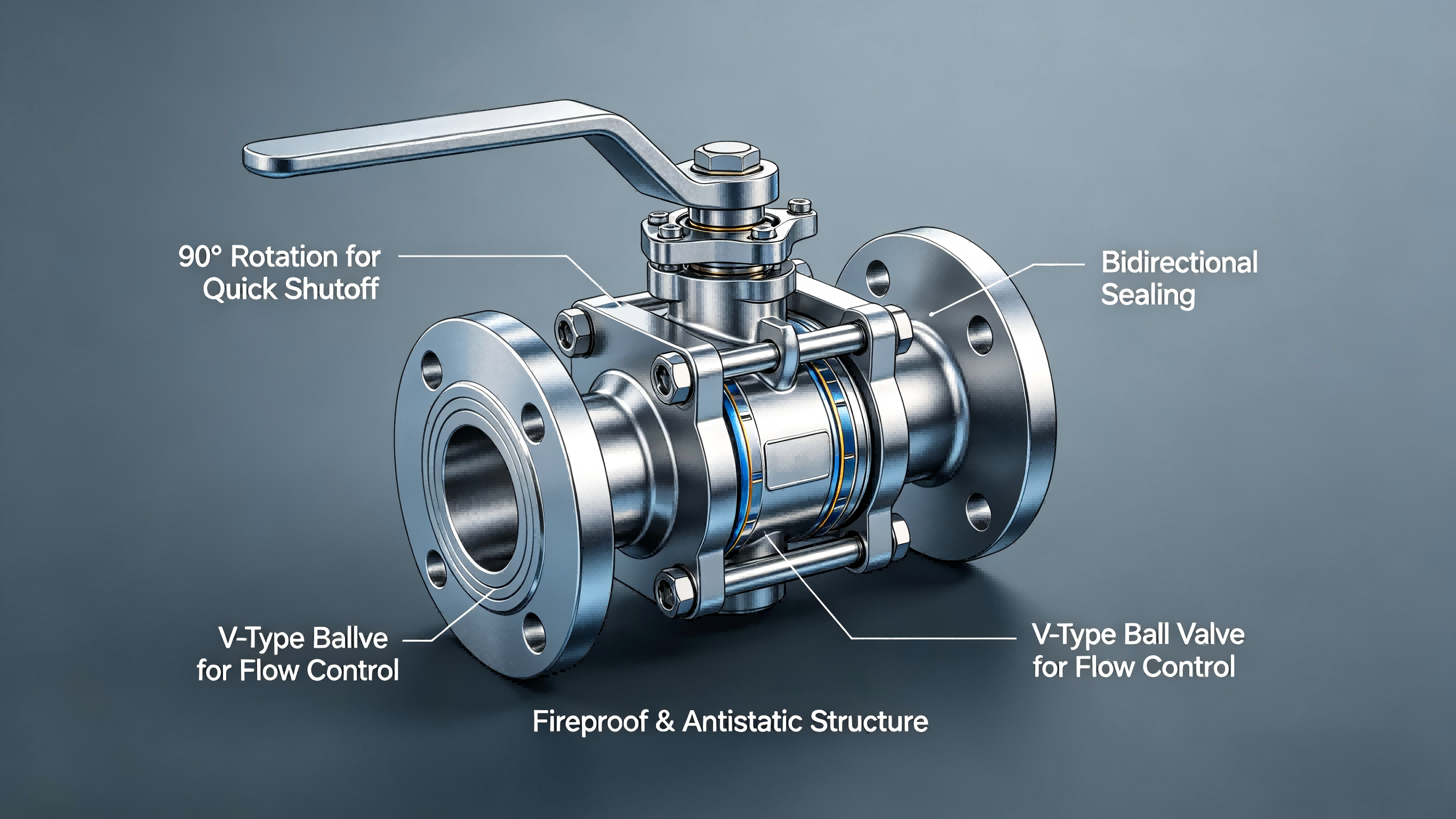
A: The functions of ball valves are not limited to simple "opening" and "closing." Their versatility is reflected in the following aspects:
Quick shut-off: Ball valves only need to rotate 90° to achieve full opening or full closing, greatly improving emergency response efficiency.
Two-way sealing: Excellent two-way sealing design ensures reliable zero leakage regardless of the direction of media flow.
Flow regulation: Specially designed V-Port ball valves can achieve precise percentage flow control, compensating for the shortcomings of ordinary ball valves in terms of regulation performance.
Fireproof and anti-static: Industrial-grade ball valves are typically equipped with anti-static devices and fire-safe designs. In the event of a fire causing seal failure, the metal auxiliary seal effectively prevents large-scale media leakage.
SJ VALVE ball valves are known for their low operating torque and long-lasting seals, significantly reducing the actuator load in automated control systems.
Q3: What are the main application areas and selection recommendations for ball valves?
A: The wide applicability of ball valves makes them ubiquitous across various industries. Selection requires comprehensive consideration of the medium, pressure, and temperature:
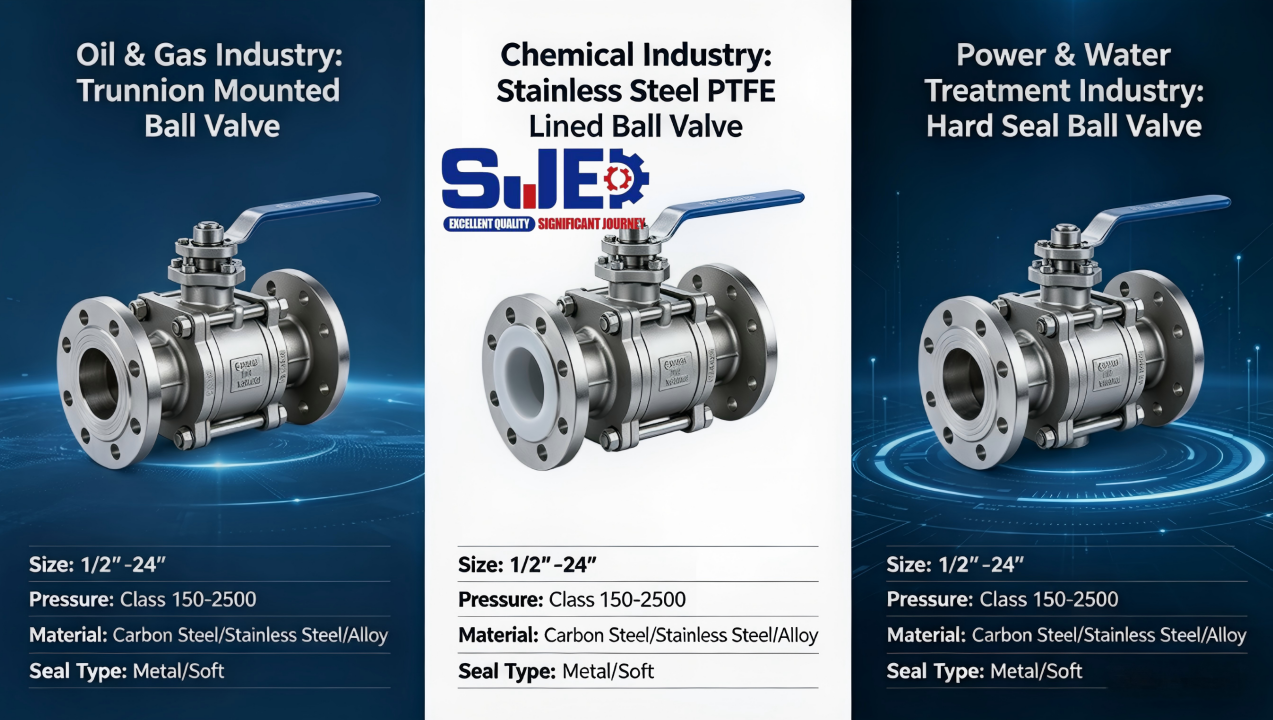
- Oil and Gas Industry: High-pressure, sulfur-resistant, and shock-resistant stationary ball valves are required, along with actuators for automated remote control.
- Chemical Industry: For strong acid and alkali media, stainless steel (e.g., 316/316L) or PTFE-lined ball valves are commonly used to enhance corrosion resistance.
- Power and Water Treatment: Emphasis is placed on long service life and low maintenance costs. Hard-seal ball valves perform particularly well when handling wastewater containing solid particles or high-temperature steam.
- Selection Tips: When selecting a ball valve, it is essential to specify the working pressure rating (e.g., Class 150/600 or PN16/64), operating temperature range, and operating method (manual, pneumatic, electric).
A: The wide applicability of ball valves makes them ubiquitous across various industries. Selection requires comprehensive consideration of the medium, pressure, and temperature:
- Oil and Gas Industry: High-pressure, sulfur-resistant, and shock-resistant stationary ball valves are required, along with actuators for automated remote control.
- Chemical Industry: For strong acid and alkali media, stainless steel (e.g., 316/316L) or PTFE-lined ball valves are commonly used to enhance corrosion resistance.
- Power and Water Treatment: Emphasis is placed on long service life and low maintenance costs. Hard-seal ball valves perform particularly well when handling wastewater containing solid particles or high-temperature steam.
- Selection Tips: When selecting a ball valve, it is essential to specify the working pressure rating (e.g., Class 150/600 or PN16/64), operating temperature range, and operating method (manual, pneumatic, electric).
With years of experience serving global customers, SJ VALVE not only offers standard models but also excels at providing customized solutions based on specific field conditions (such as 16-inch Class 600 large high-pressure pipelines), ensuring robust operation at every fluid node.