A Comprehensive Analysis of SJ High-Quality Stainless Steel Ball Valves
2026-05-22
A Comprehensive Analysis of SJ High-Quality Stainless Steel Ball Valves
1.Q1: What are the core functions and working principles of a ball valve?
2.Q2: What industrial scenarios and media are ball valves typically suitable for?
3.Q3: What are the significant functional features of high-standard industrial ball valves in terms of technical design?
4.Q4: What core advantages do high-quality ball valves bring to industrial systems when selecting them?
5.Conclusion
2.Q2: What industrial scenarios and media are ball valves typically suitable for?
3.Q3: What are the significant functional features of high-standard industrial ball valves in terms of technical design?
4.Q4: What core advantages do high-quality ball valves bring to industrial systems when selecting them?
5.Conclusion
Building a Safety Line for Industrial Fluids: A Comprehensive Analysis of SJ High-Quality Stainless Steel Ball Valves
In modern industrial fluid control systems, valves are not only tools for cutting off and regulating media, but also the core barrier ensuring the safe and stable operation of the entire production line. As a professional manufacturer deeply rooted in the field of fluid equipment, SJ Valves has always adhered to stringent international standards, committed to providing high-performance industrial valve solutions for global customers.
This article will take you on a comprehensive journey to understand the precision-manufactured SJ stainless steel ball valve series, deeply analyzing how they demonstrate outstanding flow control capabilities in complex working conditions.
Q1: What are the core functions and working principles of a ball valve?
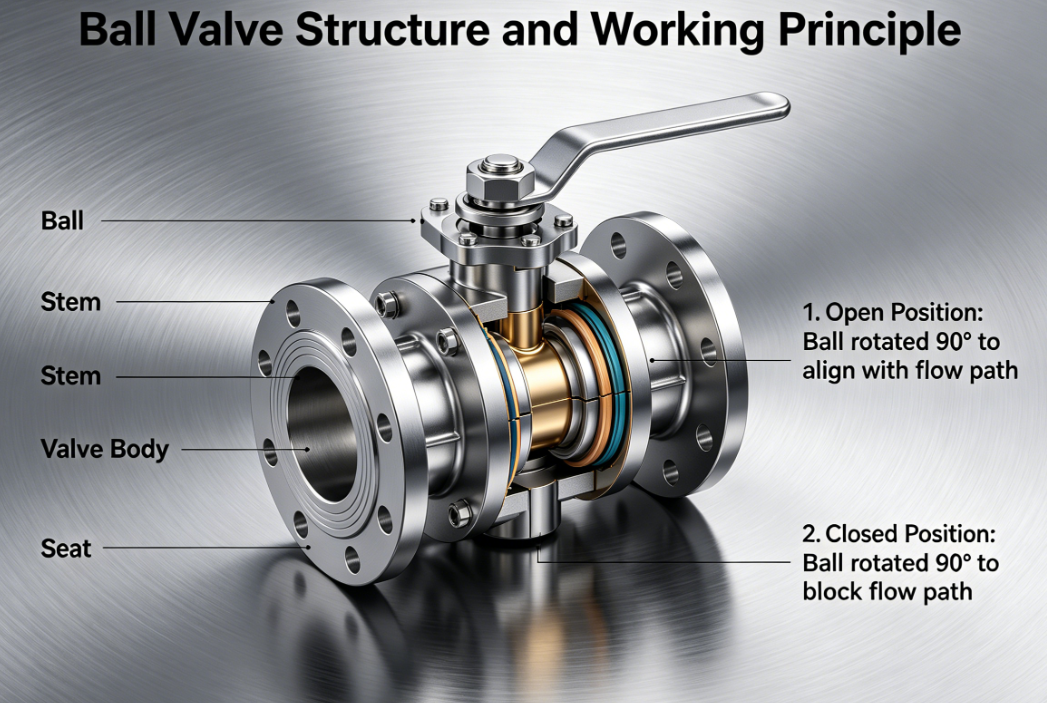
A: Ball valves are mainly used for the rapid cutting off, distribution, and changing of the flow direction of media in pipelines. Their core working principle relies on a ball with a circular through-hole inside the valve body, which rotates 90 degrees through the valve stem. When the ball's through-hole is aligned with the pipeline axis, the valve is fully open, allowing fluid to pass through with almost no resistance; when the valve stem rotates the ball 90 degrees, the through-hole becomes perpendicular to the pipeline, achieving a tight cut-off. Due to its structural characteristics, the ball valve operates smoothly and opens and closes quickly. Furthermore, when fully open or fully closed, the sealing surfaces of the ball and seat are isolated from the medium, effectively reducing erosion and wear on the sealing surfaces.
SJ Summary: SJ stainless steel ball valves, while inheriting classic fluid control principles, have undergone in-depth optimization of their internal structure. The valves not only operate more smoothly, but also, in the fully open or fully closed state, the high-precision ball machining process and the high-quality valve seat ensure a tight fit, reducing the fluid resistance coefficient to an extremely low level and significantly improving the operating efficiency of the pipeline system.
Q2: What industrial scenarios and media are ball valves typically suitable for?
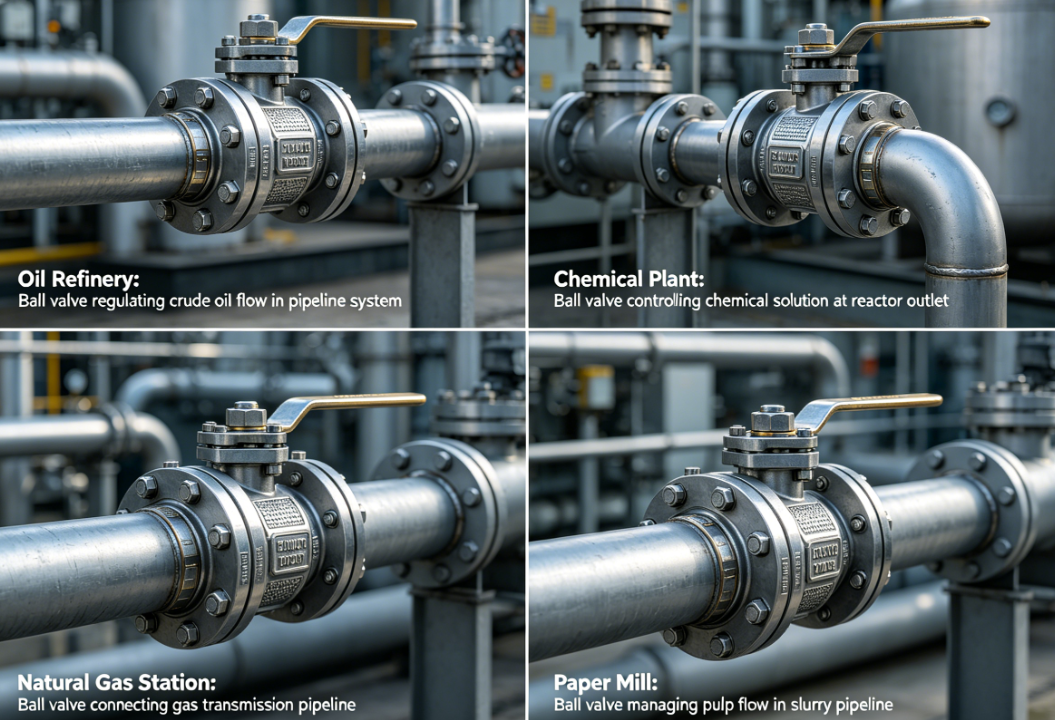
A: Ball valves, with their low flow resistance and excellent sealing performance, are widely used in many industries, including petroleum, chemical, natural gas, power, metallurgy, water treatment, and pharmaceuticals. Depending on the specific operating conditions, they can be used to control common media such as water, steam, and air, as well as corrosive media such as acids and alkalis, and even in complex fluid environments with high pressure or high viscosity. Ball valves are the preferred flow control device in safety defense lines requiring rapid fluid cutoff or in process pipelines demanding strict bidirectional sealing.
A: Ball valves, with their low flow resistance and excellent sealing performance, are widely used in many industries, including petroleum, chemical, natural gas, power, metallurgy, water treatment, and pharmaceuticals. Depending on the specific operating conditions, they can be used to control common media such as water, steam, and air, as well as corrosive media such as acids and alkalis, and even in complex fluid environments with high pressure or high viscosity. Ball valves are the preferred flow control device in safety defense lines requiring rapid fluid cutoff or in process pipelines demanding strict bidirectional sealing.
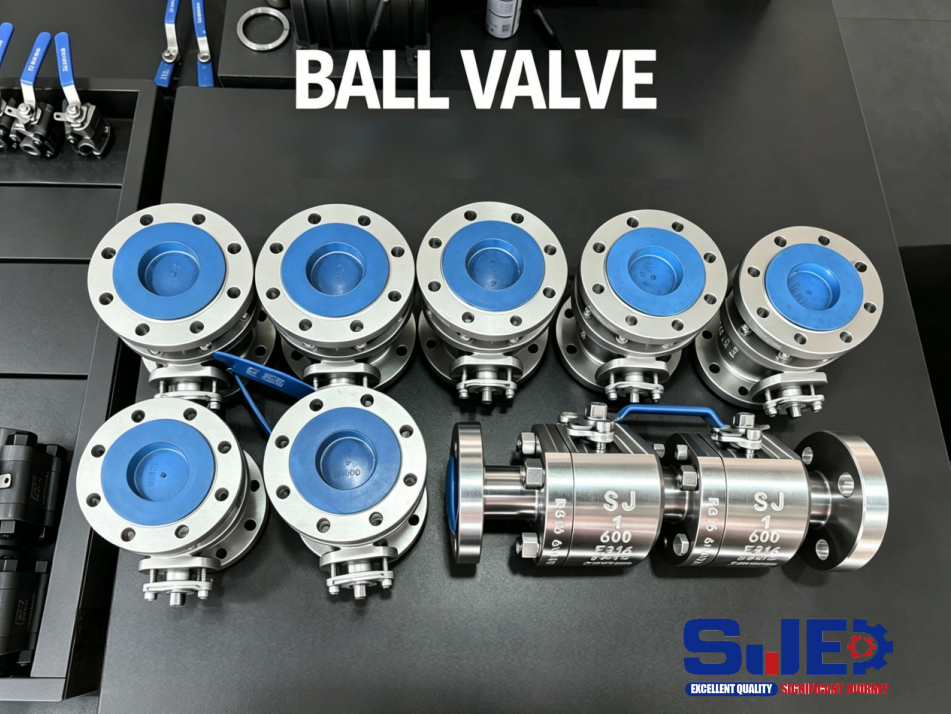
SJ Summary: SJ Valves has conducted targeted research and development and offers multi-level pressure configurations for different industrial scenarios. For high-pressure applications such as oil and gas, SJ offers 1-inch Class 600 high-pressure forged steel ball valves (F316), perfectly suited for long-distance pipelines and gathering stations; while for water treatment, environmental protection, and general chemical pipelines, SJ offers large-diameter cast ball valves such as DN100 PN16, which can easily resist the corrosion of various acids, alkalis, and organic solvents, possessing strong adaptability to multiple scenarios.
Q3: What are the significant functional features of high-standard industrial ball valves in terms of technical design?
A: To ensure stability and safety under high-pressure, high-frequency opening and closing environments, modern industrial ball valves incorporate numerous precision technologies in their design. Firstly, there's the anti-flyout stem design; even with abnormal pressure increases in the valve cavity, the stem will not be ejected by the medium pressure. Secondly, there's material traceability; high-quality valves clearly mark the material grade, pressure rating, and specifications on the valve body surface. Furthermore, to adapt to the development of modern industrial automation, valves typically use international standard platform interfaces for easy connection to various actuators.
A: To ensure stability and safety under high-pressure, high-frequency opening and closing environments, modern industrial ball valves incorporate numerous precision technologies in their design. Firstly, there's the anti-flyout stem design; even with abnormal pressure increases in the valve cavity, the stem will not be ejected by the medium pressure. Secondly, there's material traceability; high-quality valves clearly mark the material grade, pressure rating, and specifications on the valve body surface. Furthermore, to adapt to the development of modern industrial automation, valves typically use international standard platform interfaces for easy connection to various actuators.