Analysis of the Golden Partner of Butterfly Valves and Actuators

2026-02-11
Analysis of the Golden Partner of Butterfly Valves and Actuators
- Q1: What is a butterfly valve? What are its core advantages?
- Q2: What is an actuator? Why is it the "brain" of a valve?
- Q3: What is the collaborative relationship between the butterfly valve and the actuator?
- Q4: How to scientifically match the appropriate actuator to a butterfly valve?
- Conclusion
In-depth Analysis of the "Golden Partner" of Butterfly Valves and Actuators
In the intricate landscape of modern industry, the stability of fluid control systems directly impacts the safety and efficiency of production lines. As the "gatekeepers" of piping systems, butterfly valves, with their compact structure and high operational efficiency, are widely used in water treatment, chemical, energy, and food processing industries. However, even a high-performance valve cannot reach its full potential without a precise "brain" to drive it.
SJ Valve will delve into butterfly valves and their core driving component—the actuator—unveiling the secrets of this highly efficient industrial partnership.
Q1: What is a butterfly valve? What are its core advantages?
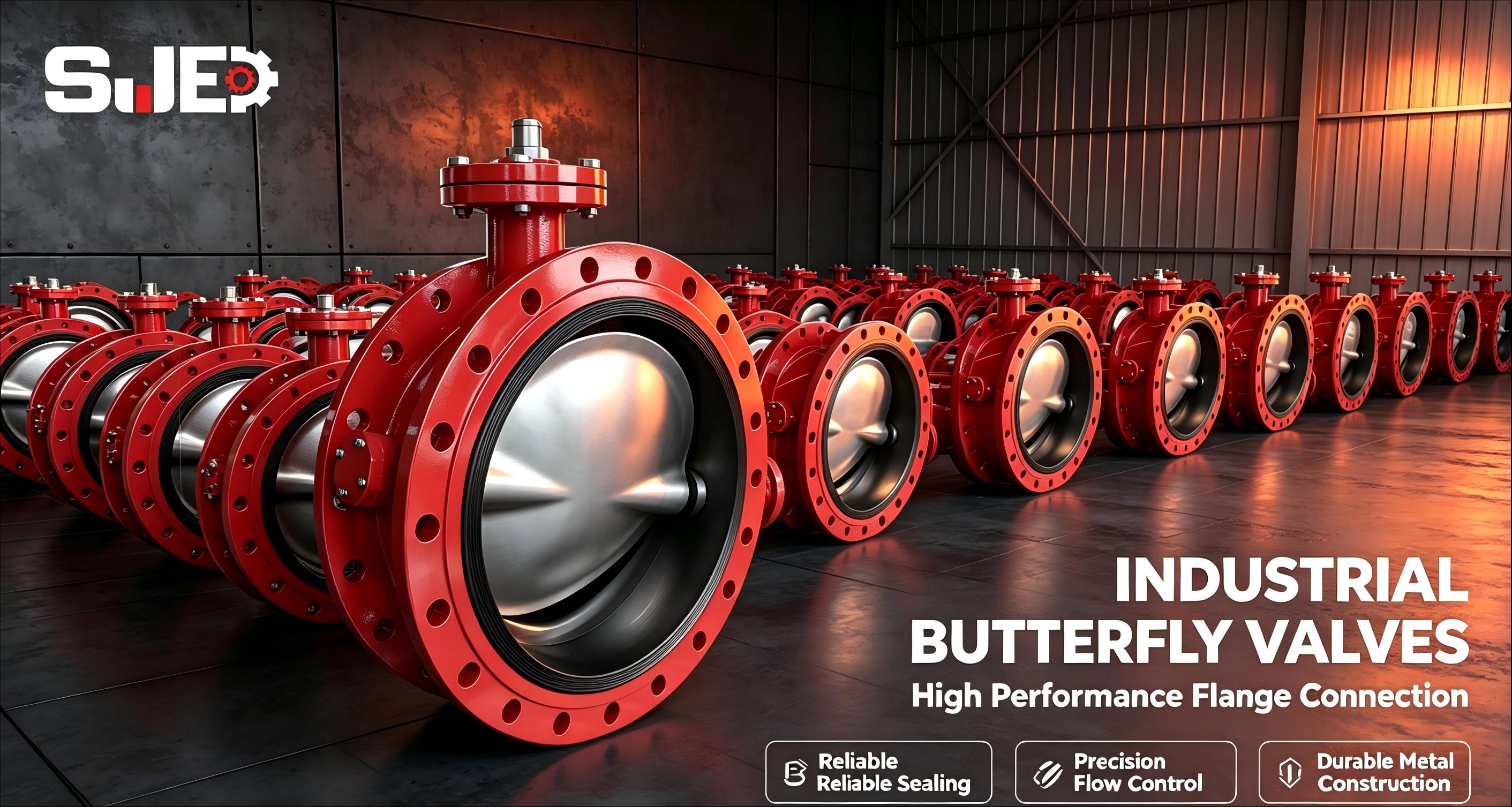
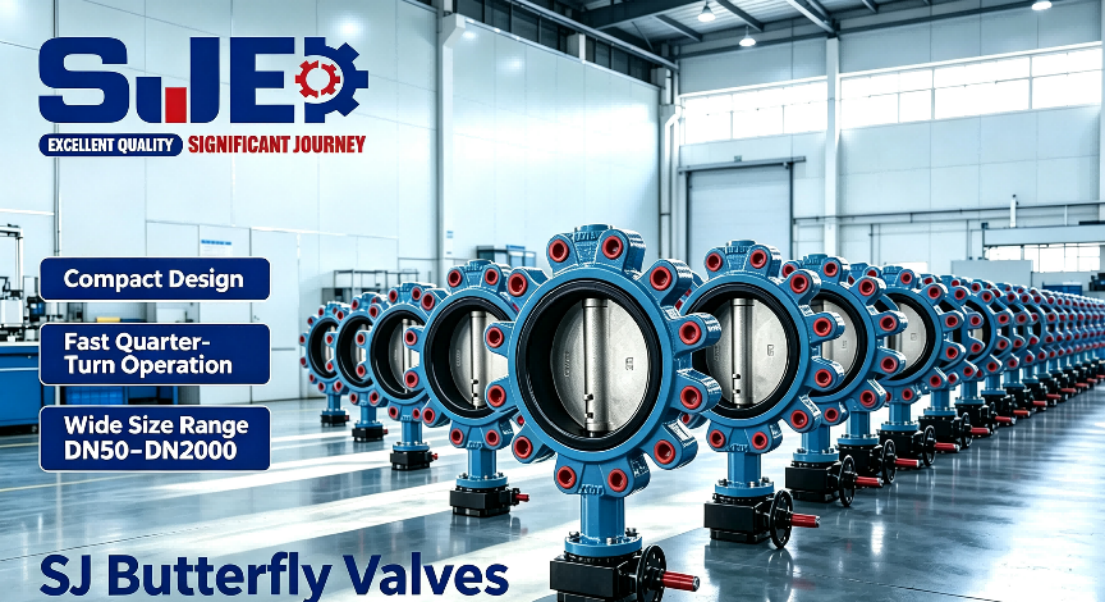
A: A butterfly valve is a valve that uses a disc-shaped opening and closing element (butterfly plate) to reciprocate approximately 90° to open, close, or regulate the flow of media.
- Lightweight Design: Compared to traditional gate valves or globe valves, butterfly valves have a simpler structure, occupy less space, and significantly reduce the load on pipeline systems.
- Rapid Opening and Closing: Switching from fully open to fully closed requires only a 90° rotation.
- Low Pressure Drop: The streamlined butterfly plate design reduces fluid resistance, ensuring high energy efficiency.
Butterfly valves are not just switching components; they are key nodes for energy saving and consumption reduction in industrial pipeline networks. Our butterfly valve products, with their lower flow resistance coefficient and extremely short opening and closing stroke, effectively reduce pumping energy consumption and significantly improve system response speed. Choosing SJ Valve means choosing lower operating torque, longer service life, and more reliable industrial safety.
A: A butterfly valve is a valve that uses a disc-shaped opening and closing element (butterfly plate) to reciprocate approximately 90° to open, close, or regulate the flow of media.
- Lightweight Design: Compared to traditional gate valves or globe valves, butterfly valves have a simpler structure, occupy less space, and significantly reduce the load on pipeline systems.
- Rapid Opening and Closing: Switching from fully open to fully closed requires only a 90° rotation.
- Low Pressure Drop: The streamlined butterfly plate design reduces fluid resistance, ensuring high energy efficiency.
Butterfly valves are not just switching components; they are key nodes for energy saving and consumption reduction in industrial pipeline networks. Our butterfly valve products, with their lower flow resistance coefficient and extremely short opening and closing stroke, effectively reduce pumping energy consumption and significantly improve system response speed. Choosing SJ Valve means choosing lower operating torque, longer service life, and more reliable industrial safety.


Q2: What is an actuator? Why is it the "brain" of a valve?
A: An actuator is a device that receives control signals and outputs power to drive the valve. If the valve is the "muscle," then the actuator is the "brain."
- Driving methods: Common types include pneumatic actuators (using compressed air, extremely fast response), electric actuators (using electricity, high control precision), and hydraulic actuators.
- Functional integration: Modern actuators can not only open and close valves, but also achieve percentage-level flow regulation through feedback systems, and have remote operation and fault self-diagnosis functions.
SJ Valve's actuator solutions are always at the forefront of intelligent technology. Our products not only have extremely high power response speed, but also enable remote monitoring, precise adjustment, and real-time early warning through the integration of high-precision intelligent feedback modules. This is achieved by deeply matching high-performance actuators with our valve bodies.
A: An actuator is a device that receives control signals and outputs power to drive the valve. If the valve is the "muscle," then the actuator is the "brain."
- Driving methods: Common types include pneumatic actuators (using compressed air, extremely fast response), electric actuators (using electricity, high control precision), and hydraulic actuators.
- Functional integration: Modern actuators can not only open and close valves, but also achieve percentage-level flow regulation through feedback systems, and have remote operation and fault self-diagnosis functions.
SJ Valve's actuator solutions are always at the forefront of intelligent technology. Our products not only have extremely high power response speed, but also enable remote monitoring, precise adjustment, and real-time early warning through the integration of high-precision intelligent feedback modules. This is achieved by deeply matching high-performance actuators with our valve bodies.


Q3: What is the collaborative relationship between the butterfly valve and the actuator?
A: The relationship between the butterfly valve and the actuator is a typical "execution and command" relationship. The butterfly valve, as the mechanical actuator, is responsible for physically isolating or guiding the fluid; while the actuator, mounted on the valve stem via a mechanical interface, converts the signal into mechanical torque.
-Precise Conversion: The actuator converts electrical or pneumatic energy into torque, overcoming valve seat friction and media pressure to drive the butterfly plate to rotate.
-Automatic Collaboration: The combination of the two enables a leap from manual operation on-site to digital monitoring in the central control room, forming the foundation of Industry 4.0 automation.
SJ Valve is committed to eliminating the lag between command and execution through a "hand-brain integrated" solution. We adopt high-precision mechanical interface standards to ensure that every Newton-meter of torque from the actuator is accurately transmitted to the butterfly plate, thereby achieving millisecond-level response speeds.
A: The relationship between the butterfly valve and the actuator is a typical "execution and command" relationship. The butterfly valve, as the mechanical actuator, is responsible for physically isolating or guiding the fluid; while the actuator, mounted on the valve stem via a mechanical interface, converts the signal into mechanical torque.
-Precise Conversion: The actuator converts electrical or pneumatic energy into torque, overcoming valve seat friction and media pressure to drive the butterfly plate to rotate.
-Automatic Collaboration: The combination of the two enables a leap from manual operation on-site to digital monitoring in the central control room, forming the foundation of Industry 4.0 automation.
SJ Valve is committed to eliminating the lag between command and execution through a "hand-brain integrated" solution. We adopt high-precision mechanical interface standards to ensure that every Newton-meter of torque from the actuator is accurately transmitted to the butterfly plate, thereby achieving millisecond-level response speeds.