The Core Tool for Industrial Fluid Control: Large-Diameter Fixed Ball Valves
The Core Tool for Industrial Fluid Control: Large-Diameter Fixed Ball Valves
- Overview
- Leading Manufacturers of Trunnion Mounted Ball Valves
- Q1: What is the "fixed" design of a fixed ball valve? What are its core structure and functions?
- Q2: In which typical industries and scenarios are these large-diameter stationary ball valves with worm gear drives primarily used?
- Q3: What customized configurations are available for these stationary ball valves for complex and extremely harsh operating conditions?
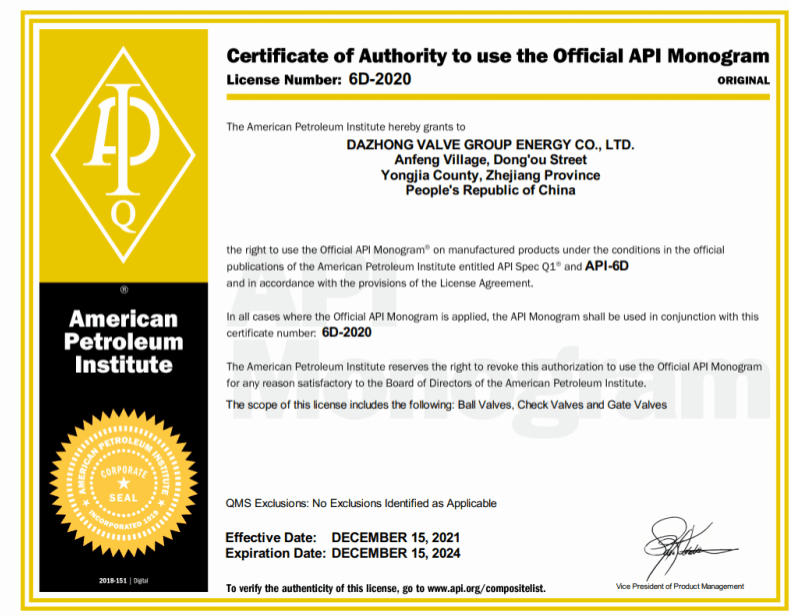
- Q4: What rigorous international standards must these high-end stationary ball valves undergo before leaving the factory?
- Conclusion:
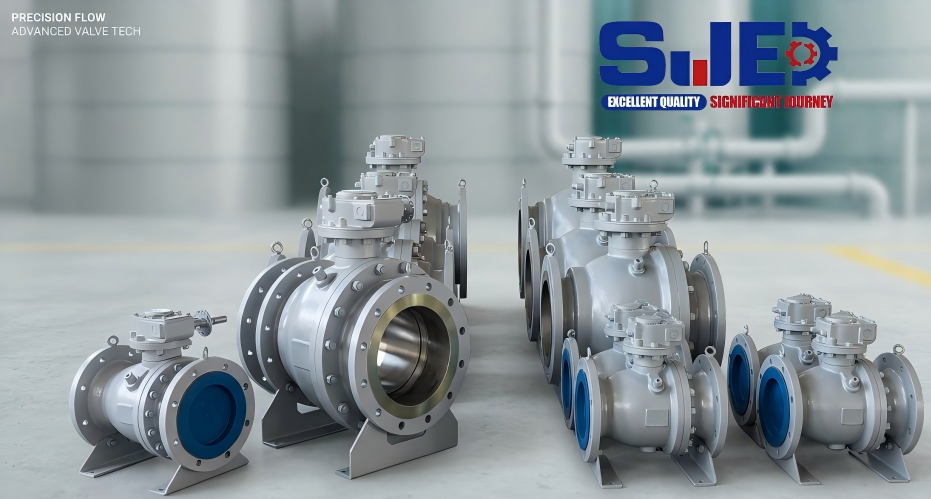
In modern industrial fluid transport systems, ensuring absolute safety and efficient shut-off of pipelines in the face of high pressure, large diameters, and extremely harsh media conditions is a core focus for every engineering project. Trunnion Mounted Ball Valves, with their unique fixed ball structure and superior sealing performance, have become an indispensable core control component in the oil, gas, chemical, and heavy industry sectors.Ball valves are important components in a vast range of systems, from small family-owned workshops to huge industrial facilities - ball valves are everywhere. However, despite the widespread use of these clever little devices, many are unaware of the sheer range of ball valve types available.Through this article, we hope to shed some light on the topic by explaining the main types of ball valves and highlighting the diverse range, focusing on specific features and applications.
Leading Manufacturers of Trunnion Mounted Ball Valves
2.Flowserve: A premier global giant in integrated industrial pumps and valves, whose trunnion mounted ball valves offer outstanding safety protection and fire-safe designs for heavy-duty petrochemical applications.
3.KITZ: A highly representative, comprehensive valve manufacturing giant in Asia, widely recognized for its rigorous quality control, extreme machining precision, and exceptionally smooth gear operation.
4.SJ Valve : The leading pioneer in China's valve industry and a core global supplier, possessing top-tier international competitiveness in large-diameter fully welded pipeline valves and metal-to-metal seated ball valves.
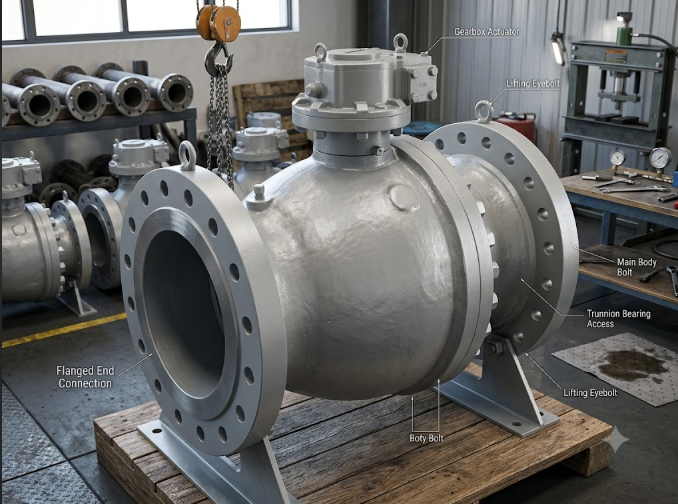
A: Unlike traditional floating ball valves, the ball in a Trunnion mounted ball valves is locked at both ends by bearings or a fixed shaft (trunnion), preventing displacement under medium pressure. Its core functions and design advantages are reflected in the following aspects:
- Bidirectional sealing and automatic pressure relief: Employing a unique floating seat design. When the medium pressure pushes the valve seat, it forms a tight seal against the ball. Simultaneously, when abnormal pressure rises in the valve body cavity, the valve seat automatically releases pressure, ensuring system safety.
- Ultra-low operating torque: Because the ball's center of gravity and pressure load are borne by the upper and lower bearings, the frictional resistance of the valve seat is significantly reduced. Combined with the precision worm gear drive (Gear Operator) equipped on the top, manual operation at large diameters and high pressure levels becomes extremely effortless and smooth.
- Safety Protection Mechanisms: Strictly adhering to international explosion-proof and safety standards, standard features include blow-out protection (Blow-out Proof Stem), anti-static properties, and fire-safe design compliant with API 607 / API 6FA standards.
|
Technical Dimension |
Floating Ball Valve |
|
|
Design Standard |
ASME B16.34, API 6D |
API 6D, ASME B16.34 |
|
Ball Support Structure |
Supported by two seat rings, no fixed stem at the bottom. |
Locked by upper and lower bearings and trunnion, zero displacement. |
|
Sealing Mechanism |
Upstream pressure pushes the ball against the downstream seat. |
Upstream and downstream fluid pressure drives floating seats (Piston Effect). |
|
Operating Torque |
Torque increases rapidly under high differential pressure. |
Reduced by over 35 percent, keeps wheel operating force under 360 N. |
|
Cavity Pressure Relief |
No automatic relief (Risk of body overpressure explosion). |
Automatic Self-Relieving (SPE or DPE design) when cavity pressure exceeds 1.5 times of pipeline pressure. |
|
Fire-Safe Certification |
Standard design, limited high-temperature sealing. |
Certified to API 607 and API 6FA (Secondary metal-to-metal seal). |
|
Size and Pressure Range |
Size 6 inch and under, Pressure Class 300 and under. |
Size 2 inch to 48 inch, Pressure Class 600 to Class 2500. |
|
Best Application |
Low-pressure pipelines, small flow control systems. |
High-pressure, large-diameter critical oil, gas, and chemical mainlines. |
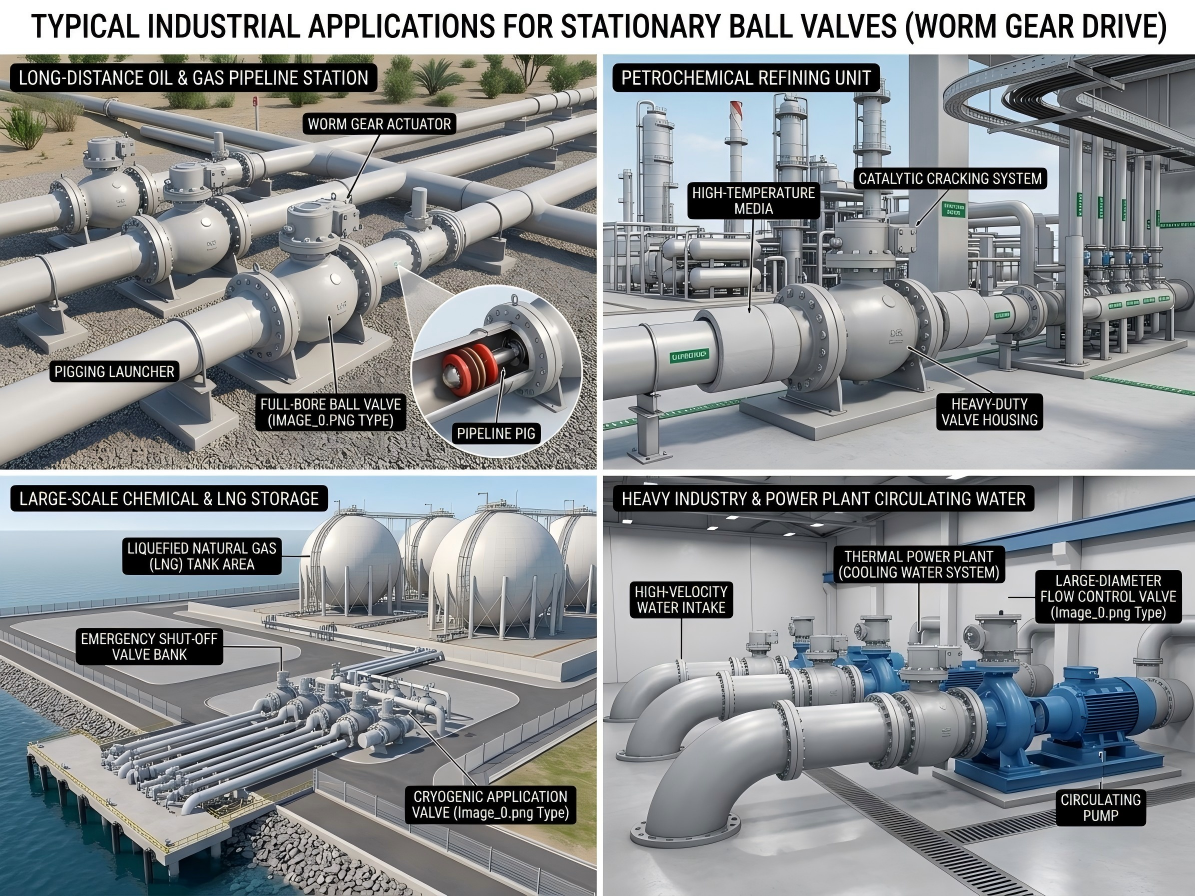
Q2: In which typical industries and scenarios are these large-diameter stationary ball valves with worm gear drives primarily used?
A: Due to their structure, these valves offer excellent pressure resistance and large-diameter applicability. They are widely used in the following national and heavy industrial fluid control scenarios:
- Oil and gas long-distance pipelines: Used for trunk line shut-off and pressure regulating station control in natural gas pipeline networks and crude oil main pipelines. Their full-bore design allows for unobstructed passage of pipeline pigs (PIGs), making them ideal for long-distance pipeline maintenance.
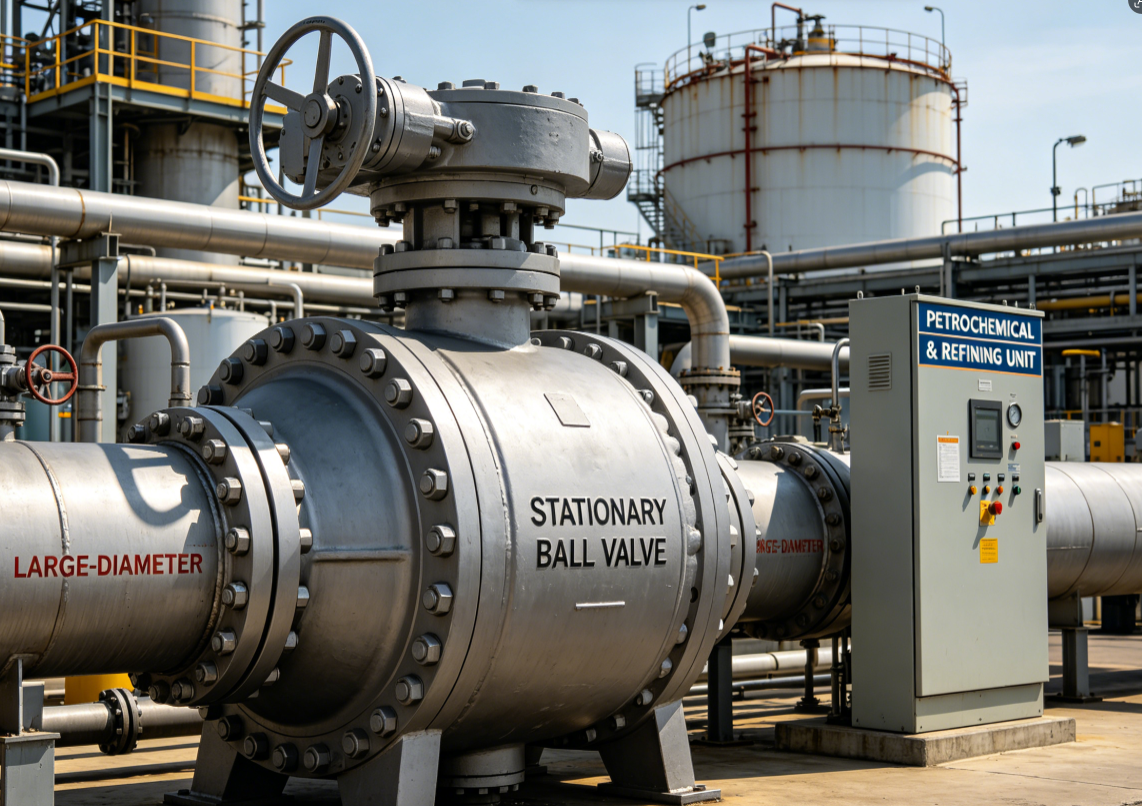
- Petrochemical and refining units: Used in crude oil catalytic cracking, hydrogenation units, and various hydrocarbon media transportation to handle high-temperature, high-pressure, and complex media environments.
- Large-scale chemical and LNG storage and transportation: Used as reliable emergency shut-off and long-term isolation valves on inlet and outlet pipelines of liquefied natural gas (LNG) receiving terminals and large chemical storage tank areas.
- Heavy industry and power plant circulating water systems: Used to control high-velocity, high-flow-rate fluid media in the circulating water systems of large thermal power plants and nuclear power plants, or in large water supply and drainage projects.
Q3: What customized configurations are available for these stationary ball valves for complex and extremely harsh operating conditions?
A: To meet the diverse technical specifications of different end-users worldwide (such as Saudi Aramco, Shell, and CNPC), stationary ball valves offer exceptional flexibility for customization:
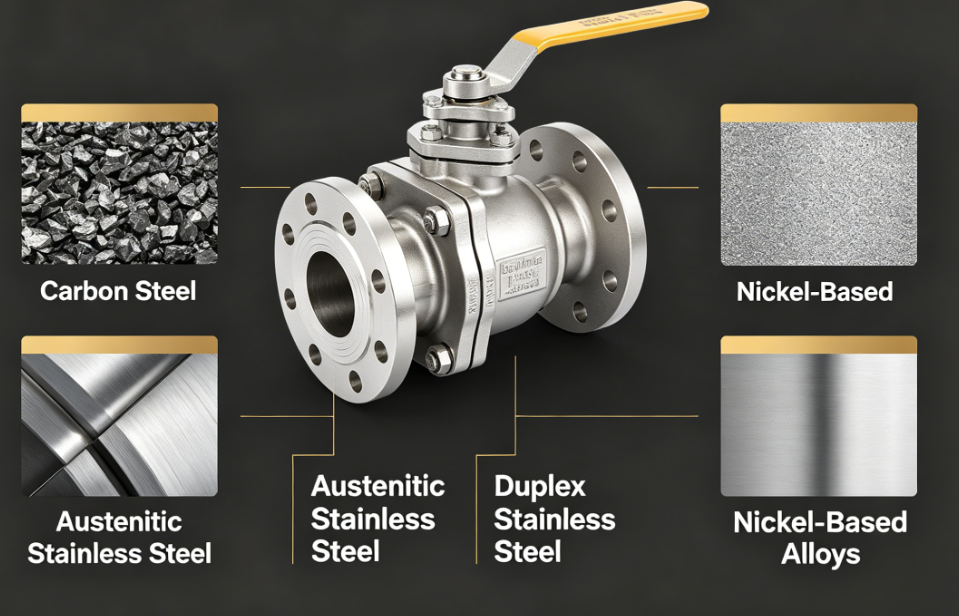
- Advanced material selection: In addition to standard carbon steel (such as A105 and WCB), valve bodies and internal components can be customized with austenitic stainless steel (316SS), duplex stainless steel (2205/2507 Duplex), or high-performance nickel-based alloys for corrosive media.
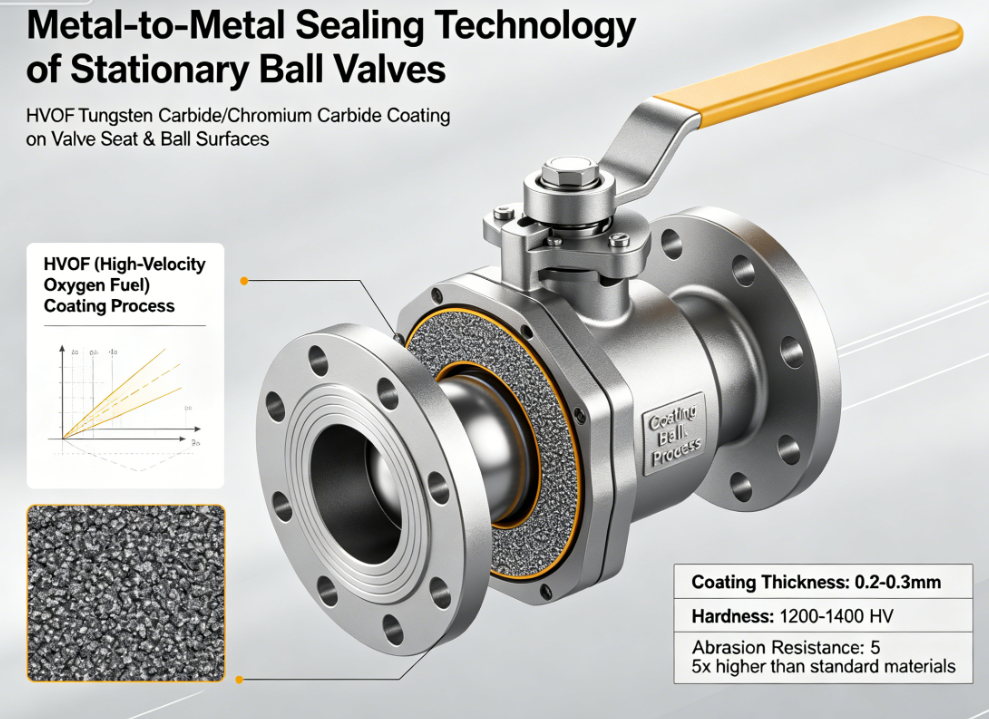
- Metal-to-Metal Sealing Technology: For media containing solid particles, sand, or high-temperature abrasion, the valve seat and ball surfaces can be coated with supersonic velocity coating (HVOF) tungsten carbide or chromium carbide, significantly improving wear resistance and high-temperature lifespan.
- Fully Welded Valve Body Structure: For buried long-distance pipelines, a fully welded valve body is available, fundamentally eliminating the potential risk of leakage from the valve body and cover.
Flexible customization and rapid response are SJ Valve's core competitive advantages that distinguish it from traditional manufacturing giants. Whether it's custom-designed duplex steel for highly corrosive media or metal-to-metal sealing (HVOF coating technology) to combat multi-particle abrasion, SJ Valve can adjust its supply chain and provide optimized engineering solutions in the shortest possible time based on the customer's datasheet.
A: Every stationary ball valve used in high-pressure industrial pipelines must undergo a series of stringent non-destructive tests and pressure tests to ensure "zero-failure" operation under field conditions:
- Pressure and Sealing Tests: Strictly adhering to API 6D and API 598 standards, high-pressure liquid seat seals, low-pressure gas seals, and valve body strength tests are conducted to ensure the valve achieves zero-leakage sealing at maximum operating pressure.
- Non-destructive Testing (NDT): For forgings or castings, PMI (partial material identification) is comprehensively implemented to prevent material confusion; PT (penetrating penetrant testing), MT (magnetic particle testing), and UT (ultrasonic testing) are performed on welds or critical stress areas to thoroughly eliminate internal macroscopic defects.
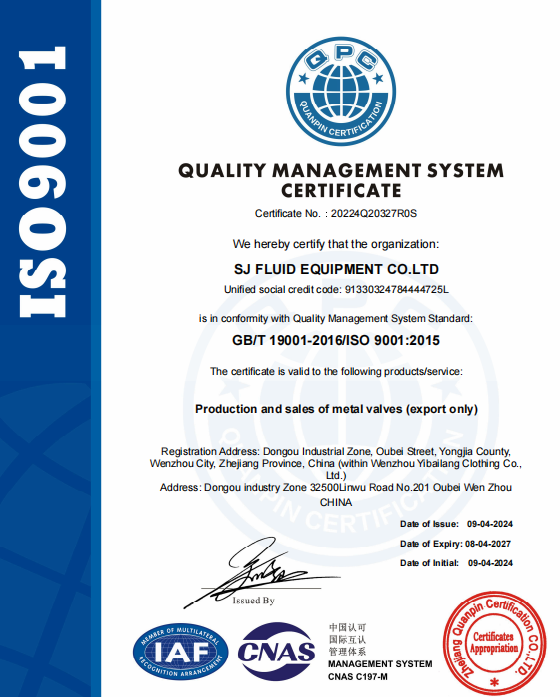
- Fugitive Emission Test: Meeting standards such as ISO 15848, ensuring that after long-term cyclic opening and closing, the valve stem seal maintains extremely low PPM levels of volatile organic compound leakage to the atmosphere. Quality control is the lifeline of SJ Valve. Our factory implements comprehensive, no-dead-angle inspection throughout the entire process, from PMI material re-inspection at the raw material procurement stage, to UT and PT flaw detection during machining, and finally to API 6D high-pressure sealing testing before shipment. Each process has an official traceability report, ensuring that every valve delivered to our customers possesses impeccable safety and quality.
Conclusion:
The manufacturing and selection of large-diameter trunnion-mounted ball valves is essentially a systems engineering project involving materials mechanics and fluid dynamics. From the API 6D-compliant bidirectional floating seat design to the selection of super duplex steel (UNS S32750) and special alloying processes for highly corrosive media, every industrial valve must meet extremely stringent operating condition verifications.
To establish unquestionable brand authority and credibility (EEAT) across the entire network, SJ Valves insists on conducting 100% non-destructive testing (NDT) on every batch of large-diameter high-pressure ball valves leaving the factory (including PT penetrant testing, UT ultrasonic testing, and PMI material identification for critical welds). We demonstrate through standardized HTML data charts and real, robust global customer success stories that choosing a high-standard, fully compliant stationary ball valve solution not only ensures zero leakage even after 10,000 cycles of testing under Class 2500 high-pressure fluctuations, but also objectively helps multinational EPC contractors reduce on-site valve failure rates by more than 45%, completely avoiding the inherently systemic safety risk of production stoppages due to valve seat leakage.
SJ web:https://www.sjvalvolesrl.com/