Breaking Through Complex Media Isolation: Comprehensive Guide to Knife Gate Valve Selection & Application
Breaking Through Complex Media Isolation: Comprehensive Guide to Knife Gate Valve Selection & Application
1.Leading Knife Gate Valve Manufacturers
2.Introduction
3.Q1: Knife Gate Valve vs.Conventional Gate Valve?
4.Q2: Knife Gate Valve vs. Slide Gate Valve?
5.Q3: How Does a Knife Gate Valve Work?
6.Q4: What Are the Key Advantages of a Knife Gate Valve?
7.Conclusion&FAQ
Breaking Through Complex Media Isolation: Comprehensive Guide to Knife Gate Valve Selection & Application
Leading Knife Gate Valve Manufacturers
-Orbinox:Headquartered in Spain, Orbinox is a global leader in knife gate valve manufacturing with a presence in over 80 countries. Their versatile range of unidirectional and bidirectional valves is widely trusted in water treatment, mining, and power generation for exceptional sealing reliability.
-DeZURIK:A prominent US-based manufacturer, DeZURIK specializes in heavy-duty flow control equipment with nearly a century of industry experience. Their slurry knife gate valves are market benchmarks for handling extreme abrasive, corrosive, and high-density solids applications.
-VAG Group:Originating from Germany, VAG Group is a renowned global supplier of water and wastewater control systems. Their knife gate valves combine precision German engineering with low-flow-resistance designs, making them a preferred choice for municipal and industrial water infrastructure projects.
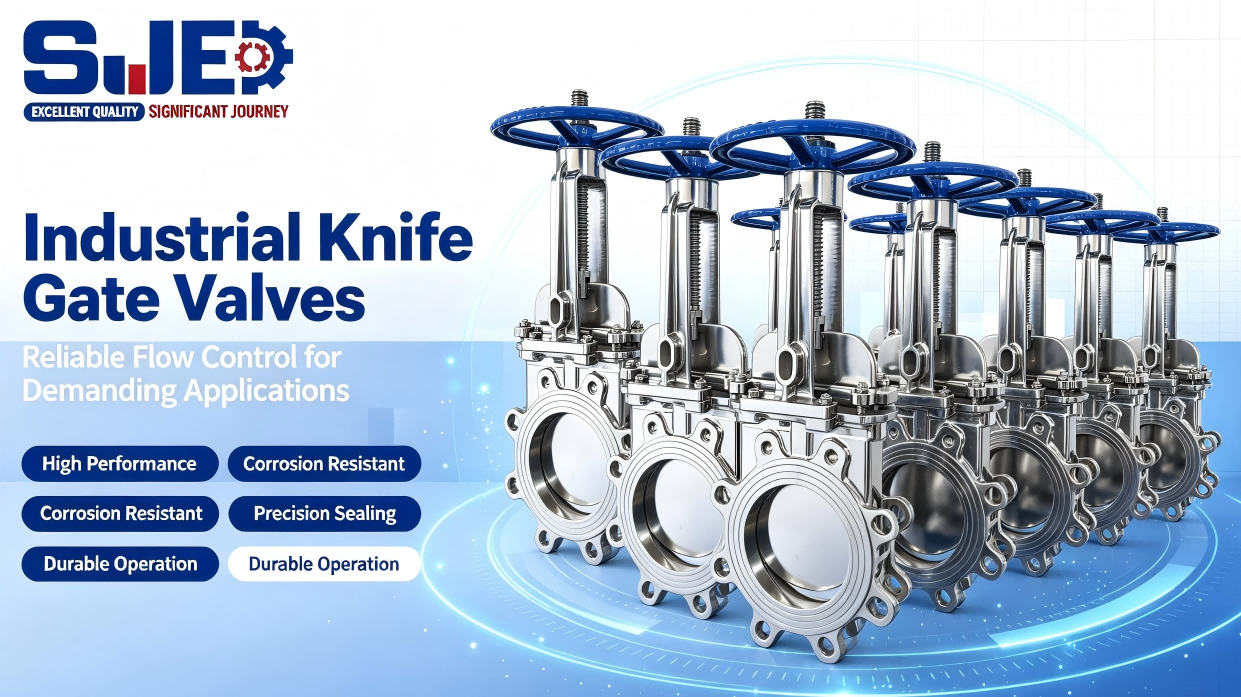
-SJ Valve:SJ is a specialized manufacturer of high-performance knife gate valves engineered for harsh industrial environments, including mining, pulp & paper, and wastewater treatment. Recognized for their superior shear-cut design, robust body rigidity, and wear-resistant seats, SJ valves effectively prevent jamming and deliver extended operational lifespans.

In industrial piping systems across mining, paper pulp, wastewater treatment, and chemical powder processing, media often carry solid particles, fibrous suspensions, or high-viscosity slurries. When faced with such demanding working conditions, conventional valves are highly susceptible to jamming, sealing surface wear, or failure to close tightly. Knife Gate Valves, with their unique "guillotine-style" shearing structure, have become the core solution for isolating solid-laden media.
This article provides a deep dive into knife gate valves across working principles, comparative analyses, and core advantages to help you make precise selection decisions for complex operating conditions.
Q1: Knife Gate Valve vs. Conventional Gate Valve?
A: Although both knife gate valves and conventional wedge gate valves belong to the linear shut-off valve family, their structural designs and suitable applications differ fundamentally:
1.Gate & Cut-Off Mechanism:
-Conventional Gate Valve: Uses a thick wedge gate that relies on mutual compression between two sealing faces and the seat to achieve a seal. If the medium contains lumps or fibers, they easily get trapped in the seat's bottom groove, preventing complete closure.
-Knife Gate Valve: Features a thin gate equipped with a beveled blade edge at the bottom. During closure, the blade acts like a knife to slice directly through fibers, viscous slurries, and suspended particles in the fluid, settling smoothly into the seat.
2.Structural Dimensions & Pressure Ratings:
-Conventional Gate Valve: Bulkier in design with a longer face-to-face dimension, capable of withstanding high pressures and temperatures. Suited for clean gas or liquid media (e.g., high-pressure water, steam).