A guide to High Temperature Butterfly Valve
2024-12-11
A guide to High Temperature Butterfly Valve
A guide to High Temperature Butterfly Valve
In this article, we will delve into the design aspects that enable these high temperature butterfly valves to operate effectively in such demanding situations and explore their wide range of applications. Whether you are an engineer looking to improve your understanding or a curious reader interested in industrial technology, this introduction to high temperature butterfly valves will provide valuable insights.
What is high temperature butterfly valve?
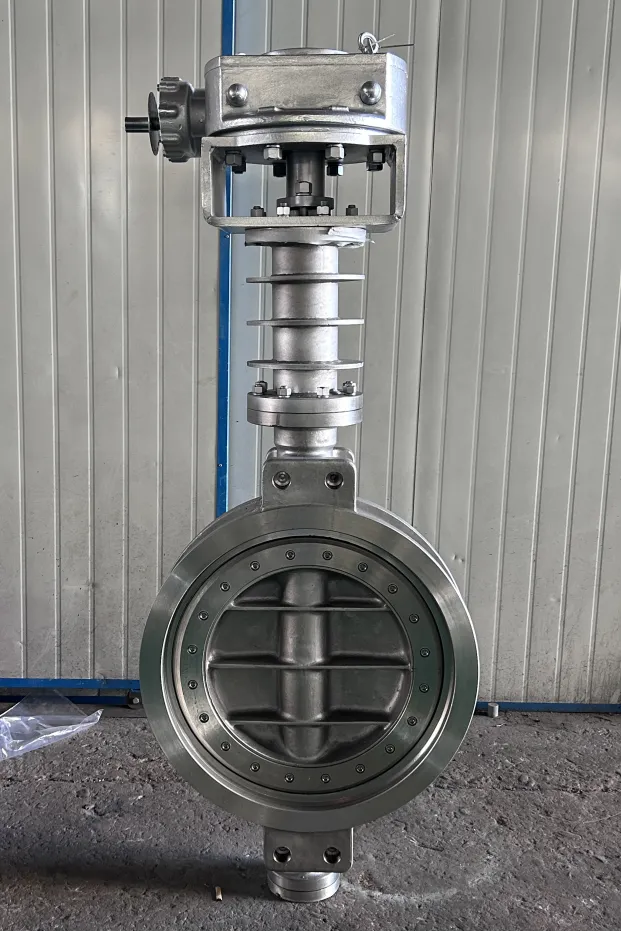
Capable of reaching temperatures up to 1200°C, the high temperature butterfly valve is a specially designed high temperature regulation and control valve.
The product has reasonable structure design, convenient operation and reliable use. It is widely used in industrial furnaces, RTO regenerative thermal oxidizers, gas and solid waste treatment. These valves control high temperature medium pipes of different sizes, changing flow patterns for automation and remote control of industrial processes.
It can be operated by turbine, electric or pneumatic drive to meet programming and remote control needs.
The product is widely used for sulfur combustion sulfuric acid production in high temperature bypass lines, as well as as a control and regulating valve for blast furnace air distribution and boiler piping in metallurgical and petrochemical systems.
Characteristics
Fluorine lined high temperature butterfly valve, valve plate and stem main material is stainless steel 310SS or 904L. It has high strength, wear resistance and corrosion resistance, high temperature rises to the platform stage, with high temperature heat dissipation bracket structure, to protect the electric and pneumatic actuators, extend the service life of the valve. In the case of the configuration of a dust cover, it can operate normally even under high temperature conditions, and it can reduce dust so that the butterfly plate does not appear stuck, to ensure that the butterfly plate flexible opening and closing
Advantage
1.The mechanical properties are higher than ferritic stainless steel, especially the plastic toughness. It is not as sensitive to brittleness as ferrous stainless steel.
2.In addition to stress corrosion resistance, other local corrosion resistance is better than ferritic stainless steel.
3.cold processing performance and cold forming performance are far better than ferritic stainless steel.
4.the welding performance is far better than ferritic stainless steel, generally do not need to preheat before welding and do not need heat treatment after welding.
5.the application range is wider than ferritic stainless steel. Due to the high strength of duplex steel, it can often save materials, such as reducing the wall thickness of pipes.
6.he service strength is more than twice that of ordinary austenitic stainless steel, and it has enough plastic toughness required for molding.
The thickness of storage tanks or pressure vessels made of duplex stainless steel is 30-50% less than that of commonly used austenitic stainless steel, which is conducive to reducing costs.
7.has excellent resistance to stress corrosion rupture ability, especially in the environment containing chloride ions, even the alloy content is relatively low duplex stainless steel also has higher resistance to stress corrosion fracture than austenitic stainless steel, stress corrosion is ordinary austenitic stainless steel is difficult to solve the outstanding problem.
8.has good local corrosion resistance, compared with the alloy content of Austenitic stainless steel, its wear corrosion resistance and corrosion fatigue performance are better than austenitic stainless steel.
9.lower than the linear expansion coefficient of austenitic stainless steel, close to carbon steel, suitable for connection with carbon steel, has important engineering significance, such as the production of composite plates or linings.
Preventive measure
1. Confirm the conditions of use
Before using a high temperature butterfly valve, you need to confirm that the operating conditions of the valve meet the requirements. For example, the temperature, pressure, medium and other parameters of the valve need to be consistent with the design parameters of the valve.