Swing Check Valves: Applications, Advantages, and Installation Guide
2024-05-11
Swing Check Valves: Applications, Advantages, and Installation Guide
Swing Check Valves: Applications, Advantages, and Installation Guide
SJ Valvole S.R.L is a powerful valve manufacturing company integrating R&D, design, production and sales. We focus on providing high-quality valve products covering a wide range of application needs.
What is a swing check valve?
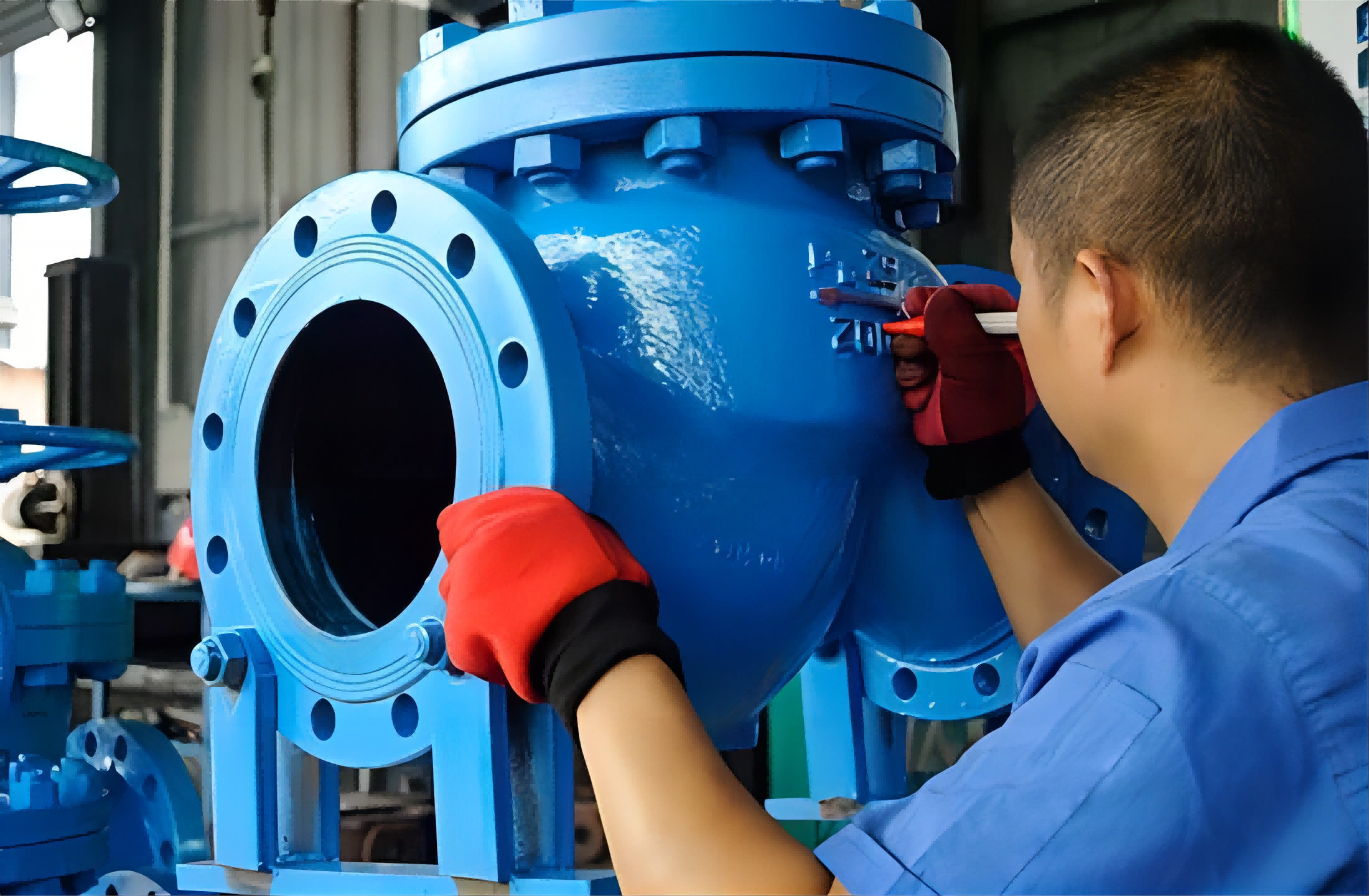
A swing check valve is a type of check valve that allows one-way flow while preventing backflow. It has a swinging disc or flap that opens under forward flow conditions and closes under reverse flow conditions, relying on gravity and fluid pressure for operation.
How does a swing check valve work?
Check swing valve work by allowing flow in one direction while blocking flow in the other. When fluid enters the valve, the flowing medium opens the valve or disc and forces the valve to remain open. When the flow stops or reverses, gravity and fluid pressure force the disc to swing back and seal against the seat, preventing backflow. In pipelines, this method provides one-way flow control.
What is the use of swing check valves?
The function of a swing check valve is to regulate the flow of fluid by allowing flow in one direction while preventing backflow. This is essential to maintain system integrity, prevent contamination, and protect equipment from damage caused by countercurrent or water hammer effects.It is commonly used in the oil and gas, manufacturing and water treatment industries.
Material
The materials used to manufacture swing check valve assemblies are the same materials used to produce many valve types. Therefore, swing check valves are suitable for various applications related to pressure, temperature and environment. Below is an overview of some commonly used materials. Read our chemical resistance guide to learn more about the chemical properties of the following and other materials.
Valve body and disc
-
Stainless Steel: Stainless steel valves are durable, corrosion-resistant and rust-resistant. In systems where pressure or temperature is not high, stainless steel valves are not cost-effective. Stainless steel valves are corrosion and rust resistant except for salt water applications.
- Ductile Iron: Ductile iron valves are strong, pressure-resistant and cost-effective, but prone to rust.
- Brass: Brass valves are suitable for high temperature, high pressure applications and are more cost-effective than stainless steel valves.
- Bronze: Bronze is cost-effective, strong, and resistant to rust.
- Monel: Monel valves are suitable for underwater applications and are acid resistant.
- Inconel: Inconel is suitable for extreme environments and is corrosion-resistant and heat-resistant.
- PVC: For applications with media temperatures below 60°C (140°F), PVC valves are the most cost-effective option.
- ABS: ABS is stronger than PVC and suitable for temperatures up to 100°C (212°F).
Valve seat
-
FKM: FKM valve seats are durable, suitable for petroleum systems and have high wear resistance. FKM valve seats have an operating temperature range of -20 °C to 230 °C (-4 °F to 446 °F).
-
Teflon (PTFE): Teflon valve seats have a low coefficient of friction and are resistant to chemical corrosion. The operating temperature range of these valve seats is -260 °C to 260 °C (-436 °F to 500 °F).
-
NBR: NBR valve seats are oil-resistant and highly wear-resistant. These seals have an operating temperature range of -35 °C to 120 °C (-31 °F to 248 °F).
-
EPDM: EPDM valve seats are suitable for water systems, not for oil and gas systems. Its operating temperature range is -40°C to 150°C (-40°F to 302°F).
Metal: Although metal valve seats are more prone to leakage than rubber seats, they allow higher operating temperatures.