Diaphragm Valves design, type, working principle, application
2024-11-22
Diaphragm Valves design, type, working principle, application
Diaphragm Valves design, type, working principle, application
In the field of industrial fluid control, diaphragm valves play a key role in regulating the flow of liquids and gases. These multifunctional valves are widely used in various industries due to their unique design and superior functionality. In this comprehensive guide, we will delve into the basics of diaphragm valves, explaining their design, type, working principle, application, and the importance of proper maintenance.
Design and Working principle
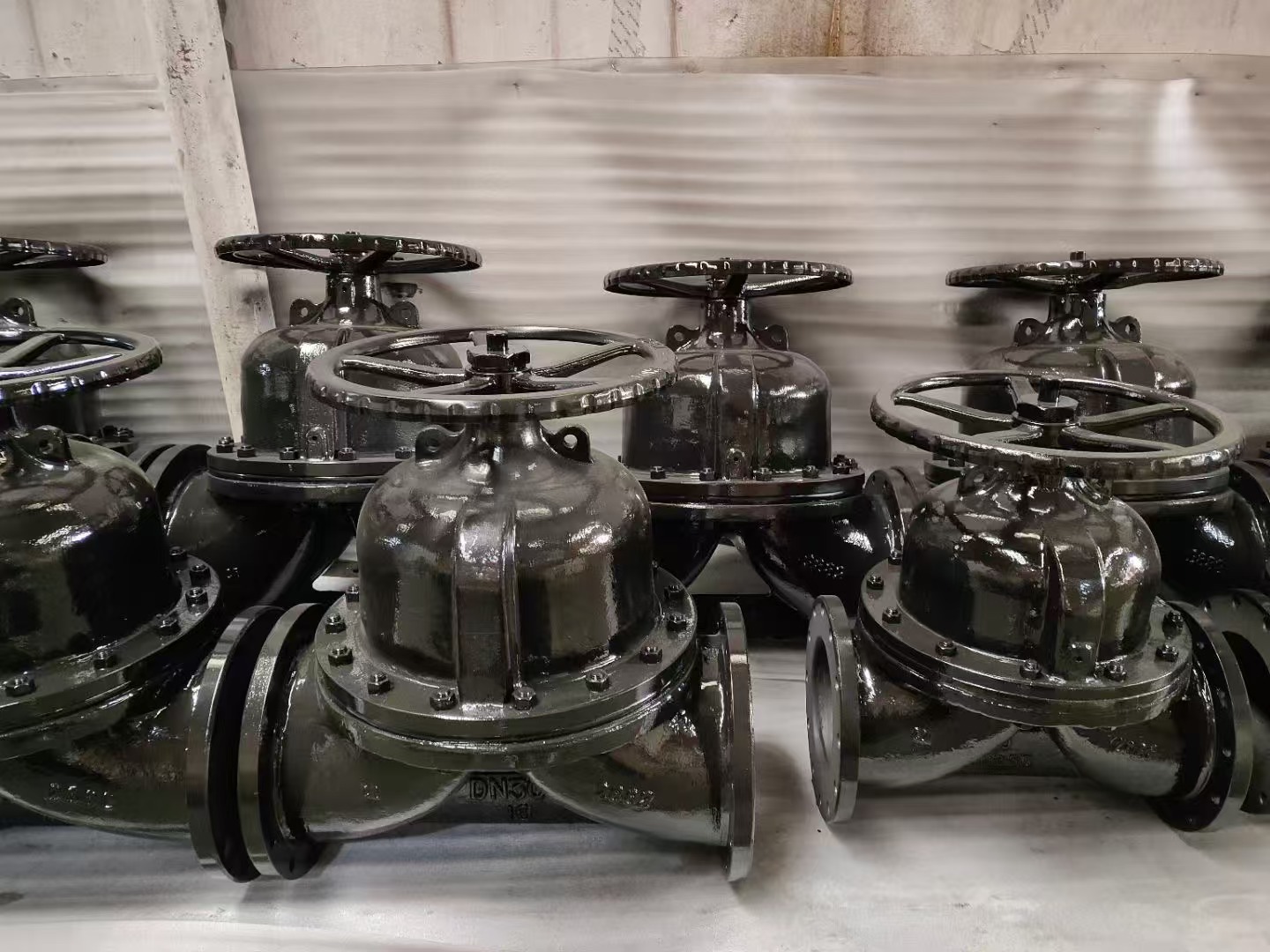
The diaphragm valve consists of a valve body and a valve cover. The valve body is equipped with a flexible diaphragm, and the valve cover holds the diaphragm to the valve body. Diaphragms are typically made of rubber, neoprene, or other elastomers and are designed to be flexible enough to deform under pressure to allow fluid to pass through the valve. When the valve is closed, the diaphragm seals the body, preventing fluid from passing through.
The operation of the diaphragm valve is controlled by a mechanism that presses the diaphragm against the body, opening or closing the valve. The most common type of mechanism used in diaphragm valves is the hand wheel or actuator. The handwheel is attached to a rod attached to the diaphragm, which moves up and down as it turns, opening or closing the valve. An actuator is a more complex mechanism controlled by electrical signals or pneumatic pressure for automatic control systems.
Type of Diaphragm Valves
Diaphragm valves come in two basic forms: weir and straight through. The basic structure of the two valves is similar except for the valve body and diaphragm.
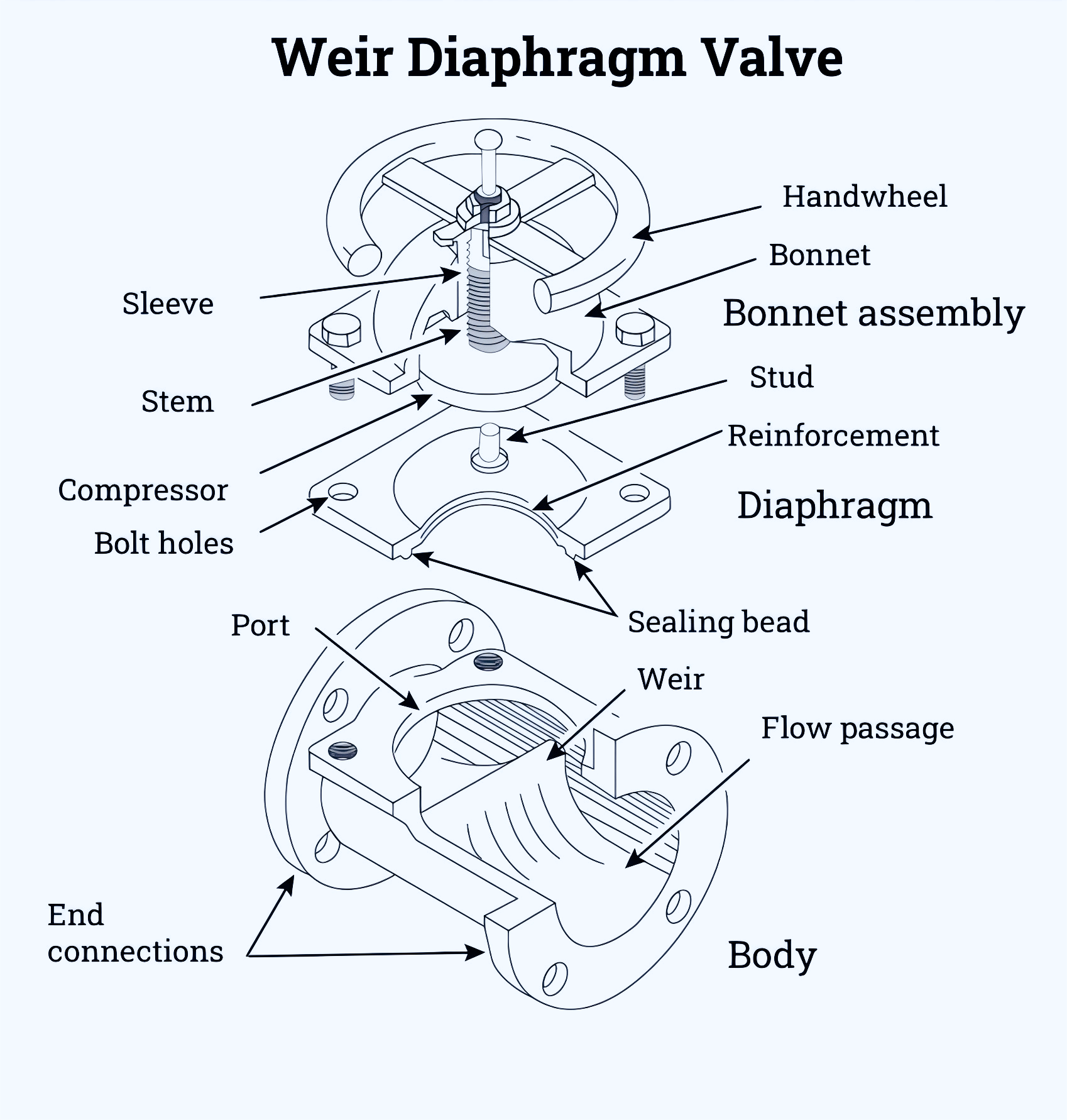
Weir Diaphragm Valves
Weir diaphragm valves are one of the most commonly used designs. It has a raised lip or saddle where the diaphragm touches to form a seal. This design shortens the travel distance of the diaphragm from fully open to fully closed, thereby reducing the stress placed on the diaphragm during operation. As a result, the diaphragm can be made of thicker materials, making it suitable for applications involving high pressure or vacuum conditions.
Weir diaphragm valves are excellent at controlling fluid flow, even at low flow rates, and are often used in throttling applications. They may employ a two-piece compressor system that creates a small opening in the center of the valve. Initially, the internal compressor lifted the central portion of the diaphragm in the early stages of the stem movement, rather than the entire diaphragm. Once the internal compressor is fully raised, the external compressor is raised as well, allowing for more precise flow control.
The valve cover assembly is recommended for handling hazardous liquids. These components cover the valve to prevent any leakage if the diaphragm fails. In addition, the diaphragm valve has a self-draining function, making it a good choice for food processing applications.
Weir diaphragm valves are suitable for handling gases and clean, uniform liquids. However, they may not be suitable for fluids with deposits or high viscosity, as these deposits can accumulate on the saddle. They are also capable of transporting corrosive, dangerous and abrasive substances.
Straight-Through Diaphragm Valves
Straight-through diaphragm valves have a flat-bottomed body designed to minimize flow resistance and allow fluid to move along a direct path. To achieve a fully closed position, the diaphragm must be sealed at the bottom of the valve body. This design requires a more flexible diaphragm material and requires more frequent replacement due to its shorter service life. The straight-through design features a lower pressure drop compared to weir valves, making it more suitable for high flow applications. Through valves are excellent at handling semi-solid media such as slurries, sludges and viscous fluids due to their unobstructed flow paths.