Depth guide for hydraulic actuators: Principle of operation, type and application
2024-11-08
Depth guide for hydraulic actuators: Principle of operation, type and application
Depth guide for hydraulic actuators: Principle of operation, type and application
What is a hydraulic actuator?
Hydraulic actuators are devices that convert compressed hydraulic motion into mechanical linear or rotational motion. This conversion is required by the piston and cylinder components that form part of its mechanism. The mechanical output energy exists in the form of motion, which can be oscillatory, linear or rotational.
Structural design
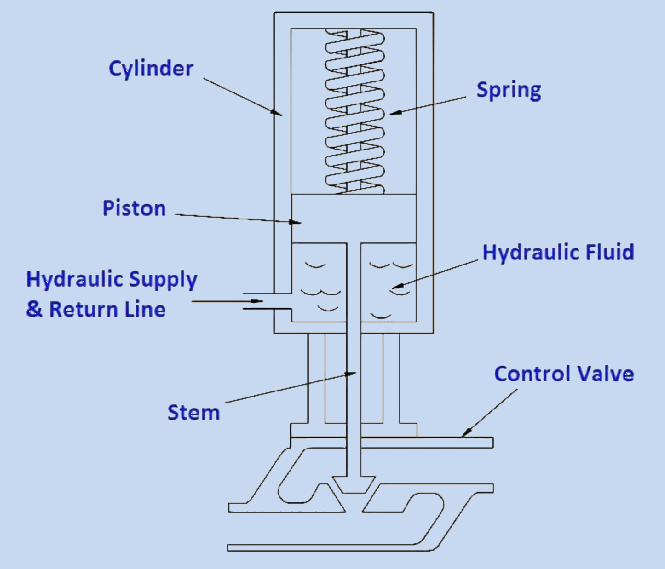
Principle of operation
The law governing the reaction of fluids to forces and pressures is PASCAL's law. Hydraulic fluids are liquids that experience the same law, so their operation will be based on that law.
The law states that any pressure applied at any point in the contained fluid will be transmitted uniformly in all directions within the fluid without causing any loss. You will find that different hydraulic actuators work differently, but they all operate according to PASCAL's law.
In addition, the hydraulic oil supplied to the actuator is usually stored in a storage tank. A hydraulic pump is used to transfer it from there to the actuator.
This is usually done at very high pressures to ensure sufficient hydraulic power is generated. The control valve controls the movement and pressure of hydraulic oil in and out of the cylinder.
Hydraulic lines provide them with inlet and outlet hydraulic oil to raise or lower the piston. Hydraulic oil is always under pressure, so any form of leakage can affect the performance of the actuator.
Usually, mechanical movement occurs when you apply some pressure to any point in the hydraulic oil. This mechanical energy can lift, rotate or move a load.
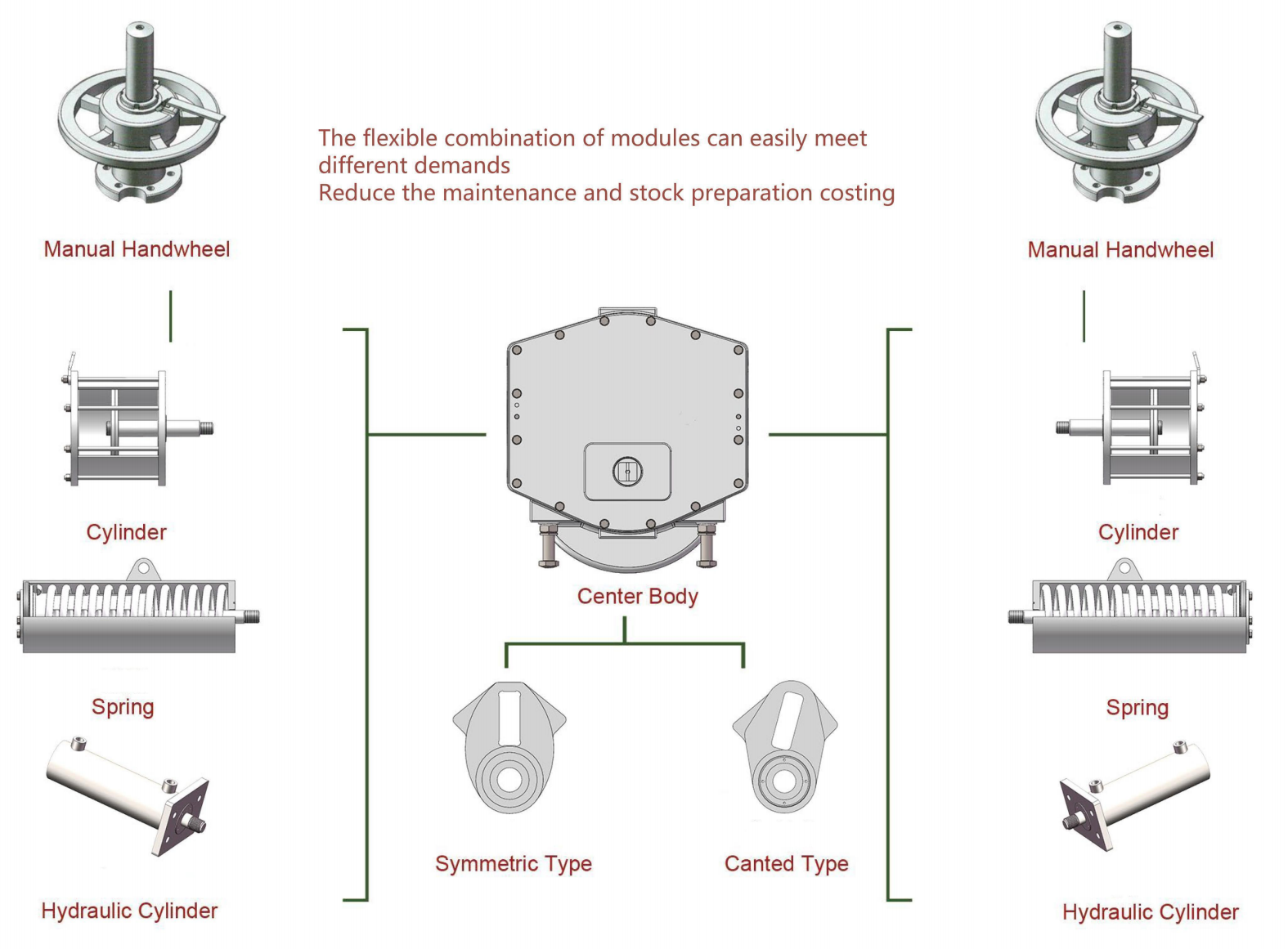
Type of hydraulic actuator
Single acting hydraulic actuator
We usually refer to them as displacement cylinders, and the pressure applied to them covers only one side of the piston. The piston must be returned to its original position, and gravity or some form of auxiliary part is required. That's why you'll find a return spring for this purpose in most products. The rest will rely on gravity to restore the piston to its initial position.
Double acting hydraulic actuator
As the name suggests, the applicable hydraulic pressure can be located on either side of the actuator piston. The piston will move to the side of the actuator cylinder with less pressure. This is because the higher hydraulic side on the other side pushes it away due to the pressure difference between the two.
Linear hydraulic actuator
You can use these actuators when your application needs to provide force in a straight line. Hydraulic cylinders are a good example because their pistons provide linear motion when driven.
Rotary hydraulic actuator
As the name suggests, you can use it for applications that require constant angular motion or some form of rotational motion. Hydraulic motors are a perfect example.
Semi-rotary hydraulic actuator
It is similar to a rotary hydraulic actuator, although this can help you in situations where your application only requires a partial drive Angle. These angular movements can be several 360° rotations or even any other Angle below that Angle.
The future of hydraulic actuators
Emerging trends have allowed hydraulic actuators to make great progress in terms of technological advancement.