Plug valve: Working Principle and how to choose one
2024-05-21
Plug valve: Working Principle and how to choose one
Plug valve: Working Principle and how to choose one
What is a plug valve
Plug valves use cylindrical or conical cocks that can be rotated within the body to control fluid flow. When the plug rotates 90 degrees, it opens or blocks the fluid channel. This provides fast-acting on/off control, but is usually not the best choice for flow modulation. Valve with plug are used in a variety of industries, including: Petroleum and natural gas, chemical and water treatment, for applications requiring reliable flow switching, with equal percentage flow characteristics. The valve with plug includes: lubricating valve, non-lubricating valve, eccentric valve and expandable valve. They are available in 2-way, 3-way, and 4-way configurations to meet different flow control and redirection requirements, making them versatile and reliable.
When to use the Plug Valve
Plug valve is a multi-functional valve, can be used in a variety of applications. The valve plugs are well suited for flow control, isolation, countercurrent, corrosive and corrosive fluids, and high-pressure and abrasive pastes.
When selecting a plug valve for a particular application, the following factors must be considered: type of fluid, pressure, temperature, corrosion resistance, and required flow control capability. In addition, proper maintenance and lubrication of plug valves are essential to ensure their long-term performance and reliability.
Plug Valve design
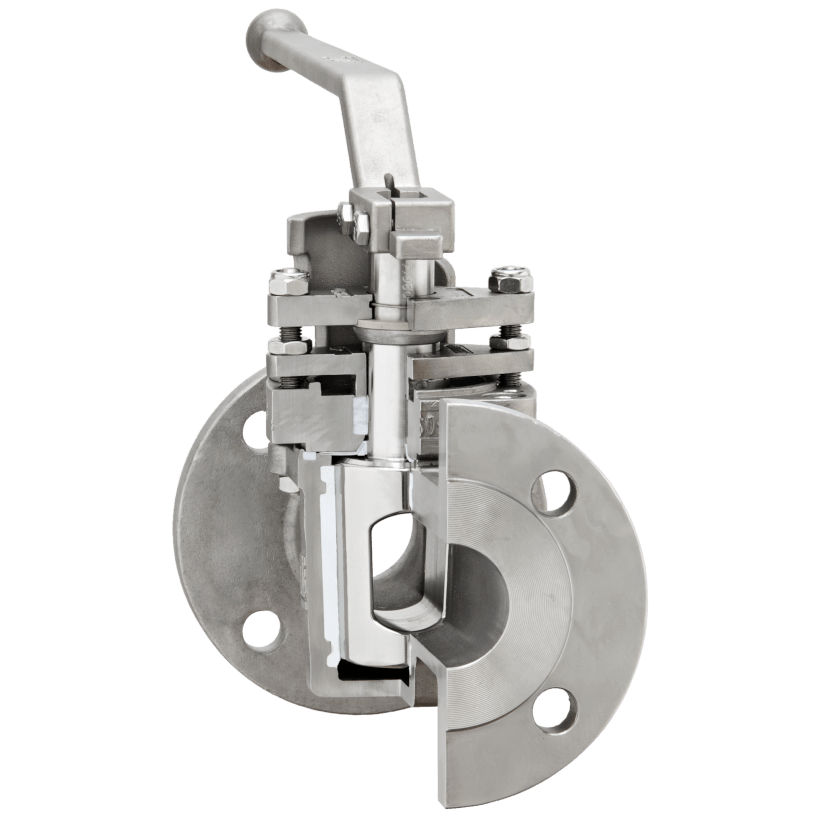
A typical plug valve design consists of several key components that work together to form a robust and reliable valve for a variety of industrial applications. Depending on the application, the plug valve may have additional features, such as seals and washers, to improve leak resistance.
-
Body: the body of a plug valve is usually cylindrical or spherical and made of durable materials such as cast iron, stainless steel or alloy steel.
-
Plug: the plug opens or closes the flow. It is usually cylindrical or tapered with a hole or port in the center.
-
Stem: stem connects plug to actuator.
-
Cap: the bonnet covers the body and provides a leak-proof cover at the top. It is usually bolted to the body, but can also be tightened or welded in place.
-
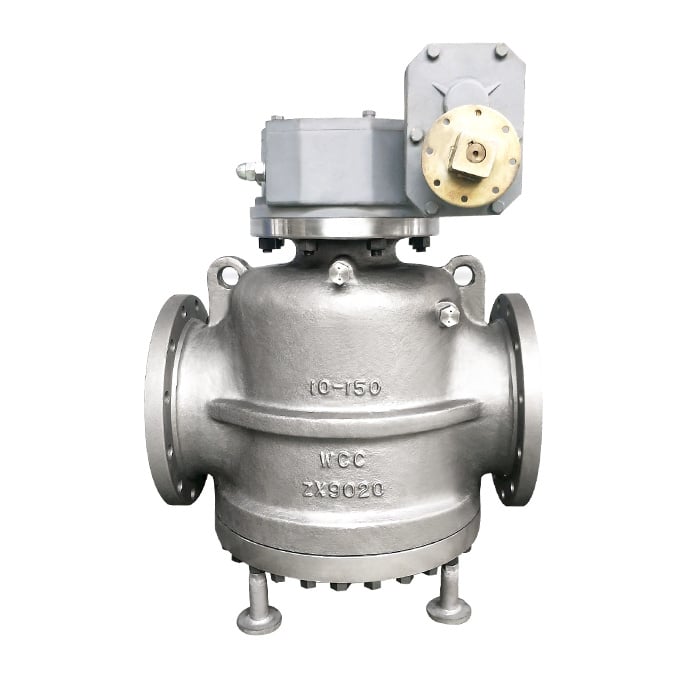
Actuator: actuator rotates stem, stem rotates plug. The plug valve actuator may be manual (handle) , electric, pneumatic, or hydraulic.
Type of Plug Valve
1. Eccentric plug valves
An eccentric plug valve is a special type with an eccentric (eccentric) shaft, which means that the plug is not centered in the body. The eccentric plug is partially or completely removed from the flow path during rotation, allowing for more gradual flow regulation during 90 ° rotation. This design minimizes wear and friction and makes it suitable for handling abrasive or viscous fluids such as sewage and pulp.
2. Lubricate plug valves