Check valve Industrial guardian that ensures one way flow of fluid
2025-08-06
Check valve Industrial guardian that ensures one way flow of fluid
Check valve: Industrial guardian that ensures one-way flow of fluid
Check valves, also known as non-return valves or one-way valves, are crucial safety devices in industrial piping systems. Their core function is to allow fluid (liquid, gas, or steam) to flow in one direction only, automatically preventing reverse flow. This simple function is essential for preventing equipment damage, ensuring stable system operation, and even avoiding safety accidents.
According to their working principle, structural design and application characteristics, check valves can be divided into the following main types:
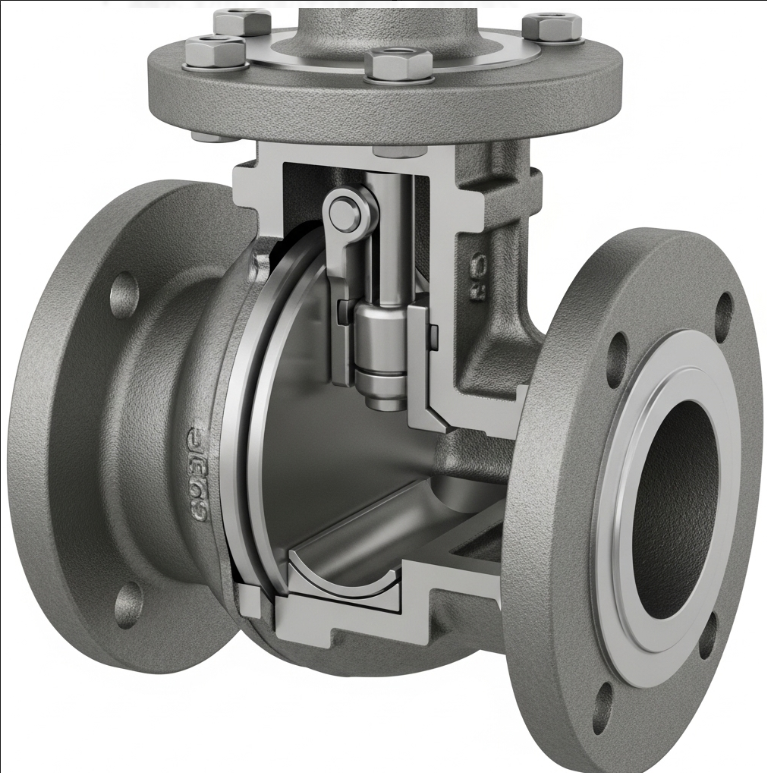
Swing Check Valve
Working Principle: A swing check valve has a rocker arm fixed to the valve body at one end and a disc suspended from the other. The disc is usually disc-shaped or rectangular. When the fluid flows in the forward direction, its pressure pushes the disc open, and the disc rotates around the hinge axis of the rocker arm to open. When the fluid flows in the reverse direction, the reverse fluid pressure and the weight of the disc cause it to close quickly, pressing against the valve seat, thus achieving a sealed check valve.
Technical Features and Applications:
Low Flow Resistance: When fully open, the flow path is almost the same diameter as the pipe, resulting in minimal fluid resistance.
Wide Application: Particularly suitable for large-diameter pipes, low flow rates, and infrequent flow direction changes, such as pump outlets and boiler feed lines.
Installation Requirements: Horizontal installation is typically required to ensure the disc closes properly under gravity. When used on vertical pipes, select a specific model.
Disadvantages: Not suitable for applications with frequent opening and closing. Disc flapping may cause "water hammer," resulting in noise and equipment damage.
Low Flow Resistance: When fully open, the flow path is almost the same diameter as the pipe, resulting in minimal fluid resistance.
Wide Application: Particularly suitable for large-diameter pipes, low flow rates, and infrequent flow direction changes, such as pump outlets and boiler feed lines.
Installation Requirements: Horizontal installation is typically required to ensure the disc closes properly under gravity. When used on vertical pipes, select a specific model.
Disadvantages: Not suitable for applications with frequent opening and closing. Disc flapping may cause "water hammer," resulting in noise and equipment damage.
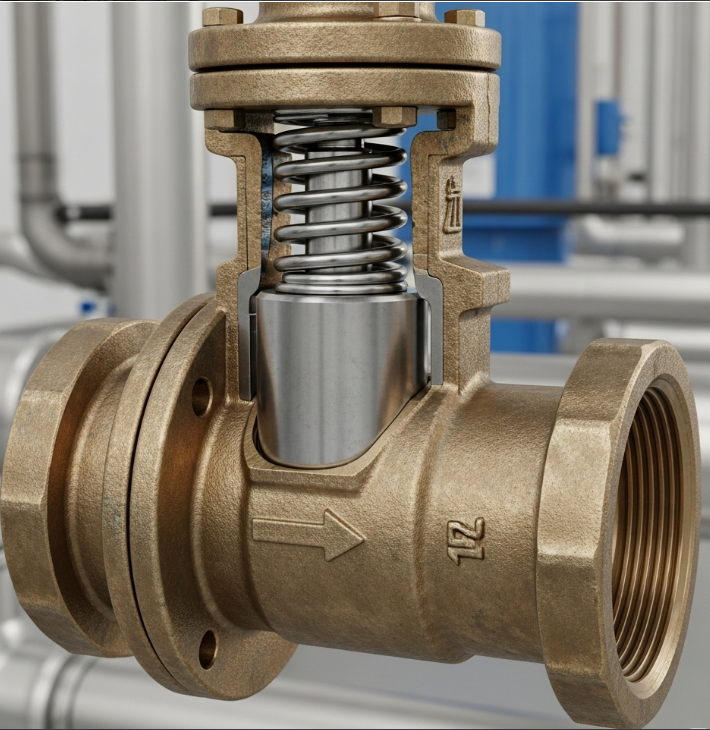
Lift Check Valve
Working Principle: The disc of a lift check valve is a cylindrical or spherical object that moves up and down along the vertical centerline within a guide sleeve inside the valve body. During forward flow, pressure lifts the disc off the seat, opening the passage. During reverse flow, gravity and the reverse fluid pressure rapidly lower the disc back onto the seat, sealing it.
Working Principle: The disc of a lift check valve is a cylindrical or spherical object that moves up and down along the vertical centerline within a guide sleeve inside the valve body. During forward flow, pressure lifts the disc off the seat, opening the passage. During reverse flow, gravity and the reverse fluid pressure rapidly lower the disc back onto the seat, sealing it.
Technical Features and Applications:
Excellent Sealing: The contact area between the disc and the seat is large, resulting in a better sealing effect than a swing-type valve.
Application: Particularly suitable for small-diameter pipelines and high-pressure or high-temperature applications, such as steam pipelines and compressed air systems.
Installation Requirements: The mounting position is not critical and can be installed horizontally or vertically. However, when installed vertically, the flow direction should be from bottom to top.
Disadvantages: The flow path is S-shaped, resulting in greater flow resistance than a swing-type valve. The disc is prone to vibration during opening and closing, making it unsuitable for fluids containing large particles.
Excellent Sealing: The contact area between the disc and the seat is large, resulting in a better sealing effect than a swing-type valve.
Application: Particularly suitable for small-diameter pipelines and high-pressure or high-temperature applications, such as steam pipelines and compressed air systems.
Installation Requirements: The mounting position is not critical and can be installed horizontally or vertically. However, when installed vertically, the flow direction should be from bottom to top.
Disadvantages: The flow path is S-shaped, resulting in greater flow resistance than a swing-type valve. The disc is prone to vibration during opening and closing, making it unsuitable for fluids containing large particles.
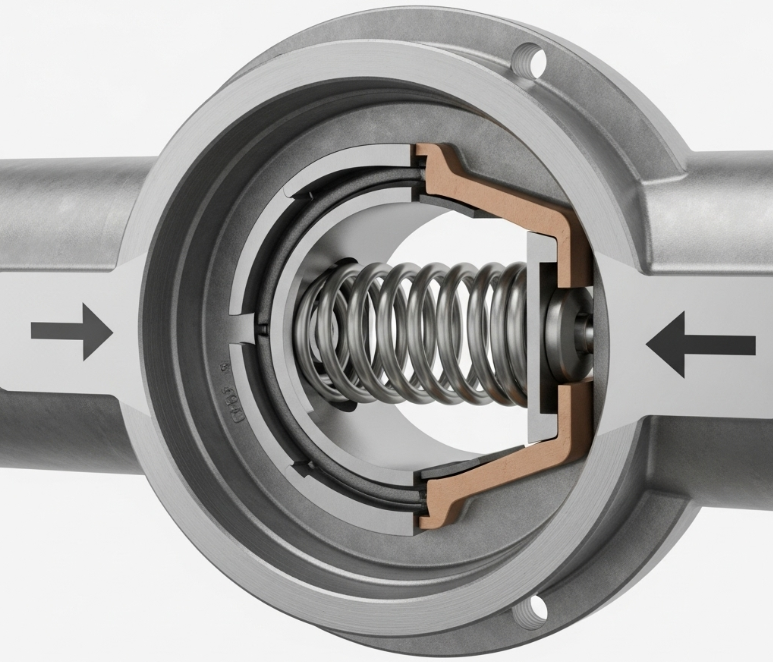
Wafer Check Valve
Operating Principle: The disc of a butterfly check valve consists of two semicircular "butterfly"-shaped flaps, fixed to the center of the valve body by a central axis. During forward flow, fluid pressure pushes the two flaps apart. During reverse flow, the flaps quickly close under the combined action of the reverse fluid pressure and the force of the internal spring.
Operating Principle: The disc of a butterfly check valve consists of two semicircular "butterfly"-shaped flaps, fixed to the center of the valve body by a central axis. During forward flow, fluid pressure pushes the two flaps apart. During reverse flow, the flaps quickly close under the combined action of the reverse fluid pressure and the force of the internal spring.
Technical Features and Applications:
Compact Structure: The valve body is very thin, resembling a wafer, hence the name. Its small size and light weight make it particularly suitable for installations with limited space.
Easy Installation: It is clamped directly between two pipe flanges, eliminating flange connections and reducing costs.
Applications: Commonly used in large-diameter pipelines, such as those in municipal water supply, chemical engineering, and environmental protection.
Disadvantages: It lacks sealing performance compared to swing and lift valves, requires higher fluid cleanliness levels, and is not suitable for fluids containing solid particles.
Compact Structure: The valve body is very thin, resembling a wafer, hence the name. Its small size and light weight make it particularly suitable for installations with limited space.
Easy Installation: It is clamped directly between two pipe flanges, eliminating flange connections and reducing costs.
Applications: Commonly used in large-diameter pipelines, such as those in municipal water supply, chemical engineering, and environmental protection.
Disadvantages: It lacks sealing performance compared to swing and lift valves, requires higher fluid cleanliness levels, and is not suitable for fluids containing solid particles.
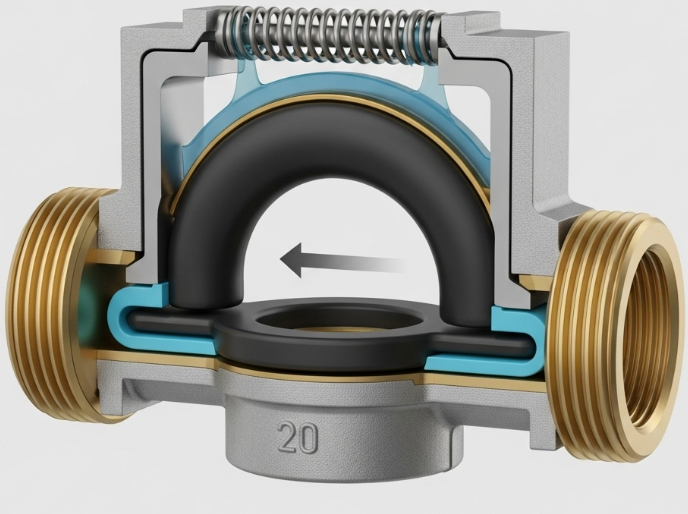
Diaphragm Check Valve
Operating Principle: A diaphragm check valve uses a flexible diaphragm as its sole opening and closing element. During forward flow, fluid pressure deforms the diaphragm, opening the passage. During reverse flow, the diaphragm returns to its original shape, pressing against the valve seat, achieving a check valve.
Operating Principle: A diaphragm check valve uses a flexible diaphragm as its sole opening and closing element. During forward flow, fluid pressure deforms the diaphragm, opening the passage. During reverse flow, the diaphragm returns to its original shape, pressing against the valve seat, achieving a check valve.
Technical Features and Applications:
No moving parts: No complex internal mechanical structure, no friction, and no wear, resulting in a long lifespan and low maintenance costs.
Applications: Particularly suitable for highly corrosive media, high-purity fluids (such as those in the semiconductor industry), and the pharmaceutical and food industries, as it avoids contamination from metal components.
No moving parts: No complex internal mechanical structure, no friction, and no wear, resulting in a long lifespan and low maintenance costs.
Applications: Particularly suitable for highly corrosive media, high-purity fluids (such as those in the semiconductor industry), and the pharmaceutical and food industries, as it avoids contamination from metal components.
Advantages: Excellent sealing performance, achieving zero leakage.
Disadvantages: Due to limitations in diaphragm material, the pressure-bearing capacity is limited, making it generally unsuitable for high-pressure or high-temperature applications.
Disadvantages: Due to limitations in diaphragm material, the pressure-bearing capacity is limited, making it generally unsuitable for high-pressure or high-temperature applications.
Spring Check Valve
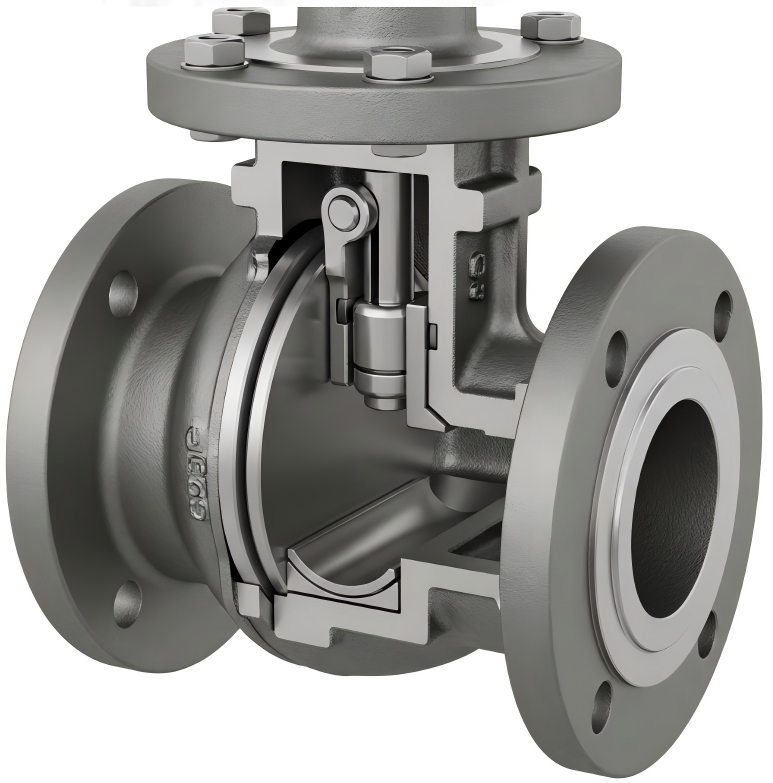
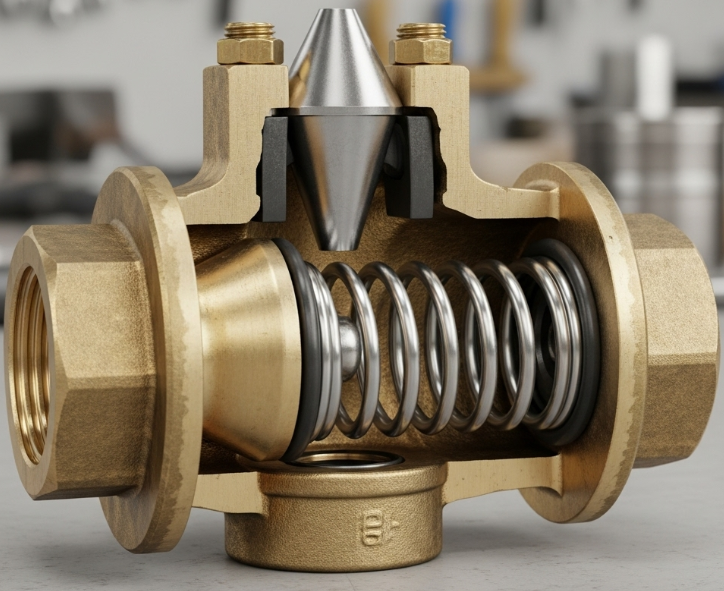
Working Principle: A spring check valve is a lift or swing check valve with an additional spring to assist in closing the disc. When the positive pressure of the fluid exceeds the spring force, the disc is pushed open. When the fluid pressure decreases or reverse flow occurs, the spring force quickly presses the disc back into the seat, preventing any return.
Working Principle: A spring check valve is a lift or swing check valve with an additional spring to assist in closing the disc. When the positive pressure of the fluid exceeds the spring force, the disc is pushed open. When the fluid pressure decreases or reverse flow occurs, the spring force quickly presses the disc back into the seat, preventing any return.
Technical Features and Applications:
Fast Response: Spring-assisted closing provides quicker response and effectively prevents water hammer.
Flexible Installation: Can be installed vertically or horizontally, making it particularly suitable for applications requiring rapid closing.
Applications: Commonly used in small pipelines, compressed air systems, and vacuum systems.
Disadvantages: The presence of the spring creates additional fluid resistance, and spring fatigue may affect check performance.
Fast Response: Spring-assisted closing provides quicker response and effectively prevents water hammer.
Flexible Installation: Can be installed vertically or horizontally, making it particularly suitable for applications requiring rapid closing.
Applications: Commonly used in small pipelines, compressed air systems, and vacuum systems.
Disadvantages: The presence of the spring creates additional fluid resistance, and spring fatigue may affect check performance.
These check valves, each with its own unique characteristics, play an indispensable role in piping systems. Correct selection and application are key to ensuring safe and efficient industrial production.
In addition, if you are interested in the pump, please click the link below:https://www.pumpwisewitness.com/