Comparison of Swing Check Valves and Non-Return Valves

2025-12-19
Comparison of Swing Check Valves and Non-Return Valves
Comparison of Swing Check Valve and Non-Return Valves
- Q1: What is a Check Valve?
- Q2: What is a Non Return Valve?
- Q3: What the Design of Swing Check Valve?
- Q4: Have Other Essential Non-Return Valve Designs?
- SJ and the Global Valve Landscape
- CONCLUSION
A Non-Return Valve (NRV) is the broad category for any valve preventing backflow, while a Swing Check Valve is a specific type of NRV that uses a hinged disc (like a flap) to swing open and closed, ideal for large pipes and steady flows but can cause water hammer; other NRVs (like spring-loaded or lift checks) use internal discs or balls for quicker, quieter closing in demanding or smaller systems, offering better control but potentially higher pressure drop. Essentially, all swing checks are NRVs, but not all NRVs are swing checks, with the choice depending on pressure, flow rate, and application needs.
Q1: What is a Check Valve?
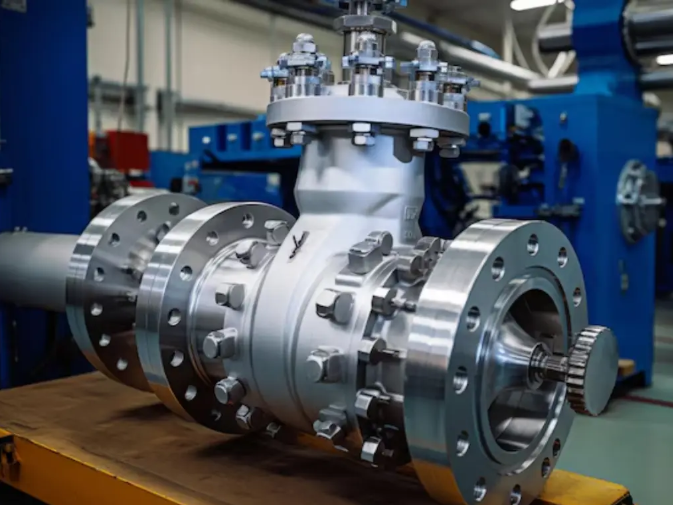
At its core, a check valve functions as an automatic guardian within a pipeline. Unlike manually operated valves, it responds autonomously to the flow of the medium it controls. Its operation is based on fluid pressure differential: it opens when upstream pressure sufficiently exceeds downstream pressure, allowing unimpeded flow, and closes automatically when flow stops or reverses, thereby preventing backflow. This self-actuating mechanism is essential for preventing equipment damage, process contamination, and other operational hazards.
The term "non-return valve" serves as a broad functional category for all valves designed to provide this one-way flow control. It describes the purpose rather than a specific design. In this sense, a swing check valve is one type of non-return valve—much as a square is a specific type of rectangle. Thus, while every swing check valve is a non-return valve, not every non-return valve is a swing check valve. This distinction is key for proper valve selection and for understanding the range of designs available.
Q2: What is a Non Return Valve?
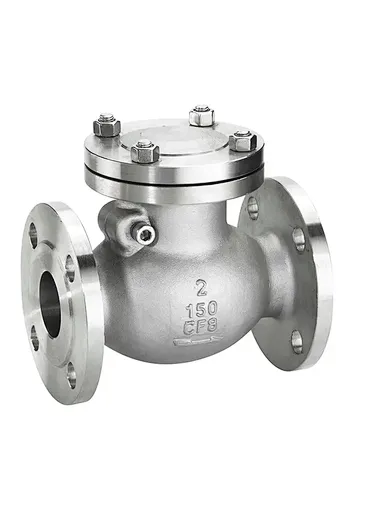
Non-return valves (NRVs) function similarly to check valves, as they are engineered to facilitate unidirectional fluid flow while strictly preventing backflow. While sharing a fundamental purpose with general check valves, NRVs are specifically deployed in critical environments—such as water treatment, sewage management, and complex process systems—where maintaining flow integrity is paramount. The operational mechanism is governed by differential pressure: the valve actuates when the inlet pressure exceeds the outlet pressure, and conversely, forms a secure seal the moment a pressure reversal occurs. Known for their robust backflow mitigation, NRVs are typically constructed from high-grade materials like stainless steel to accommodate diverse media, including water, oils, and gases. Their internal architecture is often customized to meet the specific hydraulic demands of pipelines and pumping stations.
Q3: What the Design of Swing Check Valve?
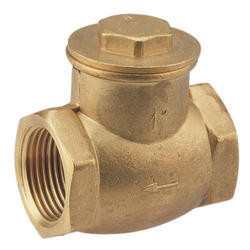
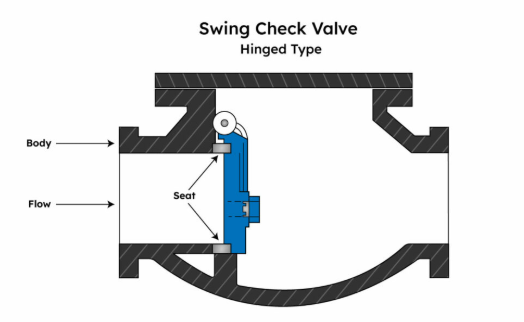
Swing check valves are designed with a focus on simplicity and efficiency, particularly where minimizing pressure drop is essential. Their construction centers on a hinged disc—often called a clapper—that pivots on a hinge pin located above or across the flow passage.
Design and Components
The main parts include the valve body, which houses the assembly and contains the inlet and outlet connections. The disc (or clapper) is the moving component that swings open to allow forward flow and closes to block reverse flow. It is connected to the body via a hinge pin or shaft, enabling rotational movement. The seat is the sealing surface inside the valve body against which the disc closes to prevent backflow.
Principle of Operation
Operation is straightforward: when fluid enters with sufficient pressure, it forces the disc to swing open, providing a largely unobstructed flow path. The disc remains open as long as forward flow continues. Once flow stops or reverses, gravity and backpressure cause the disc to swing shut against the seat, sealing the valve.
Key Characteristics and Advantages
A major advantage is the low pressure drop. When open, the disc creates an almost full-bore opening, reducing flow restriction and energy loss—making these valves suitable for large-diameter and high-pressure systems. They are versatile, handling water, gas, oil, and other non-aggressive media. The simple design also allows for easier installation and maintenance, while the smooth flow path lowers turbulence.
Limitations
A notable drawback is susceptibility to water hammer (or valve slam), which occurs during sudden flow stoppage or reversal, causing the disc to slam shut. This can create noise, vibration, and potential damage to the valve and piping, especially in long pipelines or systems with rapid flow changes. Swing check valves may also seal less effectively under low backpressure or if debris interferes with the seat. Additionally, pulsating flows can lead to accelerated wear due to frequent opening and closing.
Q4: Have Other Essential Non-Return Valve Designs?
While swing check valves are a prevalent solution, the broader family of non-return valves encompasses various specialized designs, each tailored to overcome specific operational challenges and suit distinct applications.
Lift Check Valves
These valves operate on a vertical principle. Instead of swinging, a disc or piston lifts perpendicularly off its seat to permit forward flow and reseats under gravity and backpressure. Common configurations include:
-
Ball Check Valves: Utilize a spherical ball that rolls away from the seat with flow.
-
Piston Check Valves: Employ a guided piston-like disc within a cylinder.
-
Nozzle Check Valves: Feature a streamlined body for efficient flow and fast response.
Lift check valves are often selected for high-pressure services and where a positive, tight seal is critical.
Ball Check Valves
A subtype of lift check valves, these use a free-moving spherical ball as the closing element. Forward pressure lifts the ball from its seat; reversal forces it back to seal the orifice. Their simple, robust design makes them cost-effective and suitable for viscous fluids or slurries, as the ball's movement can help clear particulates. They are frequently used in pump discharge lines and smaller pipelines.
Wafer Check Valves
Designed for compact installation between pipe flanges, wafer check valves save space and weight. Key variants include:
-
Single Plate: A central-hinged disc that opens with flow.
-
Dual Plate (Double Disc): Two spring-assisted, half-moon plates that open and close rapidly.
-
Tilting Disc: A disc pivoting on an off-center pin.
While economical and space-saving, they may introduce a higher pressure drop compared to full-bore designs.
Silent Check Valves (Spring-Assisted)
Engineered to prevent water hammer, these valves incorporate a spring mechanism that ensures rapid, controlled closure before reverse flow develops. They typically feature an axially moving disc or poppet within a streamlined body. The spring-assisted action minimizes pressure surges and noise, making them ideal for installations following pumps and in systems with frequent flow reversals or pressure fluctuations.
SJ and the Global Valve Landscape
In the global valve manufacturing industry, companies such as SJ VALVE play a significant role by supplying a comprehensive range of valve solutions, including various types of check valves. The reference to Athena Valve illustrates the competitive and diverse nature of this worldwide market.
Manufacturers like SJ VALVE typically offer a spectrum of check valve designs—from standard swing check valves to more specialized types—to meet diverse industrial requirements. Their focus, like that of many global players, is on delivering reliable, cost-effective solutions that comply with international quality standards.
When selecting a valve supplier, it is crucial to evaluate factors such as product certifications, material quality, manufacturing processes, and after-sales support. The global market features a blend of well-established international brands and emerging manufacturers, all contributing to a wide and varied selection of check valve options.
CONCLUSION
Ultimately, selecting the right check valve requires a thorough analysis of the specific application. Key factors include operating conditions, fluid properties, allowable pressure drop, water hammer risk, sealing requirements, and budget. Equally important are proper installation and proactive maintenance, which are critical for ensuring long-term reliability and performance. By weighing all these considerations, engineers can confidently choose the optimal unidirectional guardian for their fluid systems, ensuring both safety and operational integrity.