Explore Cryogenic Valve
2025-01-10
Explore Cryogenic Valve
Explore Cryogenic Valve
In the field of low temperature, the temperature plummets to an unimaginable low degree, and the role of low temperature valves cannot be underestimated. These specialized valves offer a range of advantages to ensure safe and efficient handling of cryogenic fluids, opening up new possibilities for industries such as healthcare, aerospace and energy. Valves play a key role in controlling the flow of these ultra-low temperature substances, ensuring their safe handling, effective use and the integrity of the entire cryogenic system.
Cryogenic Valve Definition?
A cryogenic valve is a specialized valve designed to operate reliably in extremely cold environments, managing the flow of cryogenic fluids. These fluids can include liquid hydrogen, oxygen, helium, nitrogen, and liquefied natural gas (LNG). While the precise definition of "low temperature" can vary, these valves are typically used for applications operating at -40°F (-40°C) or colder, with some designed for temperatures as low as -320°F (-196°C).
Operating Principle
Cryogenic valves are engineered to maintain a constant, secure seal in their naturally closed position, effectively containing cryogenic gases and other media. They are specifically designed to respond to high pressure; as pressure builds, it forces the valve open, allowing for a smooth flow. This flow continues until the pressure drops, at which point the valve automatically closes. A specialized, airtight metal seat then creates a bubble-tight seal to prevent any leakage.
Type of Cryogenic Valve
-
Cryogenic globe valve:The globe valve is sealed with a strong stem to contain harmful refrigerants. Linear plug motion also provides precise flow control. Most use metal seals, but soft options are suitable for low-purity services.
-
Cryogenic ball valve
-
Lightweight ball valves with drilled balls suitable for low temperature applications. Its compact size, low torque drive and forward closure help manage piping and small equipment lines. Internal safety valves prevent pressure retention.
-
Cryogenic butterfly valve:Cryogenic butterfly valves provide high flow rates and lower weight using elastic seat materials in the flow tray. They are simple to operate and suitable for mass delivery through large pipes to transport dewar bottles.
-
Cryogenic safety valve:Safety valves play a key role in managing the refrigerant sealing infrastructure. When insulation fails or the pipe contents heat up rapidly, they allow the expanded evaporated gas to be vented at safe levels. This prevents cracking.
-
Cryogenic check valve:The cryogenic check valve plays an important backup role, ensuring that the refrigerant flows in only one direction. This prevents dangerous migration to vulnerable areas in the event of a failure of the main valve. Their autonomous operation provides an additional layer of security control.
-
Cryogenic control valve:Control valves with actuators allow remote regulation of the flow of refrigerant in batches or continuous supply to process equipment. Their positioning sensitivity prevents fluid hammering and optimizes delivery.
Specifications and standards for cryogenic valve
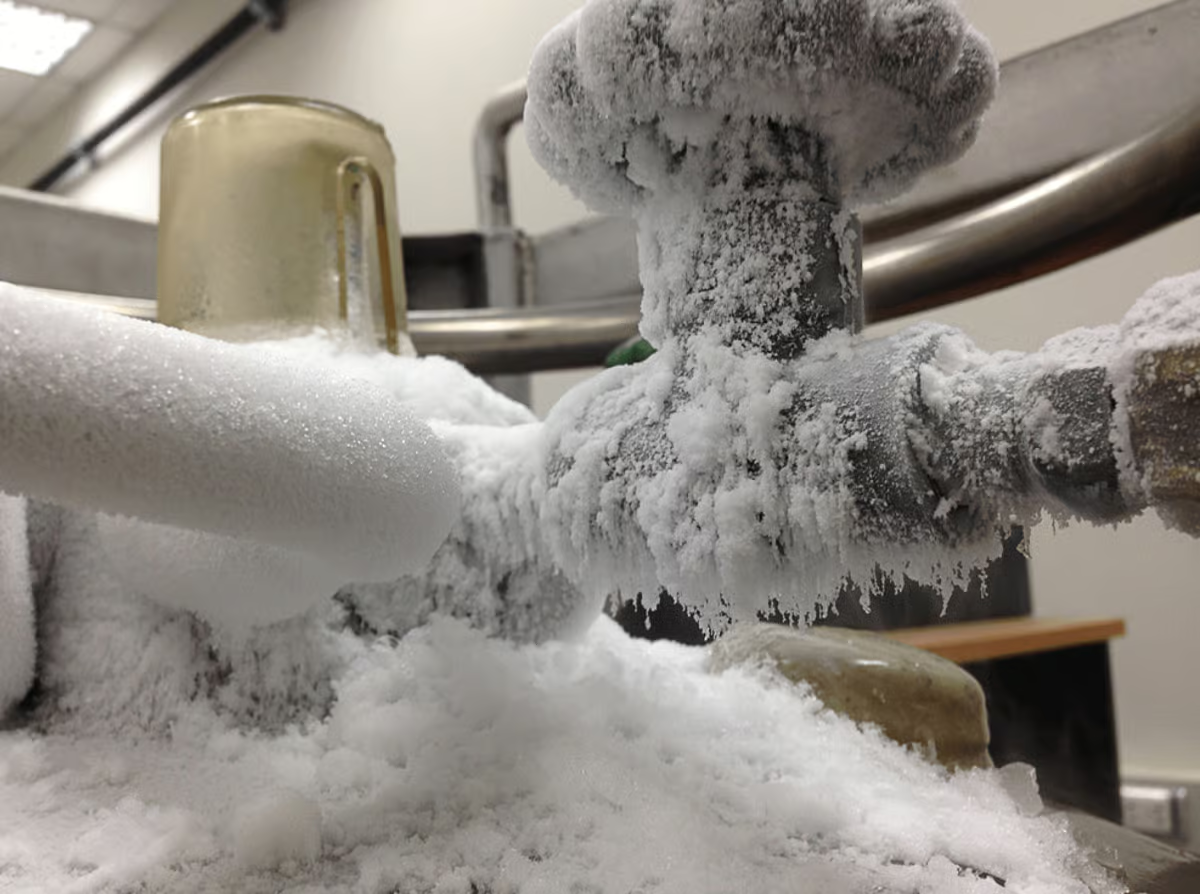
Any fluid that leaks into the atmosphere through gaskets or gland seals can degrade the performance of valves and associated equipment. This leak at the stem can cause localized icing, which can jam the valve operating mechanism. This is why valves for low-temperature applications must be designed in accordance with API 598 for high performance and true zero leakage.