Gate Valve vs Ball Valve - How They Work
2024-04-10
Gate Valve vs Ball Valve - How They Work
Gate Valve vs Ball Valve - How They Work
Gate valves and ball valves are the most commonly used flow control valves on the market. They are commonly used to control the flow of liquids and gases. Although these two types of valves are used in similar environments, there are some important differences between them. We discussed the differences between gate valves and ball valves and how to choose between them. Operational differences
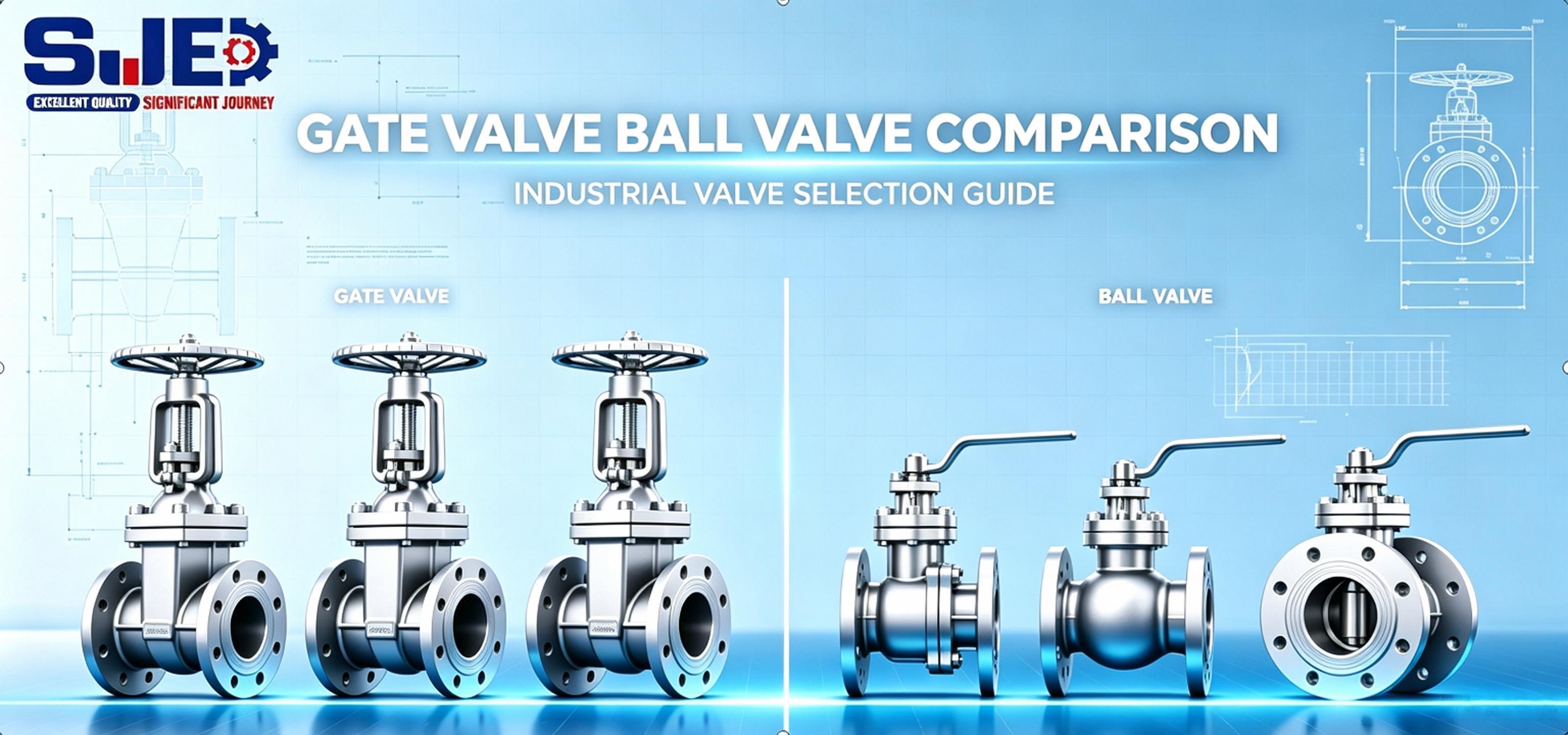
Ball valves use a rotating ball with a hole and stem, as shown in Figure 2. When the handle attached to the valve stem is turned, it rotates the ball to open or close the valve. This type of valve is also called a quarter-turn valve because the handle only needs to be rotated 90° (a quarter-turn) to allow or block the flow of the medium. When the handle is parallel to the pipe, the valve opens, and when the handle is perpendicular to the pipe, the valve closes. For a more in-depth analysis of ball valves, check out our in-depth analysis
Operational Differences
Ball valves use a rotating ball with a hole and stem, as shown in Figure 2. When the handle attached to the valve stem is turned, it rotates the ball to open or close the valve. This type of valve is also called a quarter-turn valve because the handle only needs to be rotated 90° (a quarter-turn) to allow or block the flow of the medium. When the handle is parallel to the pipe, the valve opens, and when the handle is perpendicular to the pipe, the valve closes. A more in-depth analysis of ball valves
Gate valves use gates to control the flow of media. The gate is a solid disc structure connected to the valve stem, as shown in Figure 3. Lift the gate to open the valve and return it to its original position to close the valve. This type of valve has a bonnet that controls the position of the gate when rotated. This type of valve is also called a multi-turn valve because it requires more than 360° of rotation to fully open or close the valve. A more in-depth analysis of gate valves
Selection Criteria
Before choosing between ball valves and gate valves, the following criteria can be considered:
-
Ports: Gate valves have 2 ports, and ball valves can have more than 2 ports.
-
Flow: Gate valves can provide greater flow than ball valves because gate valves typically offer larger diameters.
-
Opening and Closing Speed: Ball valves are better suited for applications requiring faster opening and closing speeds, or in emergency situations due to its quarter switch operation. Gate valves require more than 360° rotation, making them run slower than ball valves.
-
Sealing: Compared to gate valves, ball valves provide a tight seal with complete shutoff characteristics. Therefore, ball valves are more suitable for applications such as natural gas that require long-term sealing.
-
Pressure: Both ball and gate valves are suitable for low pressure applications. However, for high pressure applications, gate valves are more suitable. This is due to the fact that rapid opening/closing of the ball valve can cause water hammer.
-
Cost: Ball valves of the same specifications are usually more expensive than gate valves. However, ball valves are generally more durable and require less maintenance than gate valves. Therefore, ball valves may be more economical in the long run.
-
Connection: Choosing the connection to the pipe is an important factor for both valves.
Common Aplications
Ball and gate valves are commonly used in residential and industrial applications.