In-depth Analysis of Gate Valves The Core of Industrial Fluid Control
In-depth Analysis of Gate Valves The Core of Industrial Fluid Control
In-depth Analysis of Gate Valves: The Core of Industrial Fluid Control
In modern industrial pipeline systems, valves are not merely "switches" for pipelines, but also the "heart" ensuring production safety and efficiency. Among the many valve types, gate valves, with their unique opening and closing structure and excellent fluid control performance, have long held a dominant position in industrial pipeline networks. Whether in petrochemicals, power transmission, or municipal water supply and drainage, gate valves remain an indispensable core component in fluid control. This article will provide you with an in-depth understanding of the core advantages of gate valves, helping you make the most accurate decisions in project selection.
- Q1: What is the working principle of a gate valve, and how does it ensure extremely high sealing performance?
- Q2: What are the significant advantages of gate valves compared to other valves in practical engineering applications?
- Q3: How to choose the most suitable gate valve type for different industrial conditions?
- Q4: How to ensure the service life of gate valves under long-term high-load operation?
- Conclusion
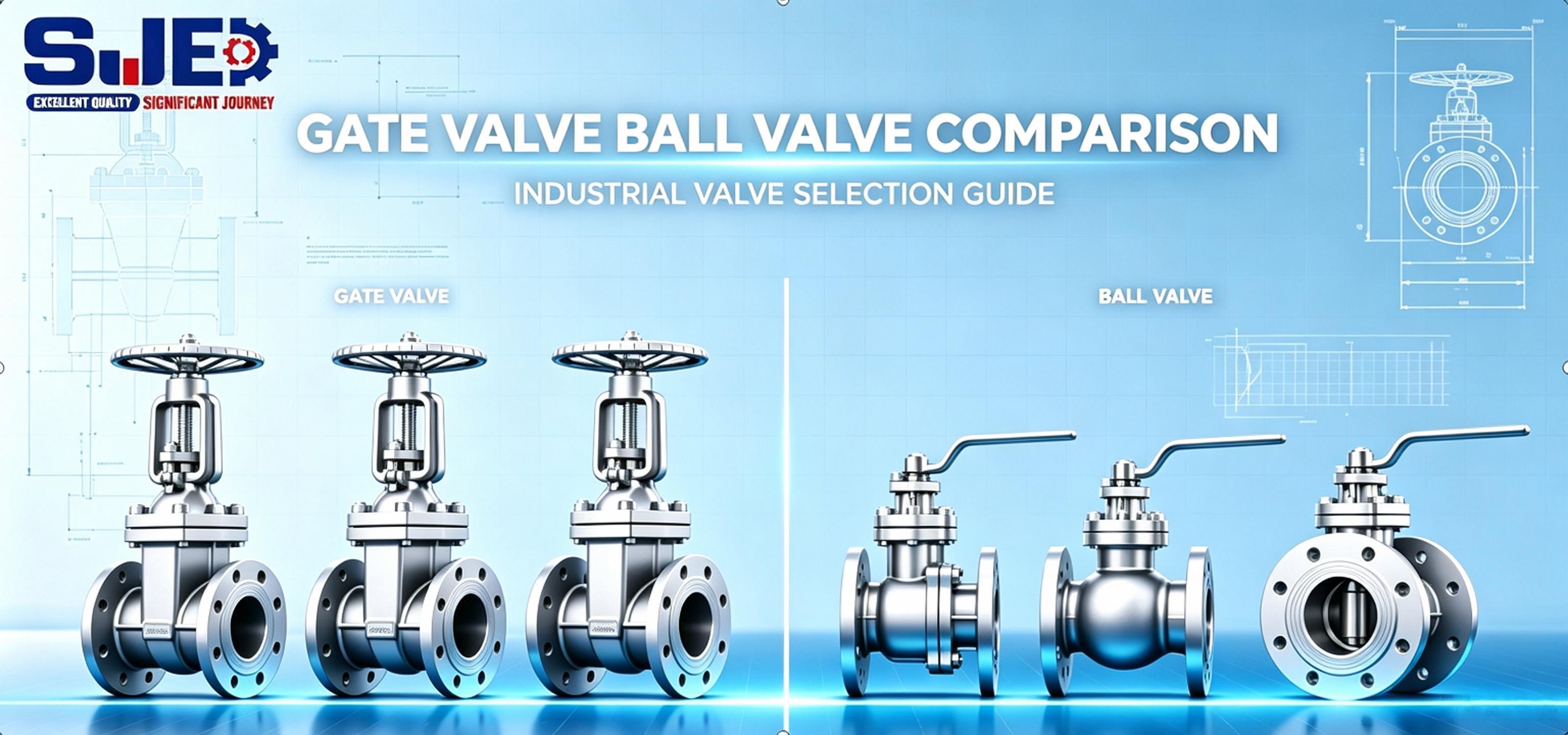
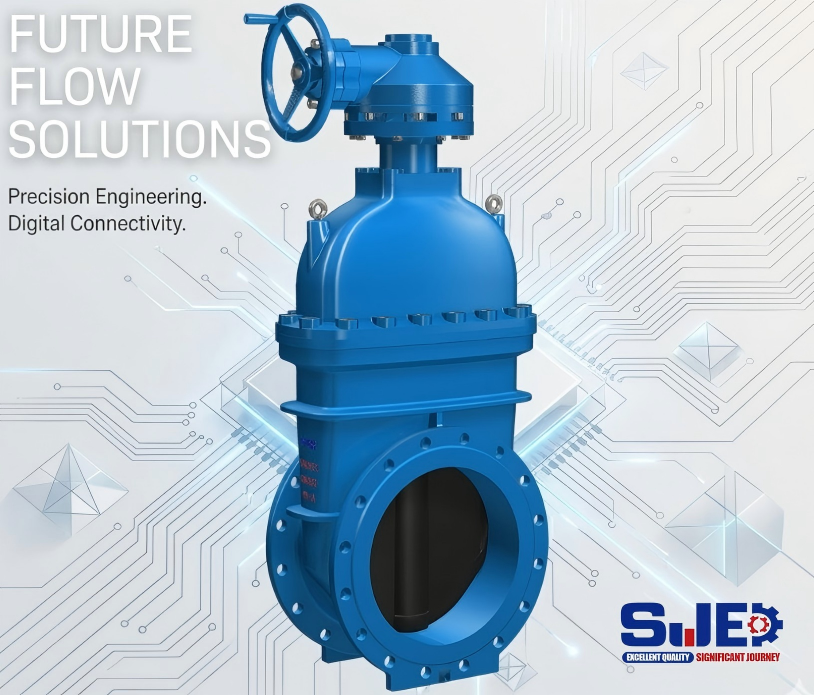
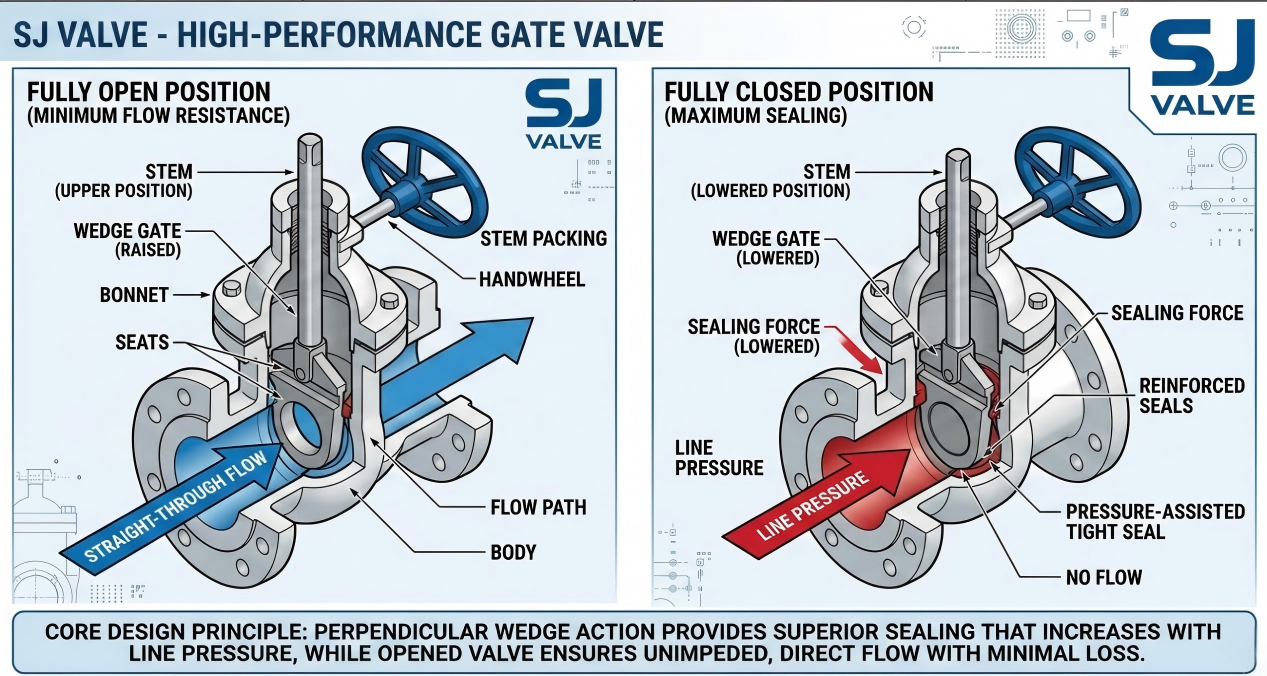
The core of a gate valve lies in the movement of its gate. Unlike the rising and falling sealing of a globe valve, the gate of a gate valve moves up and down perpendicular to the direction of fluid flow. When the valve is fully open, the gate completely moves out of the flow channel, forming a nearly straight pipe, minimizing the flow resistance of the medium. The unique aspect of this structure is that when the valve is closed, pressure forces the gate to fit tightly against the valve seat, achieving a "tighter under pressure" sealing effect.
SJ VALVE Summary: To maximize this physical advantage, SJ VALVE performs ultra-high precision grinding on the sealing surfaces during the production process, ensuring that every gate valve undergoes rigorous pressure testing before leaving the factory, achieving a true "zero leakage" standard.
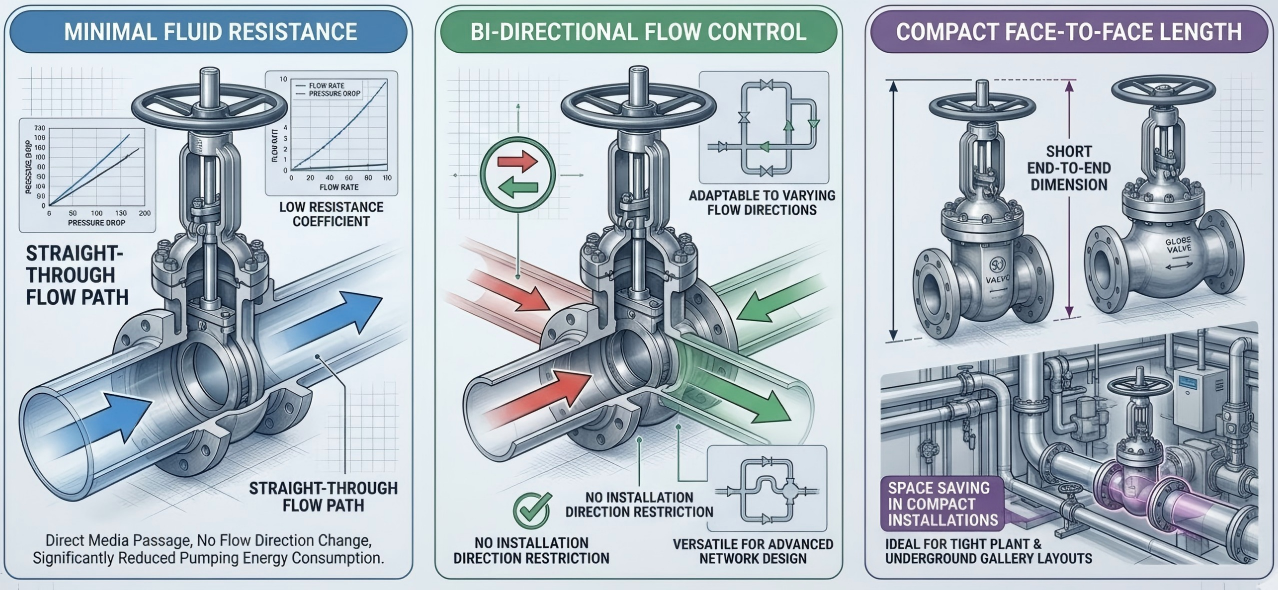
When selecting valves, we typically prioritize fluid resistance and installation space. The advantages of gate valves are mainly reflected in the following three aspects:
- Extremely low fluid resistance: The internal medium passage of a gate valve is straight, and the medium flow direction does not change. Therefore, the flow resistance coefficient is extremely low, significantly reducing the pumping energy consumption of the pipeline system.
- Bidirectional fluid control: Gate valves generally do not restrict the medium flow direction, making them highly adaptable to pipe networks where the medium flow direction may change.
- Short structural length: Compared to a gate valve of the same diameter, a gate valve occupies less space in the pipeline, which is especially important for installations in compact factory buildings or underground pipe racks.
SJ VALVE fully considers the energy efficiency and cost of long-distance transportation. Our gate valve design optimizes the internal cavity of the flow channel, further reducing flow resistance while ensuring strength, providing global customers with more energy-efficient fluid control solutions.
Rising Stem Gate Valve: The valve stem thread is exposed, making it easy to observe the opening degree. Suitable for environments with low corrosiveness or outdoor environments.
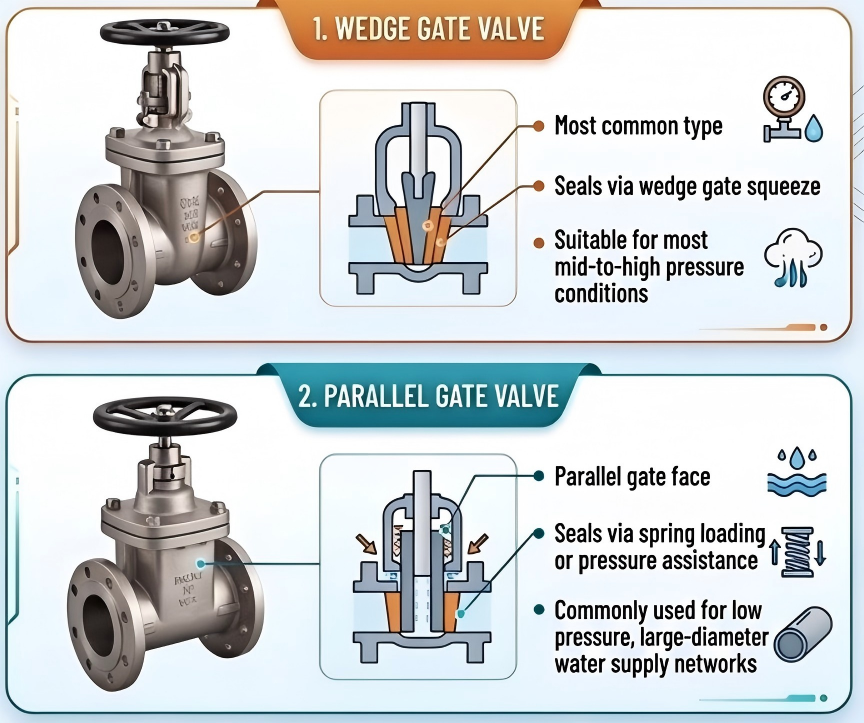
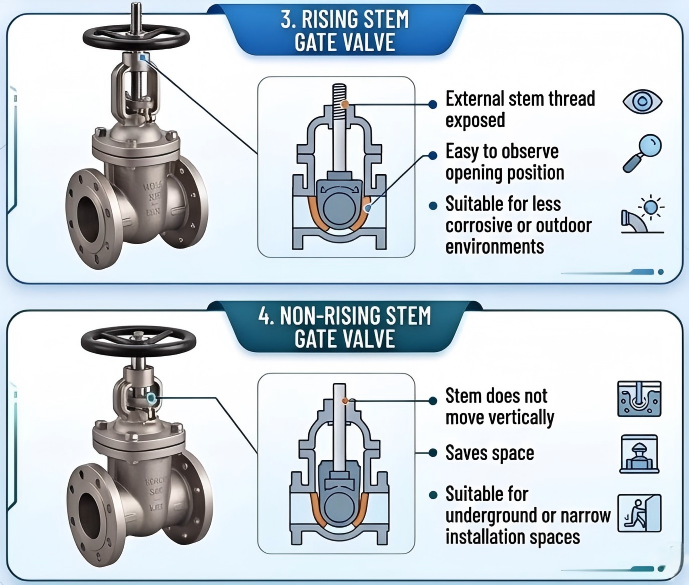
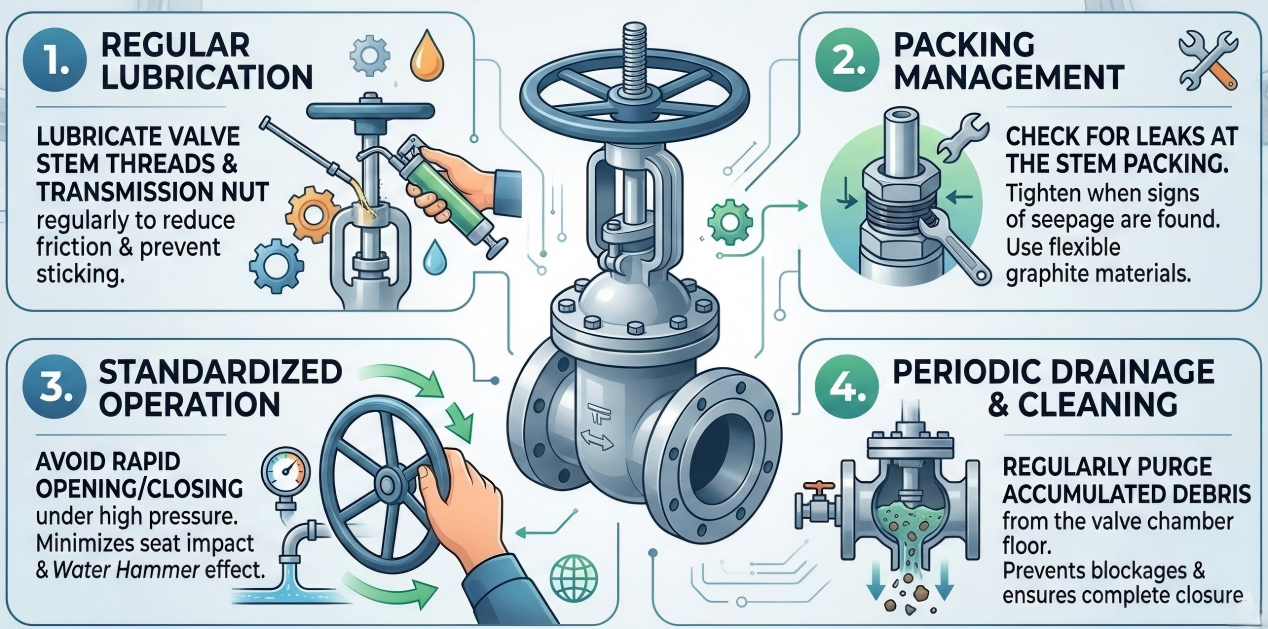
The core of gate valve maintenance lies in "preventive maintenance." Here are key recommendations to ensure long-term operation:
- Regular Lubrication: Regularly check the lubrication of the valve stem threads and drive nut to reduce friction and wear, and prevent jamming.
- Packing Management: The valve stem packing is a high-risk area for leakage. It is recommended to use high-performance materials such as flexible graphite and regularly check for signs of loosening. Tighten the packing immediately if leakage is found.
- Opening and Closing Procedures: Under high pressure, avoid rapid opening and closing to reduce the impact of the medium on the valve seat (i.e., avoid water hammer effect).
- Regular Drainage: If the conveyed medium contains impurities, regularly clean the bottom of the valve cavity to prevent hard objects from jamming the gate, causing incomplete closure.
SJ VALVE not only provides products, but also provides full life-cycle quality assurance. Our manufacturing process covers the entire process from raw material inspection to finished product pressure testing, aiming to reduce customers' post-maintenance costs through rigorous "factory pre-inspection."
https://www.sjvalvolesrl.com/