Practical Guide for Motor Maintenance
Practical Guide for Motor Maintenance
Practical Guide for Motor Maintenance
In modern industry and daily life, the application of motors is ubiquitous. From household appliances to industrial equipment, motors play an important role as key power sources. However, motors are inevitably prone to malfunctions after prolonged use, which often leads to unnecessary downtime and maintenance costs.

Understand the basic knowledge of motors
Before carrying out motor repairs, it is necessary to first master some basic motor knowledge. Electric motors are mainly divided into two categories: AC motors and DC motors. AC motors are divided into induction motors and synchronous motors, while DC motors are divided into brushless and brushed types. Understanding these basic classifications can help to prescribe targeted solutions in subsequent repairs.
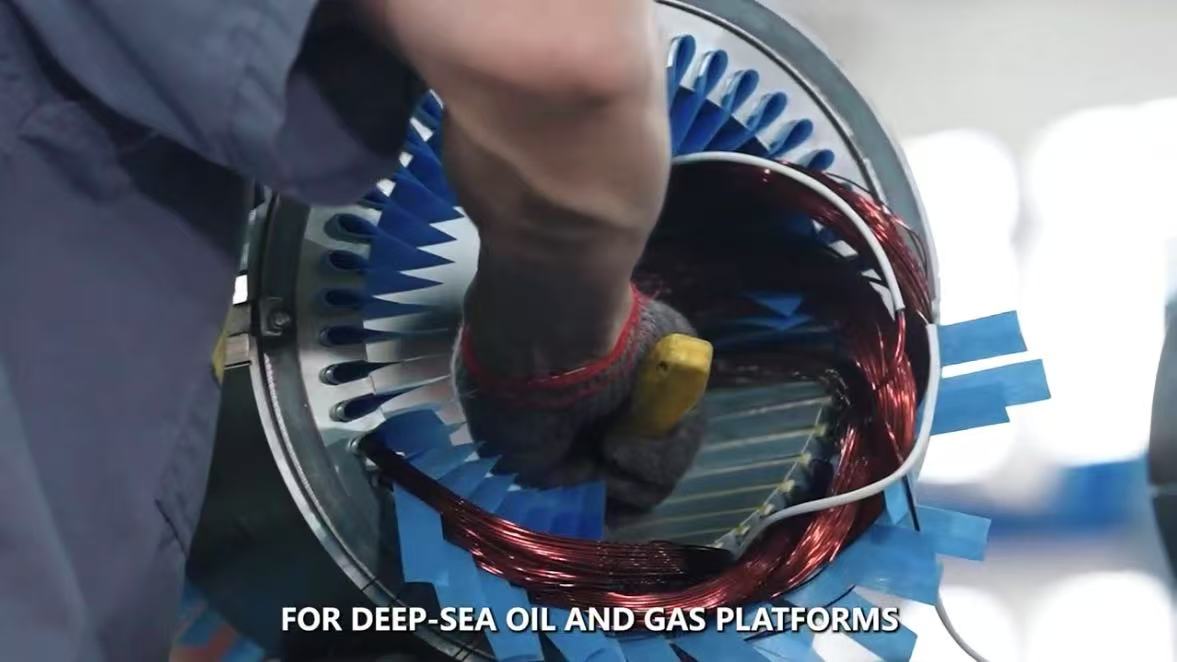
In addition, the structure of a motor usually consists of a stator, rotor, winding, and other auxiliary components. The stator is the stationary part of the motor, the rotor is the rotatable part, and the winding is the coil that generates a magnetic field through current. When current passes through the winding, electromagnetic force is generated to drive the rotor to rotate.
Common causes of motor failures
To repair a motor, the first step is to learn how to identify common faults. The possible faults of the motor mainly include the following:
1. Not starting: Although the motor is powered on, it does not rotate. The reason may be power failure, switch damage, or internal malfunction.
2. Noise and vibration: A normally functioning motor should be smooth and noiseless. If abnormal noise or vibration occurs, it may be due to bearing damage, rotor imbalance, or foreign object interference.
3. Excessive heat generation: The motor generates a certain amount of heat during normal operation, but if the temperature is too high, it may be due to excessive current, poor ventilation, or winding short circuits.
4. Power reduction: The output power of the motor decreases, which may be related to heavy load, unstable power supply, or wear of internal components.

Steps for motor repair
The repair steps may vary depending on the different faults of the motor. Here are some general motor repair steps that even beginners with zero foundation can grasp to a certain extent.
1. Power off and check
Before carrying out any repairs, ensure that the motor is completely powered off. This is the basic step to ensure safety. You can use a multimeter to check if the power supply is working properly and ensure that there are no issues with the current supply.