Pressure testing of ball valves
Pressure testing of ball valves
What are floating ball valves and trunnion mounted ball valves?
-
The floating ball valve has a ball inside the valve body. The ball is connected to the valve stem, which is operated by a handle. The ball is connected to the lever that controls the opening and closing of the valve. Floating ball valves are widely used in industries such as oil and gas, chemicals, and water treatment.
Floating ball valves are often used in applications where high precision is required. The ball in a floating ball valve can move up and down freely, creating a tight seal. This makes floating ball valves ideal for applications where a small amount of leakage is tolerated.
Floating ball valves are available in a variety of materials, such as brass, stainless steel, and plastic. The material selected depends on the purpose of the valve. For example, plastic floating ball valves are best suited for acidic environments, while brass ball valves are best suited for high temperature applications.
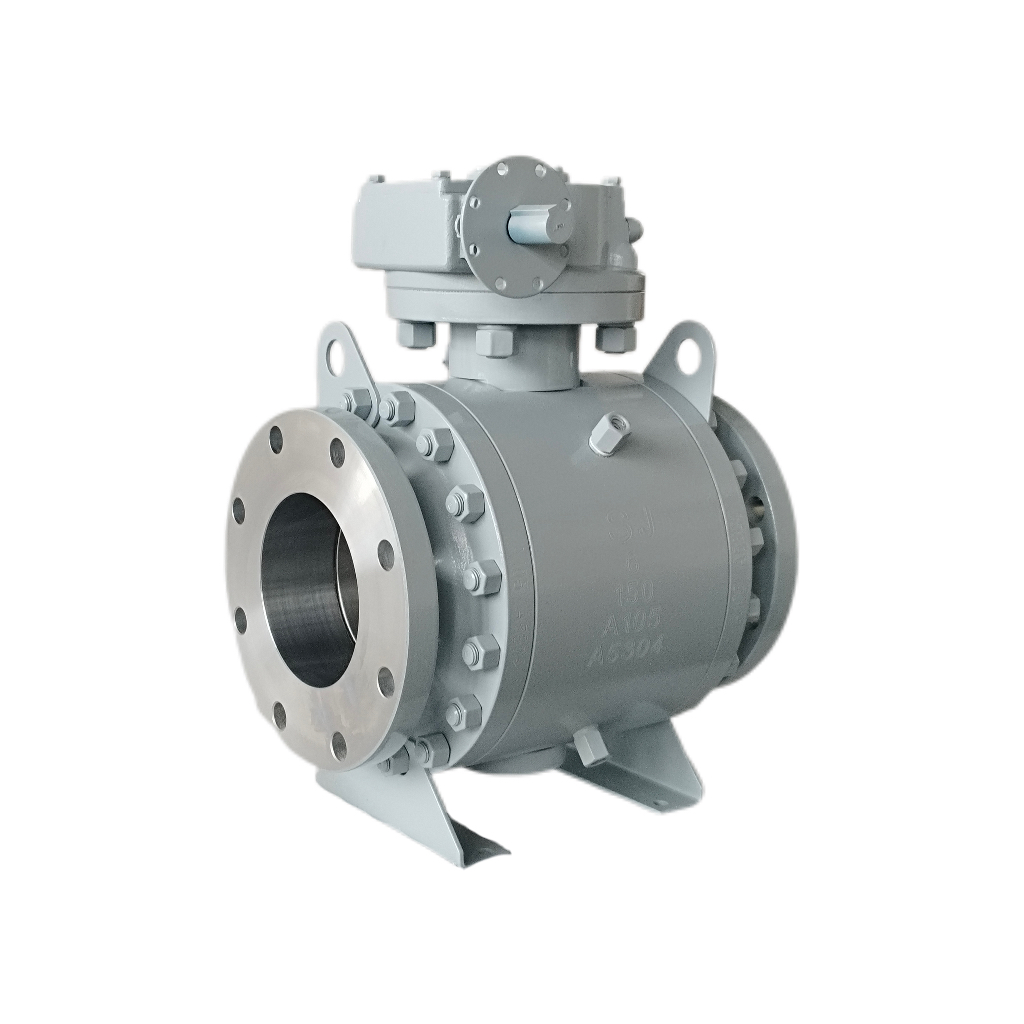
- A trunnion mounted ball valve is a valve that uses two trunnions or struts to hold the ball. This design allows the ball to rotate in place, thereby opening or closing the valve. This type of ball valve is a specialized valve that is used in a wide variety of industries. These valves are designed to provide superior performance in critical applications. Trunnion mounted ball valves are available in a variety of sizes and pressure ratings to meet the needs of different industries.
- As a sophisticated fluid control device, the working principle of the floating ball valve is to cleverly use a ball floating on the liquid surface to accurately control the flow of liquid. This ball is connected to a carefully designed lever, and the valve can be easily opened and closed by operating the lever. When the valve is in the open state, the ball floats up, creating a flow channel for the liquid; when the valve is closed, the ball slowly sinks, strictly blocking the flow path of the liquid.
-
The trunnion-mounted ball valve is an industrial tool specially designed to cope with high pressure and heavy load conditions. Its design is well considered, and it provides a variety of size specifications and configuration options, which can seamlessly adapt to the differentiated needs of different industries.
From a structural perspective, the trunnion ball valve adopts an advanced two-piece valve body design, with a sphere with a center hole as the internal core. The sphere is precisely mounted on the trunnion, which plays a vital role as a key bracket to support the sphere to achieve stable rotation. The trunnion is closely connected to the valve body and is firmly fixed by high-precision bearings to ensure stable and reliable operation of the entire valve.
When the valve is in the open state, the hole in the center of the ball is precisely aligned with the inlet and outlet of the valve, forming a smooth channel, allowing the fluid to flow through the valve without hindrance. When the valve is switched to the closed position, the ball rotates, causing the originally aligned hole and outlet to no longer be consistent, thereby effectively blocking the flow path of the fluid. With its unique design and excellent performance, the trunnion ball valve is particularly suitable for applications that have extremely strict control requirements on leakage risks and must minimize or even eliminate the possibility of leakage.
Advantages and disadvantages of floating ball valve and trunnion ball valve:
Floating ball valves are widely used in industrial and commercial fields. This type of valve has a unique design that allows the ball to be suspended in the fluid, thereby achieving an efficient sealing effect and effectively reducing the force during operation. As one of the mainstream valve types on the current market, fixed ball valves have performed well in many industries and scenarios such as oil and gas extraction, water supply and drainage, and sewage treatment. Both types of ball valves have their own advantages and disadvantages. Whether they are suitable for enterprises depends on specific needs. You can weigh the pros and cons and make a choice based on their characteristics.
Advantages of floating ball valve:
- They are user-friendly in operation
-
They are compatible with a wide range of fluids
-
They entail low maintenance expenses
-
They are well-suited for installation in confined spaces
Disadvantages of floating ball valve:
- They are not appropriate for high-pressure scenarios
-
Can be difficult to repair
-
Certain liquids may cause the ball to become adhered