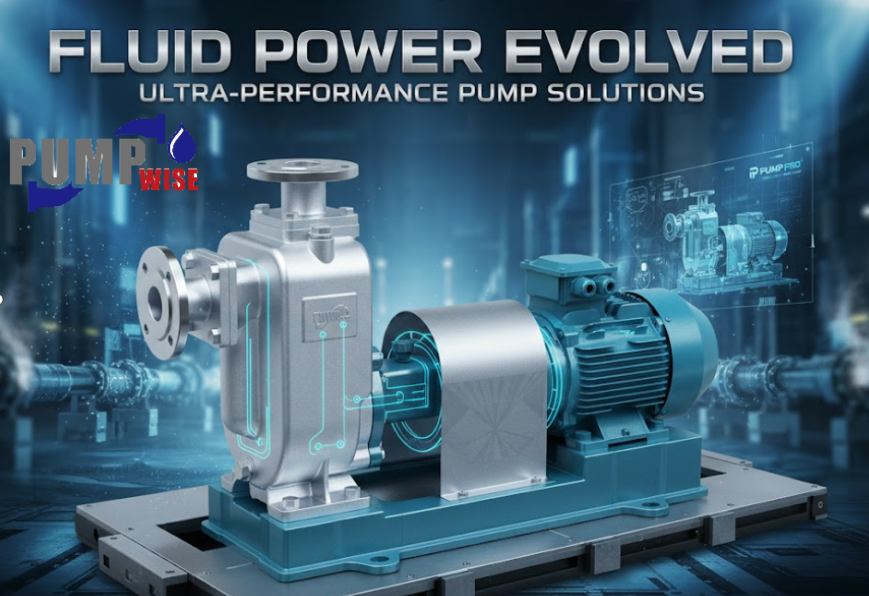
PumpWise ZW Series Split-Type Stainless Steel Self-Priming Sewage Pump
2026-02-04
PumpWise ZW Series Split-Type Stainless Steel Self-Priming Sewage Pump
PumpWise ZW Series Split-Type Stainless Steel Self-Priming Sewage Pump
Q1: What are the unique structural design features of the PumpWise ZW series, and how does it solve the clogging problem?
Q2: Why does the ZW series emphasize the combination of "split-type" design and "stainless steel" material?
Q3: What application scenarios does the ZW series self-priming sewage pump mainly serve in actual production?
Q2: Why does the ZW series emphasize the combination of "split-type" design and "stainless steel" material?
Q3: What application scenarios does the ZW series self-priming sewage pump mainly serve in actual production?
In the fields of industrial wastewater treatment and municipal sewage discharge, the complexity of the medium is often the "killer" of equipment lifespan. To cope with extreme working conditions involving solid particles, long fibers, and highly corrosive liquids, PumpWise, a leading fluid equipment manufacturer, has officially launched the new generation ZW series split-type stainless steel self-priming sewage pump. This series of products, thanks to its dual technological breakthroughs in "self-priming and sewage discharge," achieves smooth passage of large-volume impurities without the need for a bottom valve, providing global industrial customers with a more efficient and durable pumping solution.
Q1: What are the unique structural design features of the PumpWise ZW series, and how does it solve the clogging problem?
Traditional self-priming pumps often sacrifice flow channel space to achieve higher self-priming capabilities, resulting in weaker sewage discharge capacity; while traditional sewage pumps are mostly submersible, making maintenance inconvenient. The ZW series, through innovative physical structure design, balances these two conflicting aspects.
Traditional self-priming pumps often sacrifice flow channel space to achieve higher self-priming capabilities, resulting in weaker sewage discharge capacity; while traditional sewage pumps are mostly submersible, making maintenance inconvenient. The ZW series, through innovative physical structure design, balances these two conflicting aspects.

Pump WISE Advantage:
• Axial Recirculation External Mixing Structure: The ZW series adopts a unique pump body flow channel design. During startup, a strong gas-liquid mixture circulation is formed inside the pump body. Through the precise cooperation of the self-priming chamber and the return hole, the air in the inlet pipeline is quickly discharged. This means it has a powerful suction lift (up to 5 meters or more) like a clean water pump, but with an extremely spacious internal cavity.
• Large Channel Non-Clogging Impeller: Unlike ordinary closed impellers, the ZW series uses a specially designed semi-open or open large-channel design. This design creates a "green channel" for solid impurities.
- Particle Passage: Can handle solids up to 60% of the outlet diameter.
- Fiber Anti-Winding: Can transport long fiber impurities up to 1.5 times the impeller diameter.
• Axial Recirculation External Mixing Structure: The ZW series adopts a unique pump body flow channel design. During startup, a strong gas-liquid mixture circulation is formed inside the pump body. Through the precise cooperation of the self-priming chamber and the return hole, the air in the inlet pipeline is quickly discharged. This means it has a powerful suction lift (up to 5 meters or more) like a clean water pump, but with an extremely spacious internal cavity.
• Large Channel Non-Clogging Impeller: Unlike ordinary closed impellers, the ZW series uses a specially designed semi-open or open large-channel design. This design creates a "green channel" for solid impurities.
- Particle Passage: Can handle solids up to 60% of the outlet diameter.
- Fiber Anti-Winding: Can transport long fiber impurities up to 1.5 times the impeller diameter.
• Automatic Induced Recirculation: During pump operation, the internal flow field automatically induces sediment to be discharged with the fluid, effectively preventing the accumulation of solids at the bottom of the pump cavity, truly achieving "no residue left behind."
Q2: Why does the ZW series emphasize the combination of "split-type" design and "stainless steel" material?
The "lifespan" of an industrial pump is determined by two dimensions: first, the ease of maintenance of the mechanical structure, and second, the chemical resistance of the material to the medium.
Pump WISE Answer:
This is a specialized optimization by PumpWise for harsh operating conditions. The split-type design achieves physical isolation between the motor and the pump head, greatly facilitating daily maintenance and repair on-site, allowing for quick handling without disassembling the piping. In terms of materials, we have selected high-grade stainless steel (304/316/316L), which allows the ZW series to operate across a very wide pH range. It can not only handle municipal wastewater but also handle highly corrosive industrial acid and alkaline waste liquids, ensuring the structural integrity and stable operation of the equipment in complex chemical environments.


Q3: What application scenarios does the ZW series self-priming sewage pump mainly serve in actual production?
The biggest advantage of self-priming pumps is "above-ground installation, drawing liquid from underground," avoiding the risk of long-term immersion in sewage.
Pump WISE Answer:
Thanks to its excellent environmental adaptability, the ZW series has been widely used in the following key areas:
Thanks to its excellent environmental adaptability, the ZW series has been widely used in the following key areas:
-Industrial wastewater treatment: Specifically used for conveying slurries and waste liquids containing impurities in printing and dyeing, papermaking, chemical, and pharmaceutical processes.
-Municipal and civil engineering: Suitable for urban sewage drainage, river and pond dredging, and the discharge of domestic and construction wastewater.
-Mining and metallurgy: Handling circulating water containing sediments, slag, and abrasive particles.
-Food and agriculture: Meeting the sanitary standards for food processing wastewater discharge, or used for conveying water containing sediment in agricultural irrigation.
-Municipal and civil engineering: Suitable for urban sewage drainage, river and pond dredging, and the discharge of domestic and construction wastewater.
-Mining and metallurgy: Handling circulating water containing sediments, slag, and abrasive particles.
-Food and agriculture: Meeting the sanitary standards for food processing wastewater discharge, or used for conveying water containing sediment in agricultural irrigation.