Single Cylinder vs Multi Cylinder Diesel Pumps How to Choose
2025-07-30
Single Cylinder vs Multi Cylinder Diesel Pumps How to Choose
Single-Cylinder vs. Multi-Cylinder Diesel Pumps: How to Choose
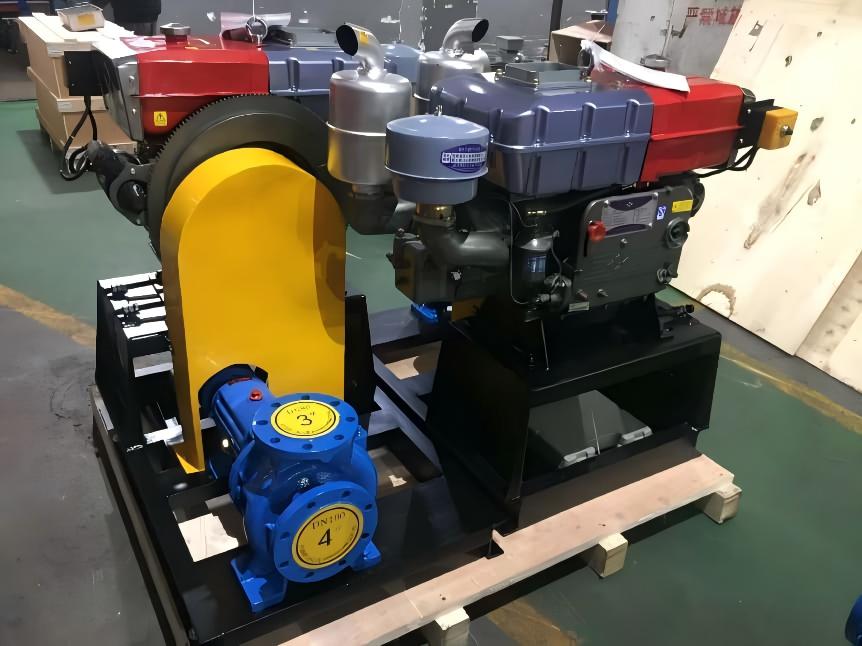
Recently, diesel engine pumps have become the core power equipment in fields such as agricultural irrigation, engineering machinery, and emergency power generation. With the increasing demand for power system efficiency in the field of industrial equipment and heavy machinery, the difference in the design of diesel engine pump cylinder numbers has become a focus of industry attention. From single cylinder to multi cylinder (such as two cylinder, four cylinder, six cylinder), different cylinder configurations can affect equipment performance. However, facing the two technical routes of single cylinder and multi cylinder, how to choose the appropriate number of cylinders has become a key issue for users to optimize equipment configuration.


Definition of cylinder number of diesel engine pump
The number of cylinders in a diesel engine pump refers to the number of cylinders inside the diesel engine, which is one of the core parameters that determine the power output, operational stability, fuel efficiency, and applicable scenarios of the diesel engine. The cylinder is the "reaction chamber" for fuel combustion and work in diesel engines. Each cylinder completes four strokes of intake, compression, work, and exhaust through the reciprocating motion of the piston, thereby converting chemical energy into mechanical energy to drive the pump body to work.
The number of cylinders in a diesel engine pump refers to the number of cylinders inside the diesel engine, which is one of the core parameters that determine the power output, operational stability, fuel efficiency, and applicable scenarios of the diesel engine. The cylinder is the "reaction chamber" for fuel combustion and work in diesel engines. Each cylinder completes four strokes of intake, compression, work, and exhaust through the reciprocating motion of the piston, thereby converting chemical energy into mechanical energy to drive the pump body to work.
The difference between single cylinder and multi cylinder
Core structure
- Single cylinder engine:
Only includes 1 cylinder, 1 piston, and 1 set of valve train (intake and exhaust valves, camshaft, etc.).
Only one cylinder completes the intake compression work exhaust cycle, and the power output is in a "pulse like" manner, with high instantaneous torque but weak persistence.
Only one cylinder completes the intake compression work exhaust cycle, and the power output is in a "pulse like" manner, with high instantaneous torque but weak persistence.
- Multi cylinder engine:
Containing 2 or more cylinders (commonly four or six cylinders), synchronized operation is achieved through crankshaft connection
By alternating the work of multiple cylinders (such as the four cylinder engine using a four stroke displacement design of "suction compression work exhaust"), the power output is smooth like "continuous flow", and the load adaptability is strong.
By alternating the work of multiple cylinders (such as the four cylinder engine using a four stroke displacement design of "suction compression work exhaust"), the power output is smooth like "continuous flow", and the load adaptability is strong.
Power Output

Fuel Efficiency
- Single cylinder engine
Advantage scenarios: Fixed speed, constant load (such as small generators running without load), fuel efficiency 5% -8% higher than multi cylinder engines.
Disadvantage scenario: When the load fluctuates (such as frequent adjustment of water pump flow in agricultural irrigation), the inability to adjust the fuel injection quantity leads to a 20% -30% increase in fuel consumption.
Disadvantage scenario: When the load fluctuates (such as frequent adjustment of water pump flow in agricultural irrigation), the inability to adjust the fuel injection quantity leads to a 20% -30% increase in fuel consumption.
- Multi cylinder engine:
Technical support: Through technologies such as turbocharging and electronic high-pressure common rail, load adaptive regulation is achieved.
Actual test data: The fuel consumption rate of a four cylinder engine at 30% load is only 220g/kW · h, which is 15% lower than that of a single cylinder engine.
Actual test data: The fuel consumption rate of a four cylinder engine at 30% load is only 220g/kW · h, which is 15% lower than that of a single cylinder engine.
Vibration and Noise
- Single cylinder engine
Vibration: The energy is concentrated during a single power stroke, and the vibration amplitude is 50% -70% higher than that of a four cylinder engine. Heavy duty shock absorbers need to be installed to reduce vibration transmission.
Noise: When operating at full load, the noise can reach 95-110 decibels (equivalent to the sound of a chainsaw), and earplugs need to be worn for operation.
Noise: When operating at full load, the noise can reach 95-110 decibels (equivalent to the sound of a chainsaw), and earplugs need to be worn for operation.
- Multi cylinder engine
Vibration reduction technology: The inline six cylinder engine achieves first stage balance through a crankshaft balance block and symmetrical layout, reducing vibration to one-third of that of a single cylinder engine.
Noise reduction design: using resin soundproof cover, double-layer oil pan and other structures, the noise is controlled at 80-90 decibels (similar to the background sound of busy streets).
Noise reduction design: using resin soundproof cover, double-layer oil pan and other structures, the noise is controlled at 80-90 decibels (similar to the background sound of busy streets).
Reliability
- Single cylinder engine:
Single point failure risk: Without redundant design, faults such as valve sticking and piston ring breakage can cause the entire system to shut down.
Maintenance cycle: Oil needs to be replaced and air filters cleaned every 200 hours.
Maintenance cycle: Oil needs to be replaced and air filters cleaned every 200 hours.
- Multi cylinder engine:
Redundancy capability: Even after one cylinder of the six cylinder engine breaks down, it can still operate at 80% power, significantly improving equipment attendance.
Intelligent monitoring: equipped with ECU for real-time monitoring of water temperature, oil pressure and other parameters, with a fault warning advance of more than 50 hours.
Intelligent monitoring: equipped with ECU for real-time monitoring of water temperature, oil pressure and other parameters, with a fault warning advance of more than 50 hours.
Applicable Scenarios
- Single cylinder diesel engine pump
Due to its simple structure, low cost, and convenient maintenance, it has significant advantages in the following scenarios:
Small scale agricultural irrigation
Suitable for scattered farmland or small plots, lightweight and easy to transport, single person operation, meeting short-term irrigation needs, low cost and simple maintenance.
Livestock and poultry breeding water supply
Drive a small water pump to supply water to the breeding farm. The structure is durable, resistant to dust and humid environments, and suitable for intermittent operations with frequent start stop.
Emergency Drainage and Flood Control
It is used for rainstorm ponding and drainage in low-lying areas. It can be deployed quickly and moved flexibly, and can work for several hours continuously to relieve waterlogging pressure.
Mobile construction water supply
Provide temporary water for construction sites, road maintenance, etc., equipped with handcarts or simple supports, suitable for scenarios without a fixed water source.
Wilderness exploration and camping
The portable single cylinder diesel pump can extract river and lake water, meeting the needs of camping sites for water or simple firefighting, with strong endurance and easy access to fuel.
Maintenance of small-scale water conservancy projects
When cleaning ditches and maintaining ponds, a single cylinder pump can efficiently pump out sediment mixed water, and the low-speed design reduces the risk of blockage.
Suitable for scattered farmland or small plots, lightweight and easy to transport, single person operation, meeting short-term irrigation needs, low cost and simple maintenance.
Livestock and poultry breeding water supply
Drive a small water pump to supply water to the breeding farm. The structure is durable, resistant to dust and humid environments, and suitable for intermittent operations with frequent start stop.
Emergency Drainage and Flood Control
It is used for rainstorm ponding and drainage in low-lying areas. It can be deployed quickly and moved flexibly, and can work for several hours continuously to relieve waterlogging pressure.
Mobile construction water supply
Provide temporary water for construction sites, road maintenance, etc., equipped with handcarts or simple supports, suitable for scenarios without a fixed water source.
Wilderness exploration and camping
The portable single cylinder diesel pump can extract river and lake water, meeting the needs of camping sites for water or simple firefighting, with strong endurance and easy access to fuel.
Maintenance of small-scale water conservancy projects
When cleaning ditches and maintaining ponds, a single cylinder pump can efficiently pump out sediment mixed water, and the low-speed design reduces the risk of blockage.
- Multi cylinder diesel engine pump
Multi cylinder diesel engine pumps dominate in the following scenarios due to their strong power, smooth operation, and high reliability:
Agricultural irrigation and drainage
Large scale farmland irrigation: Multiple cylinder machines drive large axial flow pumps or centrifugal pumps, which can achieve high flow (such as 980 cubic meters/hour) pumping to meet the irrigation needs of thousands of acres of farmland. The crankshaft movement is uniform, reducing pump vibration and extending equipment life.
Flood fighting, flood prevention and waterlogging drainage: in the scene of waterlogging caused by typhoon and rainstorm, the multi cylinder pump can quickly remove the waterlogging, prevent farmland flooding or urban waterlogging, and its strong load capacity can operate continuously for several hours.
Industrial and Municipal Engineering
Industrial circulating cooling: In scenarios such as power plants, steel mills, and paper mills, multi cylinder pumps are used for water circulation and cooling to ensure stable equipment operation. Their modular design can adapt to different power requirements.
Municipal sewage and water supply: Multi cylinder pumps can treat sewage containing large solid particles and long fiber impurities, ensuring smooth urban drainage systems; In emergency water supply scenarios such as high-rise buildings and hospitals, it can automatically start and operate at full capacity to ensure continuous and stable water supply.
Ship and power generation field
Ship power system: The multi cylinder engine pump is equipped with a dedicated cooling system to adapt to the water environment, providing propulsion power or auxiliary equipment power for cargo ships, fishing boats, etc. Its low-speed torque is large, meeting the low-speed cruising needs of ships.
Power generation equipment: Multi cylinder engine driven diesel generator sets provide stable electricity for data centers, mines, and remote areas, with high thermal efficiency (over 40%) and reduced long-term operating costs.
Agricultural irrigation and drainage
Large scale farmland irrigation: Multiple cylinder machines drive large axial flow pumps or centrifugal pumps, which can achieve high flow (such as 980 cubic meters/hour) pumping to meet the irrigation needs of thousands of acres of farmland. The crankshaft movement is uniform, reducing pump vibration and extending equipment life.
Flood fighting, flood prevention and waterlogging drainage: in the scene of waterlogging caused by typhoon and rainstorm, the multi cylinder pump can quickly remove the waterlogging, prevent farmland flooding or urban waterlogging, and its strong load capacity can operate continuously for several hours.
Industrial and Municipal Engineering
Industrial circulating cooling: In scenarios such as power plants, steel mills, and paper mills, multi cylinder pumps are used for water circulation and cooling to ensure stable equipment operation. Their modular design can adapt to different power requirements.
Municipal sewage and water supply: Multi cylinder pumps can treat sewage containing large solid particles and long fiber impurities, ensuring smooth urban drainage systems; In emergency water supply scenarios such as high-rise buildings and hospitals, it can automatically start and operate at full capacity to ensure continuous and stable water supply.
Ship and power generation field
Ship power system: The multi cylinder engine pump is equipped with a dedicated cooling system to adapt to the water environment, providing propulsion power or auxiliary equipment power for cargo ships, fishing boats, etc. Its low-speed torque is large, meeting the low-speed cruising needs of ships.
Power generation equipment: Multi cylinder engine driven diesel generator sets provide stable electricity for data centers, mines, and remote areas, with high thermal efficiency (over 40%) and reduced long-term operating costs.
The selection of cylinder number for diesel engine pumps is an art of balancing power demand, cost budget, and operational stability. For users with limited budgets and low workload, single cylinder engines have become a rational choice with "low cost+easy maintenance"; For enterprises that pursue high efficiency and stability, and plan long-term use, the value of multi cylinder machines in terms of "high reliability+low downtime" far exceeds the initial investment difference. Regardless of the chosen plan, regular maintenance (such as changing oil every 250 hours) and standardized operation (such as avoiding high-speed operation of the refrigeration unit) are the core principles for extending equipment life.
For more product information, please follow the following link:https://www.pumpwisewitness.com/diesel-pump.html
For more product information, please follow the following link:https://www.pumpwisewitness.com/diesel-pump.html