SJ Butterfly Valve Selection and Application Guide
2026-02-06
SJ Butterfly Valve Selection and Application Guide
- Q1: What are the common types of butterfly valves, and how do you choose the right one based on operating conditions?
- Q2: What is the internal structure of a butterfly valve, and what are the advantages of its working principle?
- Q3: What are the main application scenarios for butterfly valves, and which industries rely on them?
- Q4: What are the core functions of butterfly valves, and what value do they bring to the system?
- Conclusion
SJ Butterfly Valve Selection and Application Guide
In the field of industrial fluid control, if there is a valve that can handle "heavy-duty" tasks with a "lightweight" design, it must be the butterfly valve. With its compact structure, rapid opening and closing, and excellent cost-effectiveness, the butterfly valve has become an indispensable "gatekeeper" in modern industrial piping systems.
Whether handling ordinary industrial water or dealing with harsh corrosive media, the butterfly valve, with its unique rotational mechanism, embodies the essence of efficient fluid management. SJ Valve will delve into all aspects of this powerful industrial tool.
Whether handling ordinary industrial water or dealing with harsh corrosive media, the butterfly valve, with its unique rotational mechanism, embodies the essence of efficient fluid management. SJ Valve will delve into all aspects of this powerful industrial tool.
Q1: What are the common types of butterfly valves, and how do you choose the right one based on operating conditions?
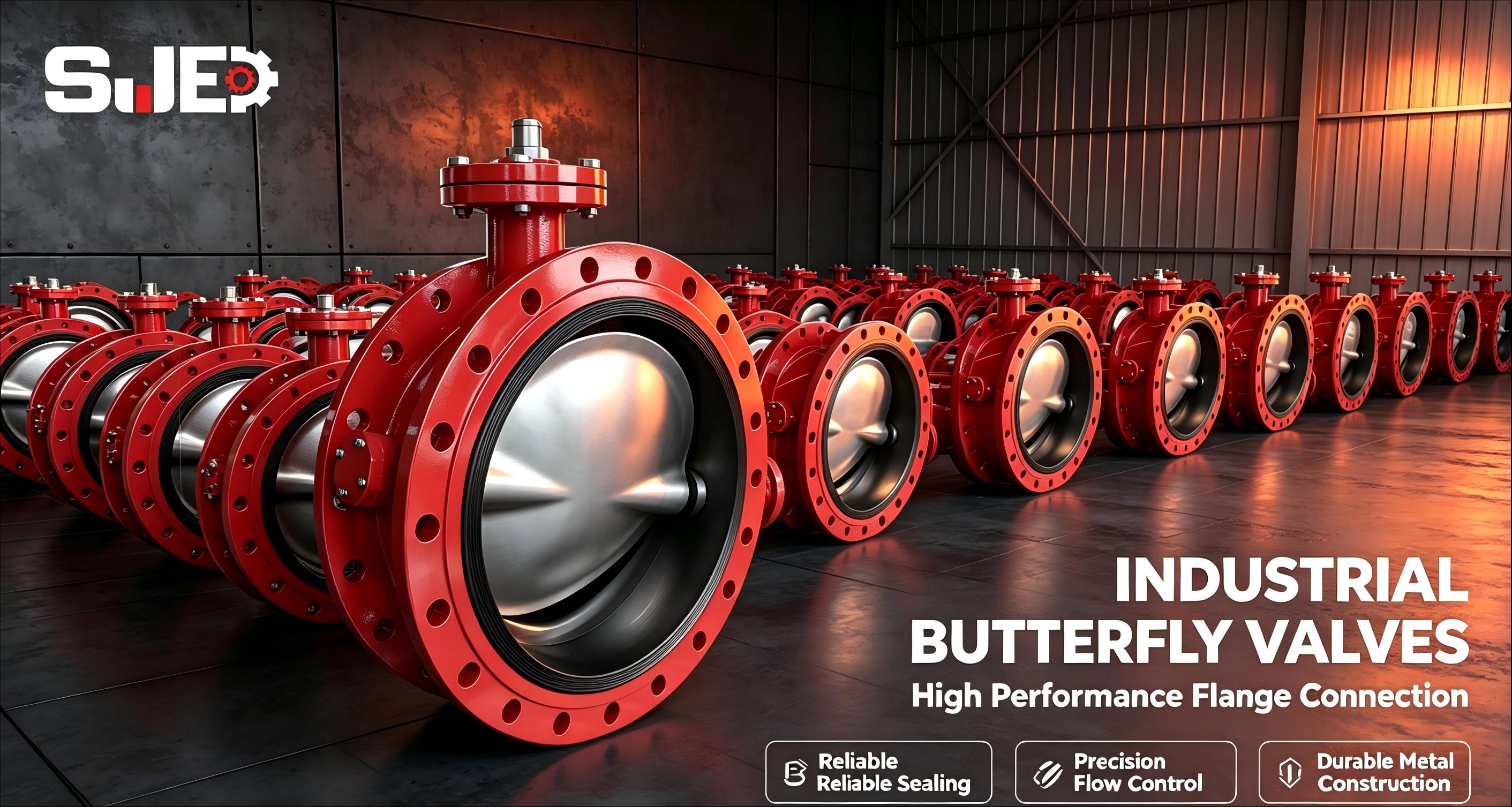
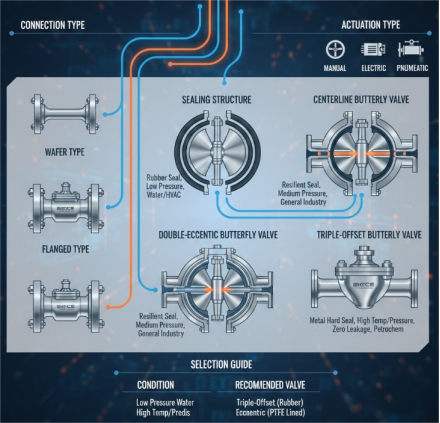
Butterfly valves come in many varieties, typically classified by connection type, sealing structure, and actuation method. By connection type, they can be divided into wafer type (most economical), flanged type (most robust), and lug type. The sealing structure is a core consideration during selection:
Butterfly valves come in many varieties, typically classified by connection type, sealing structure, and actuation method. By connection type, they can be divided into wafer type (most economical), flanged type (most robust), and lug type. The sealing structure is a core consideration during selection:
-Centric butterfly valves: The valve stem is located at the center of the disc, usually using rubber seals, suitable for low to medium pressure water treatment and air conditioning systems.
-Eccentric butterfly valves: Including single eccentric, double eccentric, and triple offset. Triple offset butterfly valves use metal hard seals, can withstand high temperatures and pressures, and achieve "zero leakage," making them a favorite in the petrochemical industry.
SJ Valve Summary: Choosing the right type is about finding a balance. You need to find the optimal solution between elastic soft seals and wear-resistant hard seals based on the medium pressure, temperature, and budget.
Q2: What is the internal structure of a butterfly valve, and what are the advantages of its working principle?
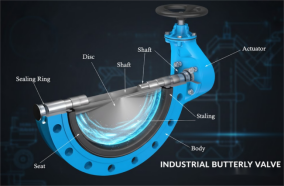
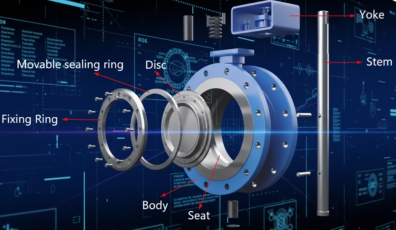
The structure of a butterfly valve can be described as "minimalist," mainly consisting of four core components: the valve body, butterfly plate, valve stem, and sealing ring. Its working principle involves the valve stem rotating the disc-shaped butterfly plate 90° within the valve body.
The structure of a butterfly valve can be described as "minimalist," mainly consisting of four core components: the valve body, butterfly plate, valve stem, and sealing ring. Its working principle involves the valve stem rotating the disc-shaped butterfly plate 90° within the valve body.
- Fully open state: The butterfly plate is parallel to the fluid direction, resulting in minimal flow resistance.
- Closed state: The butterfly plate rotates until it contacts the valve seat, achieving shut-off. The biggest advantage of this structure is its extremely high space utilization. Compared to gate valves or globe valves, butterfly valves have a shorter structural length and weigh more than 60% less, significantly reducing the support burden on the piping system.
SJ Valve Summary: The simple structure not only means easy installation and maintenance but also provides extremely fast opening and closing speeds, making it an ideal choice for automated control of large-diameter pipelines.
Q3: What are the main application scenarios for butterfly valves, and which industries rely on them?
Due to its characteristics of high flow rate and low pressure drop, the application of butterfly valves spans multiple dimensions of civil and industrial use:
Due to its characteristics of high flow rate and low pressure drop, the application of butterfly valves spans multiple dimensions of civil and industrial use:
- Water conservancy and power: Large-diameter pipelines in water treatment plants, circulating water systems, and hydropower stations.
- Energy and chemical industry: Refineries, natural gas transportation, and chemical plants with extremely high sealing requirements.
- Environmental protection and dust removal: Flue gas control in ventilation and air conditioning systems and desulfurization and denitrification projects.
- Food and pharmaceuticals: Butterfly valves made of stainless steel and with sanitary seals are widely used in beverage and pharmaceutical production lines.
- Energy and chemical industry: Refineries, natural gas transportation, and chemical plants with extremely high sealing requirements.
- Environmental protection and dust removal: Flue gas control in ventilation and air conditioning systems and desulfurization and denitrification projects.
- Food and pharmaceuticals: Butterfly valves made of stainless steel and with sanitary seals are widely used in beverage and pharmaceutical production lines.
SJ Valve Summary: From urban underground water supply networks to complex automated factories, wherever high flow rates and rapid shut-off are required, butterfly valves are always the preferred choice.
Q4: What are the core functions of butterfly valves, and what value do they bring to the system?
Butterfly valves are not just simple "switches"; they play multiple roles in modern industry:
Butterfly valves are not just simple "switches"; they play multiple roles in modern industry:
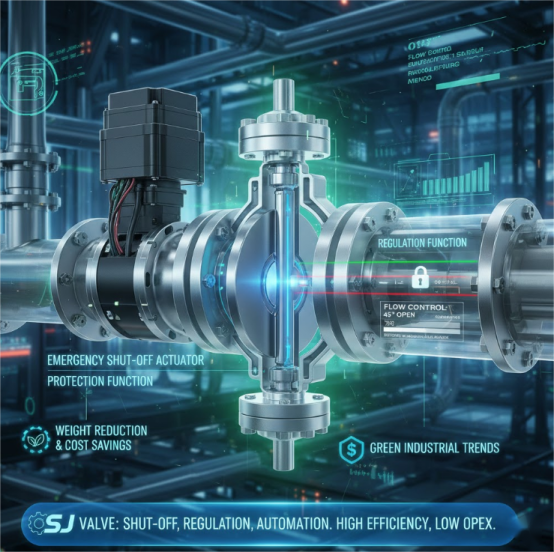
- Shut-off function: High-performance triple-offset butterfly valves can achieve tight bidirectional shut-off.
- Regulation function: Although not as precise as control valves, butterfly valves offer good flow control capabilities within an opening range of 15° to 70°.
- Protection function: By combining with pneumatic, hydraulic, or electric actuators, remote emergency shut-off can be achieved, ensuring production safety.
- Weight reduction and cost savings: The lightweight body reduces logistics and installation costs, and also reduces raw material consumption, aligning with modern green industrial trends.
- Regulation function: Although not as precise as control valves, butterfly valves offer good flow control capabilities within an opening range of 15° to 70°.
- Protection function: By combining with pneumatic, hydraulic, or electric actuators, remote emergency shut-off can be achieved, ensuring production safety.
- Weight reduction and cost savings: The lightweight body reduces logistics and installation costs, and also reduces raw material consumption, aligning with modern green industrial trends.
SJ Valve Summary: Integrating shut-off, regulation, and automation, butterfly valves achieve extremely high pipeline network operating efficiency at very low operating and maintenance costs.
Conclusion
The history of butterfly valve development is essentially a history of the continuous evolution of materials science and mechanical structures. From the initial simple seals to today's metal hard seals capable of handling demanding working conditions, butterfly valves are supporting the operation of modern industry with their unparalleled adaptability.
Choosing the right butterfly valve is not just choosing an industrial component; it's choosing long-term stability and safety for your fluid system.
The history of butterfly valve development is essentially a history of the continuous evolution of materials science and mechanical structures. From the initial simple seals to today's metal hard seals capable of handling demanding working conditions, butterfly valves are supporting the operation of modern industry with their unparalleled adaptability.
Choosing the right butterfly valve is not just choosing an industrial component; it's choosing long-term stability and safety for your fluid system.