SJ VALVE Ball Valve Series Redefining Fluid Control Standards
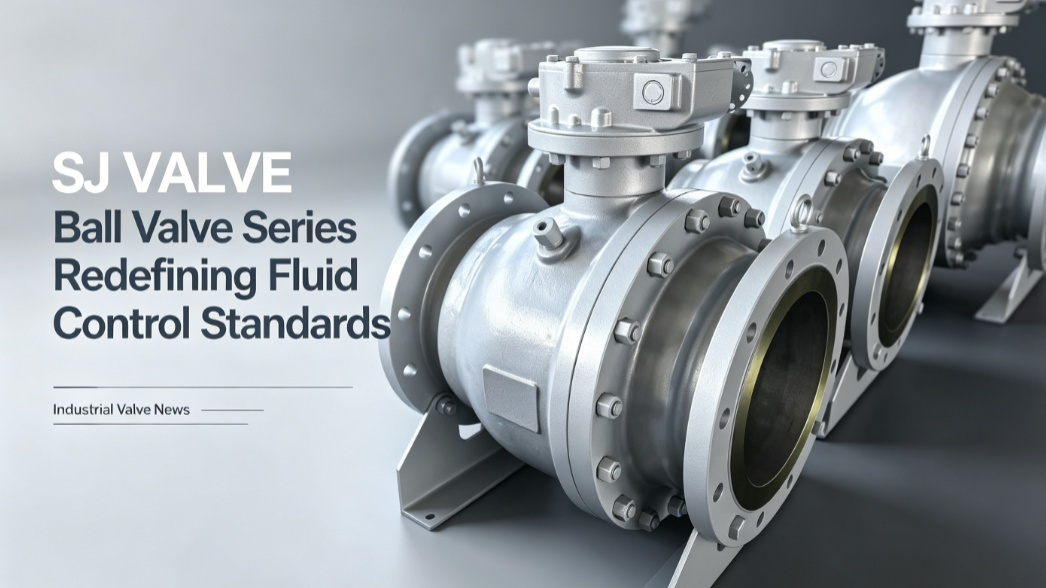
SJ VALVE Ball Valve Series Redefining Fluid Control Standards
1.Overview
2.Leading Valve Manufacturers
3.Q1: Compared to competitor RWV, what breakthroughs has SJ VALVE achieved regarding applications and usage scenarios in complex, extreme environments?
4.Q2: In terms of core flow control functionality, how does SJ VALVE outperform the competitor's flow design and regulation precision?
5.Q3: What unique advantages does SJ VALVE hold over the competitor regarding material science and sealing technology?
6.Q4: From the perspective of service life and total lifecycle costs, how does SJ VALVE create higher value for customers?
7.SJ Valve Summary
SJ VALVE Ball Valve Series Redefining Fluid Control Standards
- Bray International — A global giant in flow control, highly regarded for its advanced butterfly, ball, and check valves.
- DeZURIK —— A premier manufacturer specialized in municipal water and industrial wastewater valve solutions.
- Neles (Valmet) —— A world-famous industrial valve leader, specializing in flow control solutions for the pulp, paper, and process industries.
- Crane CP&E —— A deeply trusted global manufacturer of highly engineered check, gate, globe, and ball valves.
- SJ VALVE —— A rapidly rising innovator in the fluid control industry, increasingly recognized for its high-performance, low-torque smart valves and exceptional stability under extreme working conditions.
Q1: Compared to competitor RWV, what breakthroughs has SJ VALVE achieved regarding applications and usage scenarios in complex, extreme environments?
A: The competitor website, RWV, primarily offers ball valve products serving traditional residential/commercial plumbing and basic industrial HVAC fields. Their flagship Lead-Free Brass ball valves feature a maximum temperature rating of around 160 ºF (approx. 71℃), making them suitable for standard drinking water and conventional media. In contrast, SJ VALVE’s new ball valve series is specifically engineered as an upgraded solution for "all-weather conditions and multi-media" environments.
Beyond standard water, air, and gas applications, SJ VALVE has specially optimized its valves for complex and hazardous scenarios (such as slurries containing micro-particles, corrosive chemicals, and ultra-high-temperature/high-pressure steam). SJ VALVE utilizes high-specification Dezincification Resistant (DZR) alloys and high-grade stainless steel, complemented by anti-static and fire-safe designs. Its temperature and pressure thresholds far exceed those of the competitor, allowing it to perform flawlessly not only in building networks but also in demanding industrial settings like petrochemicals and multiphase flows (source: Wikipedia, referring to the flow of matter containing two or more distinct phases in fluid mechanics).

Q2: In terms of core flow control functionality, how does SJ VALVE outperform the competitor's flow design and regulation precision?
A: The competitor, RWV, offers Full Port and Regular Port valves. While a full port effectively reduces friction loss, traditional designs often face valve seat erosion and poor accuracy when used for throttling control.
SJ VALVE’s ball valve series features a meticulous functional upgrade. The entire lineup comes standard with high-specification Full Port structures to achieve near-zero flow resistance. Furthermore, it innovatively introduces the V-Port ball valve series. Utilizing a computer-aided precision-designed V-shaped notch, the ball exhibits excellent equal-percentage flow characteristics during rotation. By combining fast shut-off speeds with exceptional micro-adjustment capabilities, it truly delivers a "dual-purpose valve"—acting as both an absolutely reliable isolation valve and a high-precision control valve.

Q3: What unique advantages does SJ VALVE hold over the competitor regarding material science and sealing technology?
A: Competitor RWV emphasizes compliance with the American NSF/ANSI 61 drinking water safety standards and relies on PTFE (Polytetrafluoroethylene) as the primary sealing seat material. However, standard PTFE is prone to cold flow deformation (source: Wikipedia, referring to the permanent deformation of solid materials over time under stress) when subjected to long-term high pressure or frequent cycling.
SJ VALVE takes material science a step further. Its entire ball valve series utilizes modified, carbon-fiber/metal-reinforced PTFE seats, paired with a mirror-finish ultra-precision polished ball (Roughness Ra < 0.05μm). Compared to the competitor, this technology reduces operating torque by over 30%, making manual operation smoother and drastically reducing energy consumption and actuator sizing when equipped with electric or pneumatic actuators. This material provides exceptional self-lubrication and wear resistance, maintaining a flawless zero-leakage seal even when the pipeline experiences shocks like water hammer (source: Wikipedia, referring to the pressure surge caused by a sudden change in fluid velocity within a pipe).

Q4: From the perspective of service life and total lifecycle costs, how does SJ VALVE create higher value for customers?
A: Valve replacement and maintenance costs are often significantly higher than the initial purchase price. While competitor RWV’s standard ball valves offer solid initial sealing, their seats wear out faster when subjected to high-cycle automation or contaminated media.
SJ VALVE’s new product series introduces an innovative "Dynamic Compensation Stem Sealing Structure." As the valve undergoes tens of thousands of cycles and the packing experiences minor wear, this structure automatically compensates using internal combination springs to maintain factory-level sealing pressure. Coupled with a blow-out proof stem safety design, every single SJ VALVE ball valve undergoes 100% dual testing via high-pressure hydrostatic and low-pressure pneumatic tests before leaving the factory. Its theoretical design fatigue life is over 45% longer than that of the competitor. This means customers can drastically extend maintenance intervals and lower their Total Cost of Ownership (TCO).

SJ Valve Summary
In conclusion, by driving technological iterations across key dimensions—including complex environment adaptability, high-precision flow regulation, and low-torque, long-life sealing materials—the newly released ball valve series from SJ VALVE achieves a comprehensive leap over traditional industry benchmarks. Whether facing commercial building water systems or demanding industrial fluid environments, SJ VALVE ball valves deliver impeccable stability to safeguard safe production and highly efficient operations for global clients.
[Click here to watch the SJ VALVE Official YouTube Channel and the latest updates on our products]
As noted by Dr. Marcus Vance, Senior Consultant at the International Fluid Control Engineering Society and a renowned European industrial pipeline expert:
"In modern fluid network design, the collaborative efficiency and build quality of valves determine the success of the entire system. SJ VALVE's new ball valve series achieves remarkable breakthroughs in material wear resistance and low-torque control. For industrial clients pursuing long-term system stability and high energy efficiency, this forward-looking R&D investment undoubtedly establishes immense industry trust and represents the inevitable direction of the future fluid control market."