SJ VALVE Launches Next-Generation High-Precision Safety Valve Assembly Solution
SJ VALVE Launches Next-Generation High-Precision Safety Valve Assembly Solution
SJ VALVE Launches Next-Generation High-Precision Safety Valve Assembly Solution
- Q1: What is the primary function of a safety valve, and why is the assembly process so critical?
- Q2: In what demanding applications are SJ VALVE safety valves suitable?
- Q3: What technical advantages do SJ VALVE safety valves have over competing brands?
- Q4: What support does SJ VALVE offer beyond the product itself?
- CONCLUSION
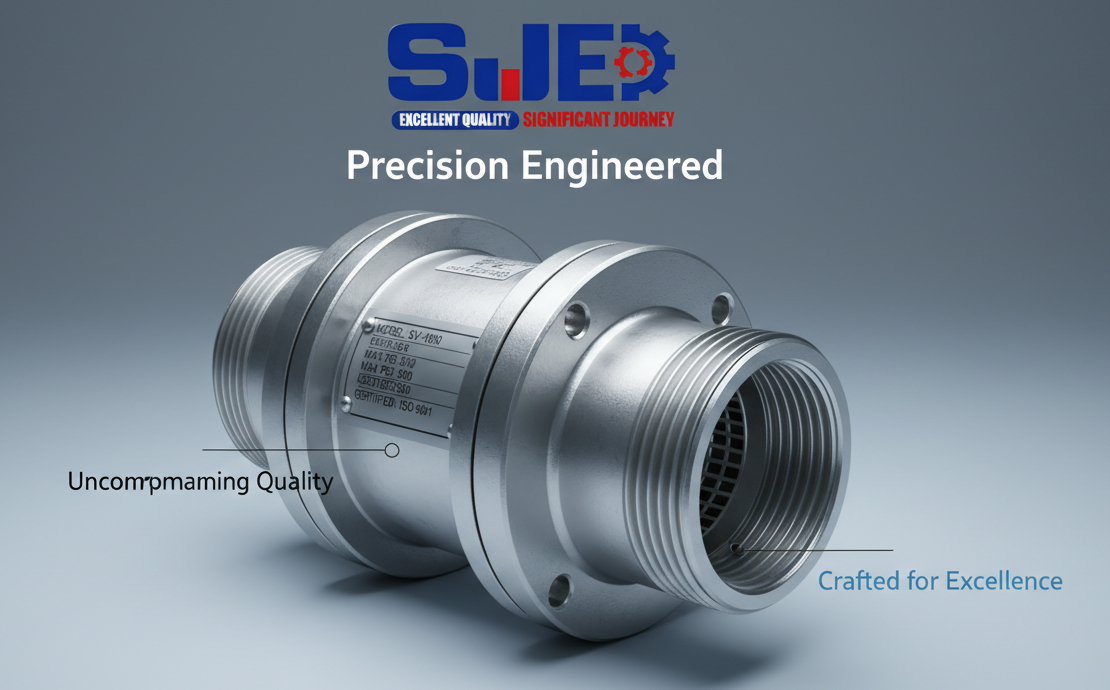
Safety valves are automatic, fail-safe devices that protect equipment and personnel from dangerous overpressure by rapidly releasing excess fluid (gas or liquid) when pressure exceeds a preset limit, then reclosing when conditions normalize, preventing explosions or damage in systems like boilers, pressure vessels, and industrial piping. They work by using a spring-loaded disc that lifts at a set pressure, allowing quick venting, often with a characteristic "pop" action for gases.

Q1: What is the primary function of a safety valve, and why is the assembly process so critical?
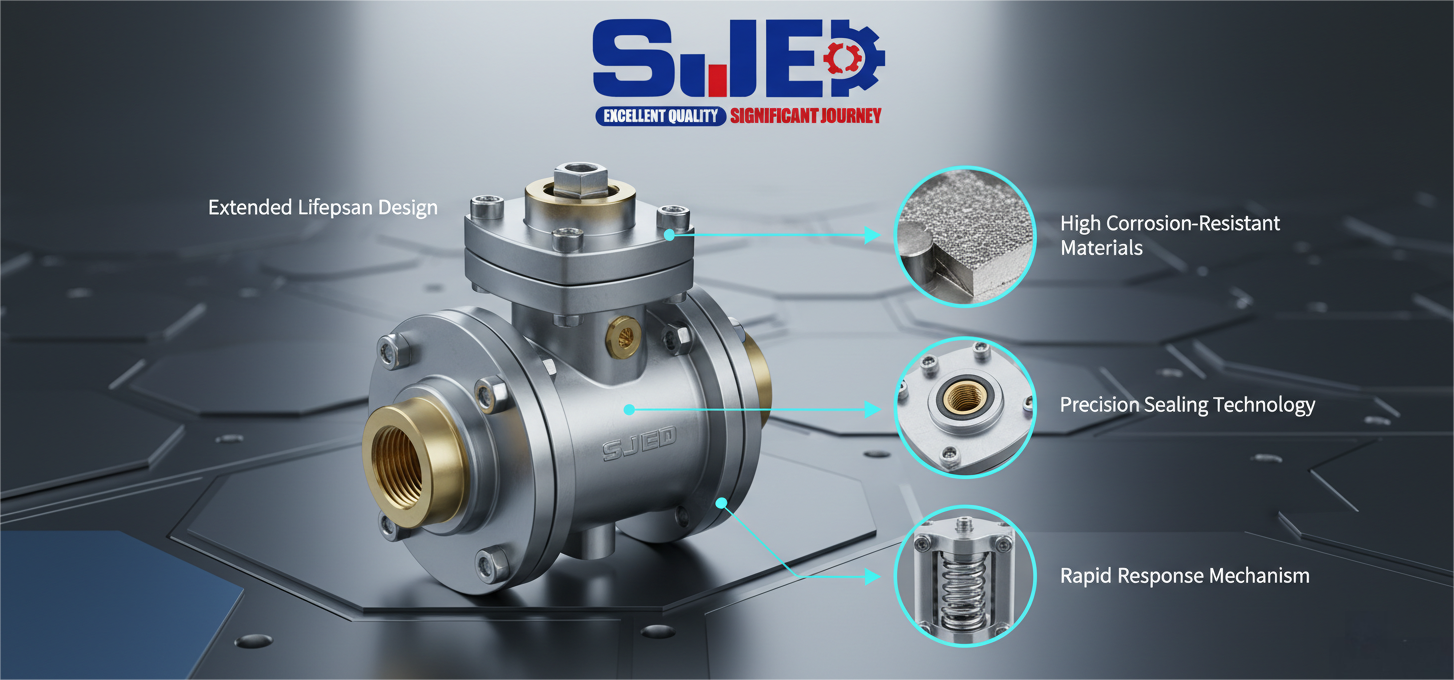
A: The core mission of a safety valve is to automatically open and relieve pressure when the internal pressure of a vessel or pipeline exceeds a preset limit, and to reseal precisely once normal pressure is restored—thereby preventing catastrophic failures such as explosions or leaks. The assembly stage is where a safety valve’s performance is “born,” directly determining its sealing integrity, actuation accuracy, and response speed. Even minor deviations in the valve seat-disc alignment, spring preload calibration, or sealing surface finish can cause malfunction during critical moments. SJ VALVE employs CNC-integrated assembly and laser calibration technology to control key tolerances within ±0.001 inches, ensuring every valve is “perfect upon delivery.”
Q2: In what demanding applications are SJ VALVE safety valves suitable?
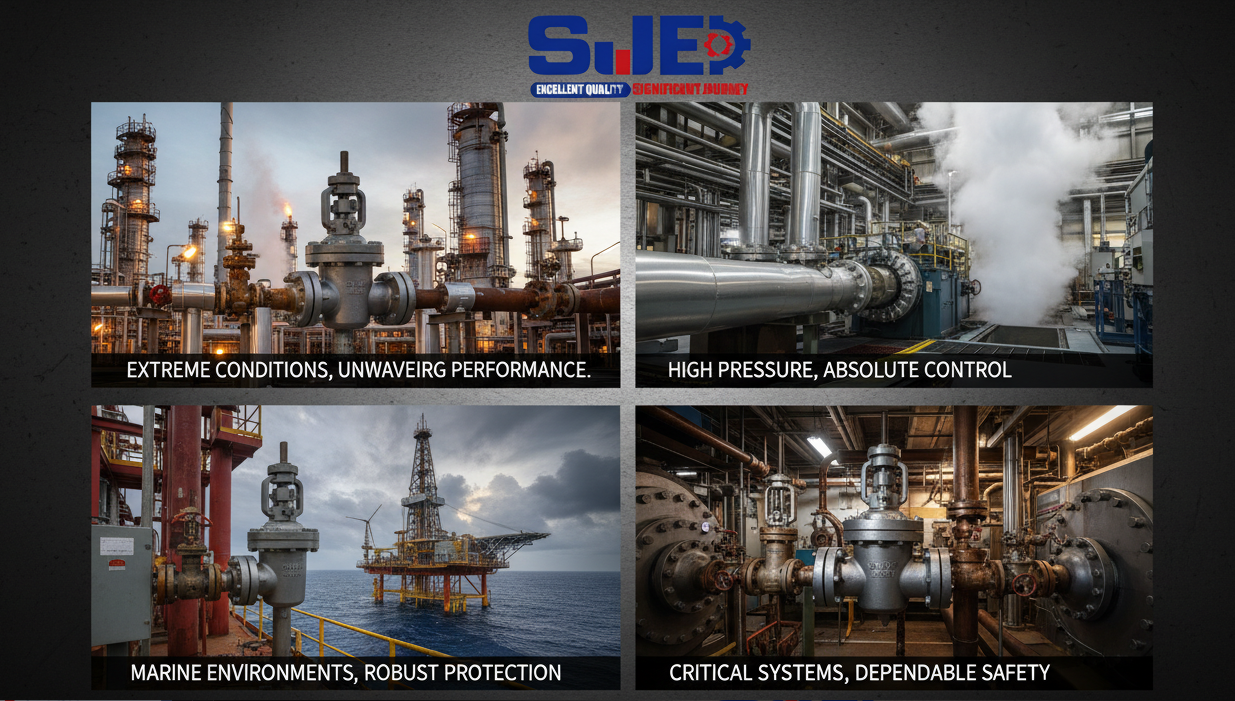
A: SJ VALVE safety valves are engineered for extreme operating conditions:
- Energy sector: Supercritical power plant boilers, oil and gas transmission pipelines, capable of withstanding sudden pressure surges and high-frequency vibration.
- Chemical industry: Reaction vessels handling corrosive media, polymerization units, featuring special alloy lining and bellows isolation technology.
- Pharmaceutical and food processing: Sterile-grade bioreactors, compliant with ASME BPE sanitary standards, with dead-zone-free design to prevent microbial retention.
- New energy: Hydrogen storage tanks, lithium battery electrolyte production lines, offering explosion-proof certification and low-leakage solutions.
Q3: What technical advantages do SJ VALVE safety valves have over competing brands?
A: Three key advantages build our competitive edge:
- Intelligent Calibration System: Assembly lines incorporate AI-powered pressure feedback modules to automatically adjust spring stiffness and sealing specific pressure, increasing efficiency by 70% over manual calibration and eliminating human error.
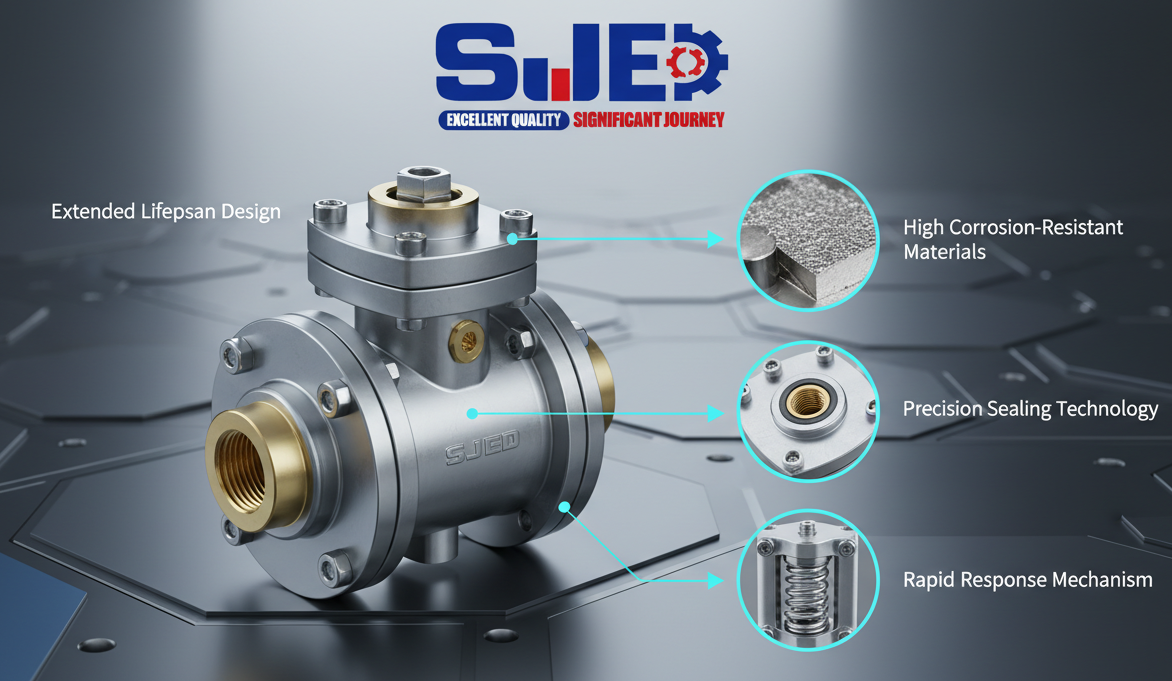
- Advanced Materials and Processing: Valve bodies use vacuum-degassed forged steel, with sealing surfaces coated with tungsten carbide-cobalt nano-layer, providing over 3 times longer wear life compared to conventional welded seats.
- Modular Redundant Design: Critical actuation components feature a “dual-path fail-safe” structure, ensuring minimal pressure relief capability even if a single spring or guiding mechanism fails.
Q4: What support does SJ VALVE offer beyond the product itself?
A: We provide a “technology + service” dual assurance framework:
- Full Assembly Data Traceability: Each valve comes with a unique QR code that links to over 300 assembly data points, including torque curves and leak test waveforms, enabling root cause analysis within minutes.
- Dynamic Pressure Adaptation Service: Customized spring tuning and online calibration software based on the customer’s system pressure profile, preventing frequent cycling and wear caused by pulsating conditions.
- Global Rapid Response Network: Technical assembly centers in 12 countries deliver on-site diagnostics and part replacement within 48 hours, 60% faster than industry average.