SJ VALVE Operation Logic and Testing Regulations of Vacuum Relief Valve
2025-12-26
SJ VALVE Operation Logic and Testing Regulations of Vacuum Relief Valve
SJ VALVE Operation Logic and Testing Regulations of Vacuum Relief Valve
- Q1: How does a vacuum relief valve work?
- Q2: What are the testing procedures for vacuum relief valves?
- Q3: What are the unique features of SJ VALVE's vacuum relief valve in its core design?
- Q4: How does SJ VALVE respond to vacuum protection requirements under extreme corrosion or harsh working conditions
- CONCLUSION
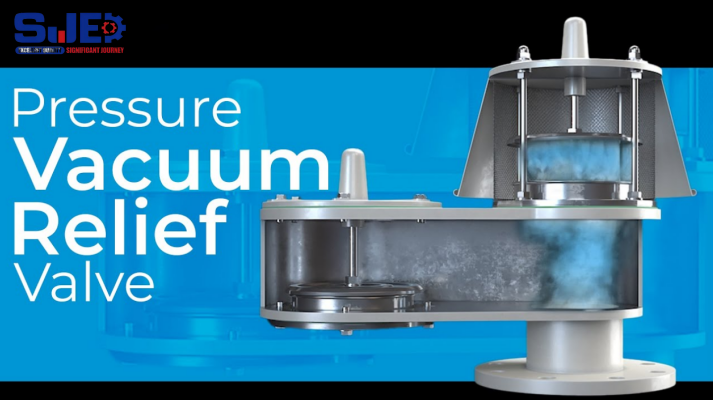
A vacuum relief valve (VRV), often part of a Pressure Vacuum Relief Valve (PVRV), is a safety device that prevents tanks and piping from collapsing or siphoning water by automatically letting air into the system when pressure drops below atmospheric (creating a vacuum), and sometimes releasing excess pressure when it goes too high. They are crucial in water heaters, storage tanks, and industrial systems to protect equipment, reduce emissions, and maintain safe operating conditions by balancing internal pressure with the outside atmosphere.

Q1: How does a vacuum relief valve work?
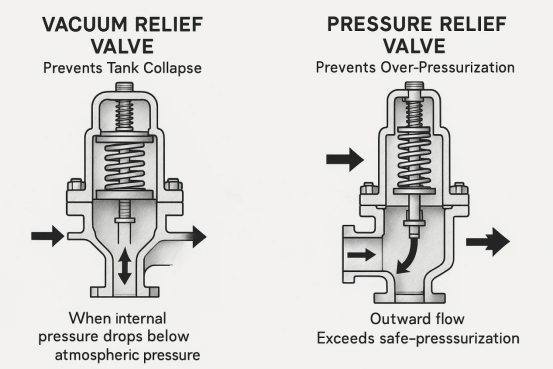
A: The essence of a vacuum relief valve is an automatic "breathing" device driven by pressure difference. Its core operating logic can be divided into the following three stages: normally closed monitoring stage: when the system is running normally and the internal pressure is within the set safe range, the valve disc (Disc) is subjected to self weight (counterweight type) or spring (spring type) pressure, tightly adhering to the valve seat (Seat).
SJ VALVE adopts ultra-high precision grinding technology to ensure airtight sealing at this stage.
SJ VALVE adopts ultra-high precision grinding technology to ensure airtight sealing at this stage.
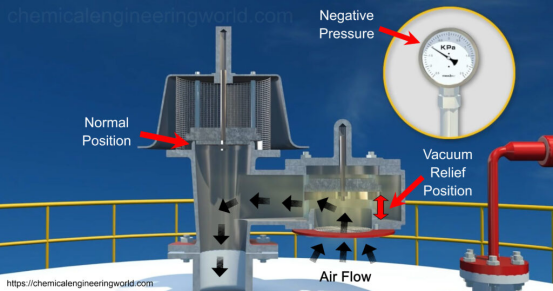
- Negative pressure induction stage: When the materials in the storage tank are emptied, the medium condenses, or the ambient temperature drops sharply, the internal pressure will be lower than the external atmospheric pressure. When this pressure difference reaches the preset "opening point", the upward thrust generated by the external atmospheric pressure will overcome the closing force of the valve core.
- Inhalation equilibrium stage: The valve disc is pushed away from the valve seat, and external air is sucked into the container through the valve port, quickly offsetting the negative pressure. Once the pressure difference between the inside and outside returns to below the safe value, the valve disc will automatically return to its seat and reseal under the action of gravity or spring force.
Q2: What are the testing procedures for vacuum relief valves?
A: In order to ensure that SJ VALVE's products are "foolproof" at critical moments, it is necessary to strictly follow the standard testing process (usually following API 2000 or ISO 28300 specifications):
- Visual Inspection: Check the valve seat for corrosion, particle accumulation, or mechanical damage. For SJ VALVE products, it is necessary to specially check whether the protective net at the suction port is clean.
- Set Pressure Test: Install the valve on a dedicated testing platform. Slowly increase the vacuum/pressure, observe and record the pressure values when the valve disc starts to "bounce" (Cracking Pressure) and fully opens. The error must be controlled within the standard requirement of 3% or a fixed tolerance range.
- Leakage Rate Test: When reaching 90% or 75% of the set pressure, use bubble method or precision flowmeter to measure the leakage rate. SJ VALVE valves typically require a "zero bubble" or extremely low flow leakage level to meet VOCs emission reduction requirements.
- Flow Capacity Test: Regularly verify the exhaust/suction capacity of the valve in a laboratory environment at overpressure of 10% or 20% to ensure that it meets the maximum flow requirements of the design.
Q3: What are the unique features of SJ VALVE's vacuum relief valve in its core design?
A: SJ VALVE always adheres to the design concept of "precision control, long-term safety". Our vacuum relief valve adopts an optimized flow channel design, which improves the exhaust efficiency by 15% -20% compared to traditional products under the same pressure difference. In addition, we take pride in the sealing surface treatment process. SJ VALVE adopts ultra-high precision grinding technology and provides perfluoroether (FFKM) or high-performance alloy sealing solutions according to different media. This not only ensures "zero leakage" of the valve when the set opening pressure is not reached, reducing the economic losses caused by medium evaporation, but also ensures sensitive and instantaneous opening under extremely low negative pressure.
Q4: How does SJ VALVE respond to vacuum protection requirements under extreme corrosion or harsh working conditions?
A: This is the core advantage of SJ VALVE. Based on our mature material research system, we can provide various special material valve bodies including Hastelloy, Duplex SS, and titanium alloy. SJ VALVE vacuum relief valves are equipped with exclusive anti-corrosion coating technology for petrochemical and strong acid-base environments, greatly extending the maintenance cycle of equipment in harsh environments. At the same time, our products have passed multiple international standard certifications, ensuring consistent high standard security guarantees in any region of the world.
CONCLUSION
SJ VALVE is continuously innovating its vacuum relief technology to eliminate every potential risk invisibly. Not only in manufacturing valves, but also in building a solid safety barrier for modern industrial civilization.
If you are planning a safety upgrade for your storage tank system or need a vacuum protection solution for special media, please feel free to contact our technical support team. We will provide you with professional technical evaluation and selection consultation.
If you are planning a safety upgrade for your storage tank system or need a vacuum protection solution for special media, please feel free to contact our technical support team. We will provide you with professional technical evaluation and selection consultation.