Strictly test the water pump before leaving the factory to ensure that the quality and performance meet the standards
2025-09-26
Strictly test the water pump before leaving the factory to ensure that the quality and performance meet the standards
Strictly test the water pump before leaving the factory to ensure that the quality and performance meet the standards
Recently, in order to ensure that every water pump leaving the factory meets the highest quality standards and performance requirements, our factory has conducted comprehensive and rigorous testing on the upcoming water pumps. The testing process is meticulous and covers multiple key steps to ensure that the water pump can operate stably and reliably under various working conditions.
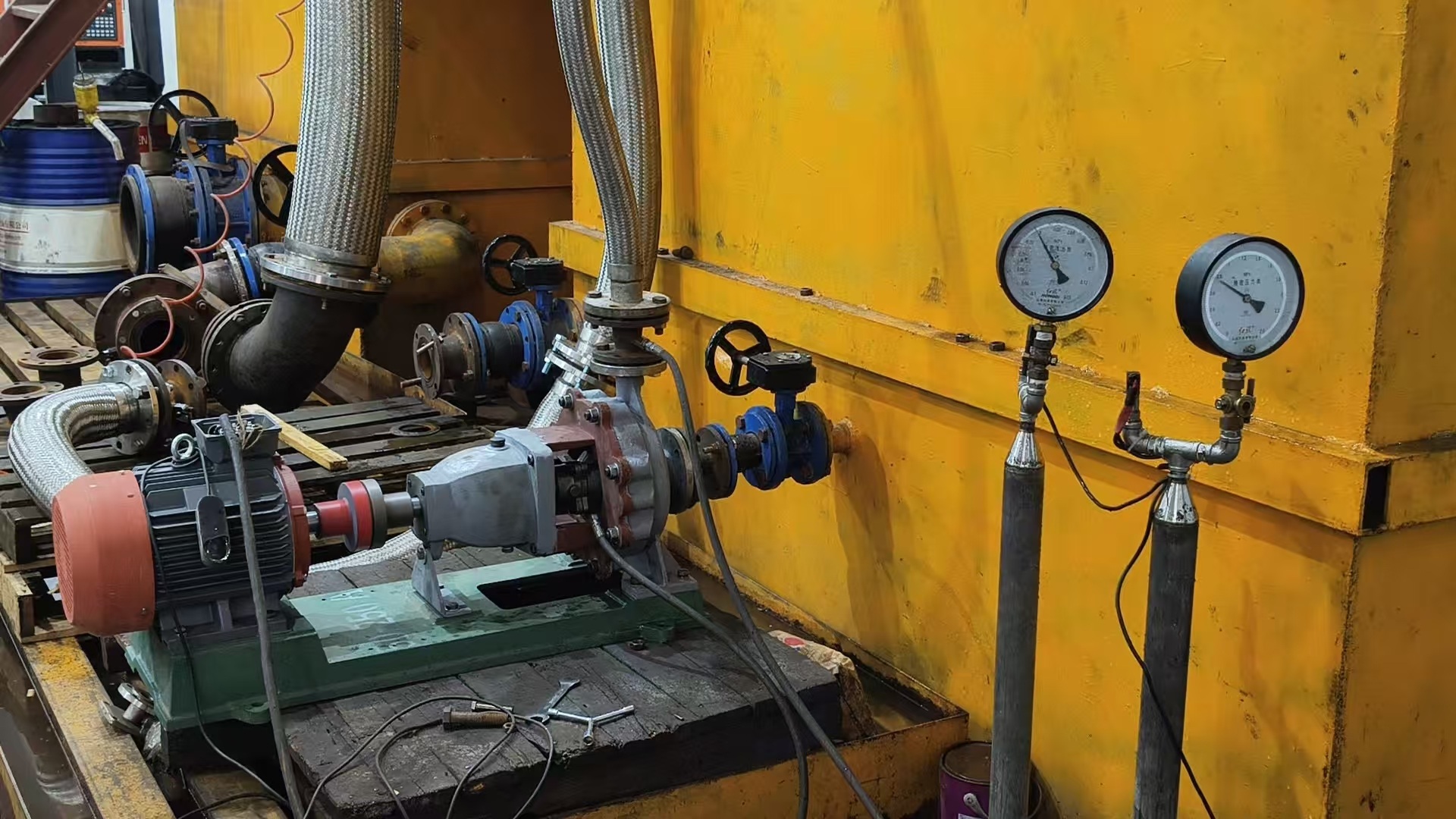
At the testing site, technicians are conducting final inspections on an IH chemical centrifugal pump. The water pump is connected to a complex pipeline system, with precise pressure gauges installed on both sides to display real-time changes in water pressure and provide accurate data support for testing.
At the testing site, technicians are conducting final inspections on an IH chemical centrifugal pump. The water pump is connected to a complex pipeline system, with precise pressure gauges installed on both sides to display real-time changes in water pressure and provide accurate data support for testing.
Factory testing process for water pumps
Appearance inspection and preparation
Appearance inspection: Technicians first conduct a comprehensive inspection of the exterior of the water pump, including the pump body, motor, base, and other components, to confirm that there are no defects such as scratches, deformation, rust, etc. At the same time, check whether the connections of each component are firm and whether the fasteners are loose.
Pipeline connection: Connect the inlet and outlet of the water pump to the testing pipeline system, ensuring that the connection is well sealed and there is no risk of leakage.
Instrument installation: Install monitoring instruments such as pressure gauges and flow meters, and calibrate them to ensure the accuracy of test data.
Appearance inspection: Technicians first conduct a comprehensive inspection of the exterior of the water pump, including the pump body, motor, base, and other components, to confirm that there are no defects such as scratches, deformation, rust, etc. At the same time, check whether the connections of each component are firm and whether the fasteners are loose.
Pipeline connection: Connect the inlet and outlet of the water pump to the testing pipeline system, ensuring that the connection is well sealed and there is no risk of leakage.
Instrument installation: Install monitoring instruments such as pressure gauges and flow meters, and calibrate them to ensure the accuracy of test data.
Start up and initial operation
Startup test: Technicians start the water pump, observe whether the startup process is smooth, record the startup time and current changes, and ensure that there are no abnormal sounds or vibrations.
Steering verification: Check whether the rotation direction of the water pump is consistent with the mark to prevent performance degradation or equipment damage caused by reverse rotation.
Preliminary operation observation: Let the water pump run at low load for a period of time, observe its operating status, and preliminarily evaluate its stability.
Startup test: Technicians start the water pump, observe whether the startup process is smooth, record the startup time and current changes, and ensure that there are no abnormal sounds or vibrations.
Steering verification: Check whether the rotation direction of the water pump is consistent with the mark to prevent performance degradation or equipment damage caused by reverse rotation.
Preliminary operation observation: Let the water pump run at low load for a period of time, observe its operating status, and preliminarily evaluate its stability.
Performance parameter testing
Flow testing: Measure the flow rate of the water pump under different operating conditions using a flow meter, record the data, and compare it with the design value.
Head test: Use a pressure gauge to measure the pressure difference between the inlet and outlet of the water pump, calculate the head, and verify whether it meets the design requirements.
Efficiency testing: Combining flow and head data, calculate the efficiency of the water pump and evaluate its energy conversion performance.
Power test: Measure the input power of the water pump to ensure it is within the rated range and compare it with the design power.
Stability and reliability testing
Long term operation test: Let the water pump run continuously for several hours or even days under rated conditions to observe whether its performance is stable and whether there is any performance degradation or malfunction.
Variable operating condition test: Simulate different operating conditions in practical applications, such as changing flow rate, head, etc., to test the adaptability and stability of the water pump.
Vibration and noise testing: Use vibration and noise meters to measure the vibration and noise levels of the water pump during operation, ensuring that they are within the allowable range.
Leakage inspection and sealing test
Visual inspection: Technicians carefully inspect the various connections, sealing surfaces, and pump body of the water pump, observing for signs of leakage such as water stains and droplets.
Pressure test: Apply a certain pressure to the water pump, maintain it for a period of time, and observe whether the pressure drops to determine the sealing performance.
Bubble detection: Apply soap water or other liquid that generates bubbles to the sealed area, observe whether bubbles are generated, and further verify the sealing performance.
Visual inspection: Technicians carefully inspect the various connections, sealing surfaces, and pump body of the water pump, observing for signs of leakage such as water stains and droplets.
Pressure test: Apply a certain pressure to the water pump, maintain it for a period of time, and observe whether the pressure drops to determine the sealing performance.
Bubble detection: Apply soap water or other liquid that generates bubbles to the sealed area, observe whether bubbles are generated, and further verify the sealing performance.
Testing of safety protection devices
Overload protection test: Simulate overload situations and test whether the overload protection device of the water pump can operate in a timely manner, cut off the power supply, and prevent equipment damage.
Overheating protection test: By heating or running for a long time to raise the temperature of the water pump, test whether the overheating protection device can effectively trigger and protect the motor.
Other protection functions, such as phase loss protection, leakage protection, etc., are also tested to ensure that all protection functions are normal and reliable.
Overload protection test: Simulate overload situations and test whether the overload protection device of the water pump can operate in a timely manner, cut off the power supply, and prevent equipment damage.
Overheating protection test: By heating or running for a long time to raise the temperature of the water pump, test whether the overheating protection device can effectively trigger and protect the motor.
Other protection functions, such as phase loss protection, leakage protection, etc., are also tested to ensure that all protection functions are normal and reliable.
Data recording and analysis
Data recording: Throughout the entire testing process, technicians meticulously record various testing data, including time, operating conditions, performance parameters, abnormal situations, etc.
Data analysis: Organize and analyze test data, compare design standards with historical data, and evaluate the performance and quality level of the water pump.
Report preparation: Prepare a test report based on the test results, detailing the testing process, data results, and evaluation conclusions to provide a basis for product delivery.
The factory manager stated that as an important equipment in industrial production and civilian facilities, the quality and performance of water pumps directly affect the user's experience and safety. Therefore, the factory conducts strict testing on every water pump that leaves the factory, which is not only responsible for the product, but also a commitment to the customer.
The successful completion of this test marks that this batch of water pumps is about to enter the market and serve a wide range of users. Through strict factory testing, our water pumps have reliable guarantees in terms of quality and performance. In the future, the factory will continue to adhere to the principle of quality first, committed to technological innovation and quality improvement, and contribute more to the development of the industry.
More information pls follow our pump web://www.pumpwisewitness.com/