The Ultimate Guide to High-Performance Electric Butterfly Valves
The Ultimate Guide to High-Performance Electric Butterfly Valves
The Ultimate Guide to High-Performance Electric Butterfly Valves
In the field of modern industrial fluid control, efficiency and accuracy are core objectives pursued by enterprises. With the deepening development of industry, traditional mechanical valves are rapidly transforming towards intelligent and automated operation. Electric butterfly valves, as key actuators in automated control systems, have become indispensable "control centers" in water treatment, chemical, energy, and light industries due to their compact structure, ease of operation, and excellent remote control capabilities. This article will guide you through an in-depth understanding of the core value of this high-efficiency fluid solution.
- Q1: What are the core functions and working principles of an electric butterfly valve?
- Q2: What are the significant advantages of electric butterfly valves compared to other valves?
- Q3: In which industries are electric butterfly valves mainly used?
- Q4: How to choose the right electric butterfly valve configuration for your project?
- Conclusion
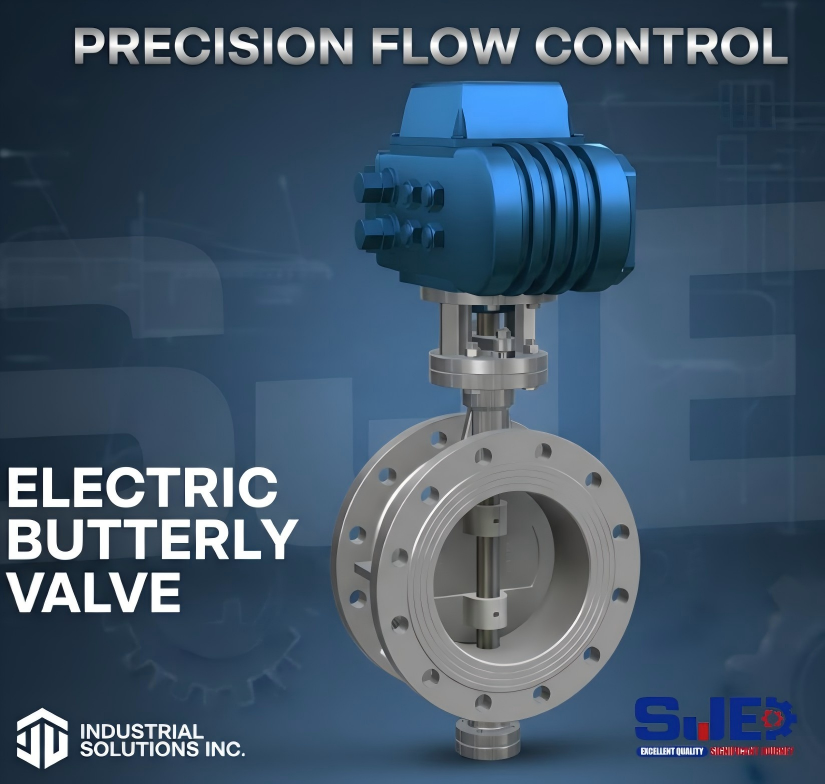
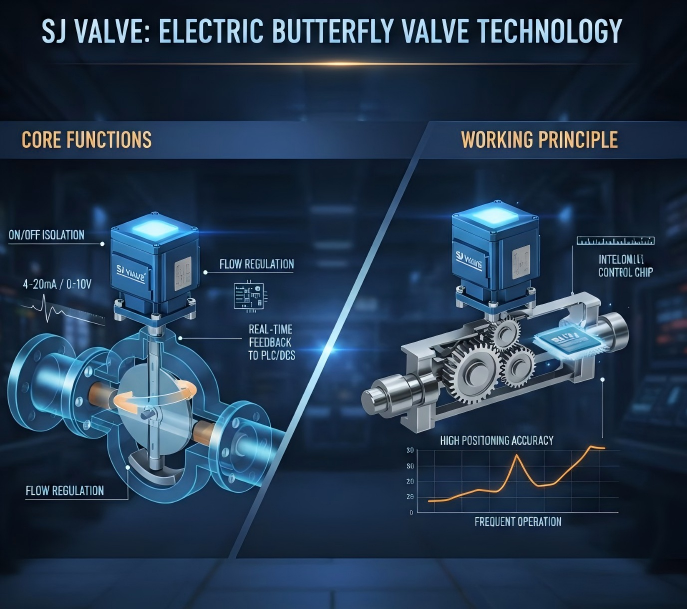
A: An electric butterfly valve mainly consists of an electric actuator and a valve body. Its core function is to receive a standard electrical signal (such as 4-20mA or 0-10V) and drive the valve stem to rotate the butterfly plate within a range of 0°-90°.
- Shutdown function: Enables rapid opening and closing of pipeline media.
- Regulation function: Achieves linear regulation of media flow, pressure, and temperature by precisely controlling the angle of the butterfly plate.
- Feedback system: Built-in intelligent module transmits valve position signals back to the central control room (PLC/DCS system) in real time, ensuring transparent system operation.
SJ VALVE's electric actuator uses a high-strength alloy gear transmission system, with mechanical errors controlled at the micron level. Combined with a self-developed intelligent control chip, our valves maintain extremely high positioning accuracy even under frequent opening and closing conditions, ensuring your process flow is accurate to the second.
A: They are widely recognized as the "king of cost-effectiveness" in the industrial field, with advantages concentrated in the following three dimensions:
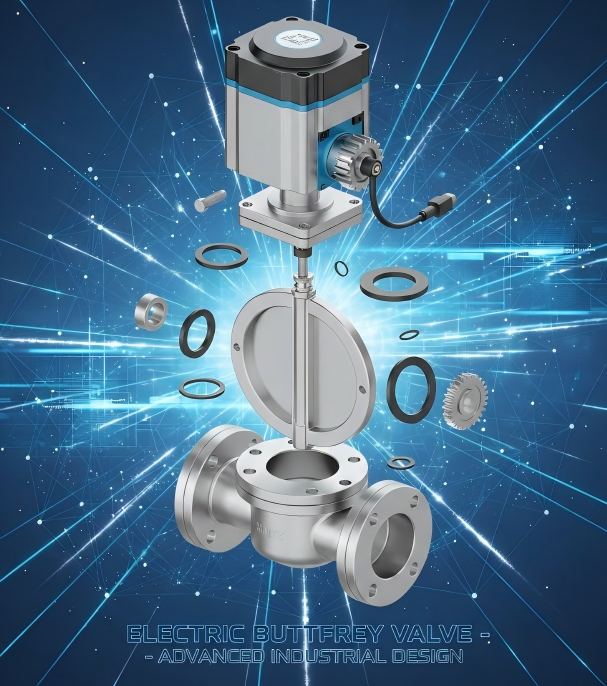
- Space optimization: Short structural length and light weight significantly save installation space, making them especially suitable for large-diameter pipelines.
- Low energy consumption and high efficiency: Energy is consumed only during opening and closing, and the electric actuator has extremely high torque output, resulting in precise and smooth operation.
- Low maintenance costs: Butterfly valves have fewer parts, and the sealing rings are easy to replace. Combined with the long-life design of the electric actuator, this significantly reduces the total cost of ownership (TCO) over its lifespan.
To reduce pressure drop, SJ VALVE's butterfly plate adopts a streamlined shuttle design. This design effectively reduces fluid resistance and eddy current generation. Compared to traditional butterfly plates, our products can reduce energy consumption in your pumping systems by approximately 15%, achieving truly green production.
A: Electric butterfly valves have extremely wide applicability, covering almost all fields requiring fluid transport:
- Water treatment and environmental protection: Flow distribution in urban water supply and drainage, sewage treatment, and seawater desalination systems.
- HVAC: Chilled water and hot water circulation control in large commercial buildings and data centers.
- Industrial process control: Regulation of non-corrosive or weakly corrosive fluids in power generation, papermaking, fine chemical, and food processing.
- Gas transport: Ventilation systems, dust collection pipelines, and industrial gas control.
From heating systems in extremely cold regions to highly corrosive chemical plants, SJ VALVE offers a full range of specifications. Our triple-eccentric hard-seal series is specifically designed for high-temperature and high-pressure conditions, breaking the limitation of "soft seals not being pressure-resistant," making it the preferred solution for heavy industrial automation.

A: The selection process directly impacts production safety and efficiency. We recommend focusing on the following key parameters:
- Media characteristics: Select stainless steel, PTFE-lined, or cast iron valve bodies based on the acidity, alkalinity, and abrasiveness of the medium.
- Pressure and temperature rating: Ensure the valve's PN rating and sealing material (such as EPDM, PTFE, or metal hard seal) meet the upper limits of the operating conditions.
- Actuator protection rating: For outdoor, humid, or explosion-proof environments, select actuators with IP67/IP68 protection ratings or explosion-proof certification.
- Control mode: Determine whether it's a simple "on/off" type or a "smart regulating" type requiring high-precision feedback.
SJ VALVE provides more than just valve hardware; we offer a complete fluid control solution. Through in-depth optimization of the "valve body + seal + actuation" trinity, SJ VALVE aims to reduce long-term maintenance costs for your project and ensure the continuous and stable operation of the production line.