Understand the role and design of Marine butterfly valves
2024-12-18
Understand the role and design of Marine butterfly valves
Understand the role and design of Marine butterfly valves
Marine butterfly valve is a key component in the Marine industry, plays a vital role in various Marine applications, is an important part of the control of liquid flow. Their importance lies in their ability to effectively regulate and isolate flows, contributing to the smooth operation of Marine systems. Understanding their design, function and application is essential to ensure efficient and reliable operation in the Marine environment.
The manufacturing standard requires the material and process of the valve body, valve plate, drive device and other components to meet the requirements of the ship, and have the characteristics of corrosion resistance, high temperature resistance and pressure resistance. Inspection standards include appearance inspection, sealing performance test, adjustment performance test, etc., to ensure the safety and reliability of butterfly valves in the use of ships.
Design:
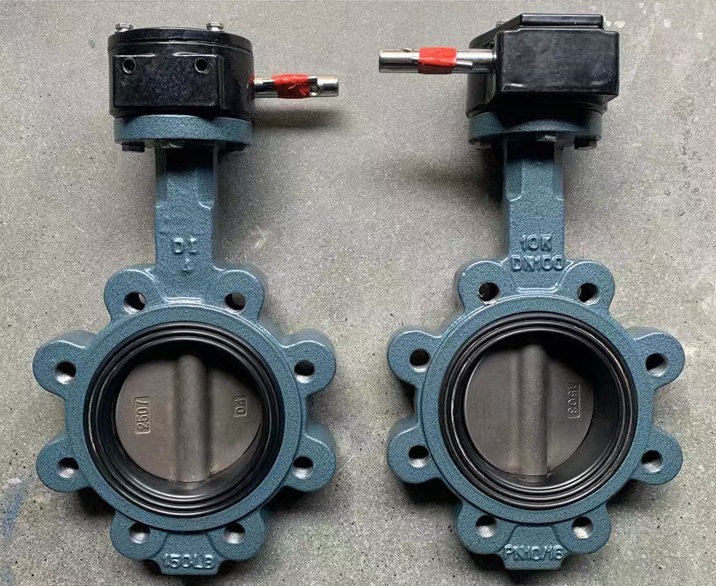
Marine butterfly valves are usually designed with a disc or plate rotating on a central shaft inside the pipe. This disc is similar to the wings of a butterfly and can be rotated to allow or limit the flow of fluid. The valve works by turning the disc parallel to the flow direction to allow fluid to pass through or vertically to stop the flow, minimizing clearance and dead zones and reducing the accumulation of corrosive substances.
Material selection
These valves are made of materials that can withstand the corrosive effects of seawater and harsh ocean conditions. Common materials include stainless steel, bronze and other corrosion resistant alloys. In addition, Marine butterfly valves are usually equipped with sealing materials such as EPDM or Viton to ensure tight closure and prevent leaks.
-
Stainless steel (such as 316, 316L) : has excellent corrosion resistance, suitable for salt water and corrosive chemical media.
-
Bronze: resistant to salt water corrosion, often used in seawater pipeline systems.
-
Duplex stainless steel: Combined with high strength, resistance to pitting and crevice corrosion, making it ideal for harsh Marine environments.
Coating and protection
Marine butterfly valves are usually coated or surface treated to improve corrosion resistance:
-
Epoxy coatings: Enhanced corrosion resistance, especially in seawater contact areas.
-
Thermal spray coatings: Applications of corrosion resistant alloys, such as nickel-based alloys, provide additional protection.
-
Anodizing (for aluminum alloys) : Increases surface hardness and oxidation resistance.