0

Understanding the Various Types of strainers in the Pipeline
{当前产品的产品关键词轮巡使用}
2024-11-12

Understanding the Various Types of strainers in the Pipeline

Understanding the Various Types of strainers in the Pipeline

A strainer is a device installed in a pipeline to filter or purify liquids by separating them from solid particles. It acts as a sieve to prevent unwanted debris like scale, rust, or welding metal from flowing through the system.

By catching these contaminants, strainers protect expensive and critical downstream equipment—such as pumps, flow meters, steam traps, and control valves—from damage. This helps reduce equipment downtime and maintenance costs. For maximum protection, it's essential to select the correct type of strainer and install it in the right location, typically upstream of the sensitive equipment it's meant to protect.

Classification  of Strainers

Strainers can be divided into Y-type strainers and Basket strainers (T-type strainers) according to their main configuration
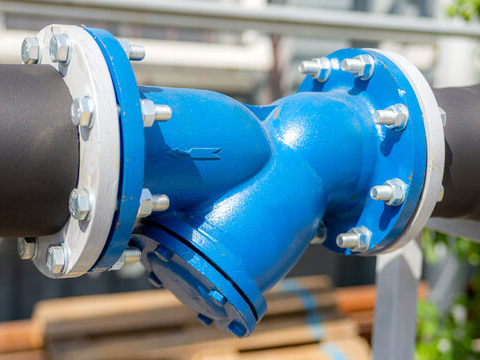
Y-type strainers
A Y-type strainer is a mechanical device used in pipelines to filter out unwanted solid particles from liquids, gases, or steam. Named for its characteristic "Y" shape, it houses a screen or mesh that traps debris like rust, sediment, or scale, protecting more expensive and sensitive downstream equipment such as pumps, meters, and control valves from damage. Its compact design allows it to be installed in either horizontal or vertical pipelines, making it a versatile and popular choice for a wide range of industrial applications

Basket strainers (T-type strainers)

Basket strainers (also known as T-strainers) are distinguished by their vertical, large-capacity chambers. Their design results in a larger filtration area compared to Y-strainers, which leads to a smaller pressure drop. This makes them the preferred choice for liquid applications.

Because they can hold more contaminants than a Y-type strainer, basket strainers are also used for large-diameter steam pipes. However, they can only be installed in horizontal pipes, and larger, heavier models may require a support base.

A key advantage of basket strainers is their duplex configuration, which consists of two parallel filters with a diversion valve. This is ideal for demanding applications involving chemicals or abrasive materials. The duplex design allows for uninterrupted operation: when one filter basket becomes full, the fluid flow is automatically redirected to the second one. This enables an operator to remove, clean, and replace the first basket without shutting down the entire process.

How to choose the appropriate  pipe strainers?

When choosing a pipeline strainers, several factors must be considered to ensure proper functionality and efficiency, including:
1. Size and location: The strainers must be sized to fit the pipe and placed in a location that is easy to clean and maintain.
2. Pressure drop: The introduction of strainers in the pipeline system will produce pressure drop; Therefore, strainers should be designed to minimize this effect in order to maintain system efficiency.
3. Material: The structural material of the strainers should be compatible with the process fluid and operating environment to prevent corrosion and ensure durability.
4. strainers grade: The size of the opening (mesh size) in the strainers element should be selected according to the size of the particles that need to be removed

Different components of the strainers will use various materials

The Main Body Materials
Cast iron, bronze, carbon steel, stainless steel and plastic are the most commonly employed materials for the main bodies of Y-type strainers and basket strainers. Now let's delve into some common body materials for Y and basket strainers:
  1. Cast Iron
Due to its low cost, cast iron is the most popular strainers body. It is used in systems where the water pressure and temperature are not high and the system is not subject to high thermal shock or mechanical shock. Cast iron is primarily used in large drinking water pipelines and many non-drinking water systems, in addition to a variety of other product and process uses.
  1. Bronze