what are the components of pressure cooker spring loaded safety valve
what are the components of pressure cooker spring loaded safety valve
What is a Safety Valve?
A safety valve is an engineered device specifically designed to regulate the flow of pressurized liquids or gases within a contained system. Its primary purpose is to safeguard against excessive pressure buildup, which could otherwise lead to system failure with potentially catastrophic consequences.
When internal pressure exceeds predefined safety thresholds, the valve is triggered to release a controlled volume of fluid, thereby maintaining operational pressures within permissible limits. This critical mechanism not only preserves the structural integrity of equipment such as steam boilers, pressure vessels, and complex piping networks but also ensures the safety of personnel in proximity to these systems.
Consequently, the strategic implementation of safety valves remains an indispensable practice in industries where pressure management is non-negotiable, effectively mitigating risks associated with over-pressurization.
safety Valve Components
Adjustment Screw
Spring
Spindle
Disc
Nozzle
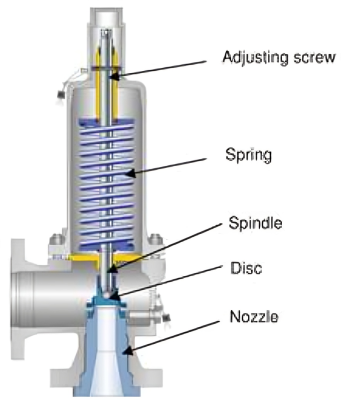
How does a safety valve work?
The working principle of a safety valve is simple but effective: it maintains a balance between the internal pressure of the system and the force applied by a spring or weight mechanism. When the pressure exceeds a predetermined limit, the valve opens, allowing excess fluid to escape and relieving the pressure. When the pressure returns to a safe level, the valve closes again.
It is crucial that the discharge openings are properly designed so that they can handle sufficiently large outflow streams to prevent further increases in system pressure. The discharge opening must be visible, but must not pose a danger to people observing it.
-
In operation, the safety valve usually remains closed until the upstream pressure reaches the desired set pressure. When the set pressure is reached, the valve will open and continue to open, allowing more flow as the overpressure increases. When the upstream pressure drops below the set pressure by a few psi, the valve will close again.
-
The safety valve plays a role in safety protection in the system. When the system pressure exceeds the set value, the safety valve opens, and part of the gas/fluid pipeline in the system enters the atmosphere, and the system pressure does not exceed the allowable value, thus ensuring that the system does not cause accidents due to excessive pressure.
-
The safety valve is a weight that maintains a certain pressure. When the pressure is high, the weight will rise and the steam will escape.
-
The rubber diaphragm is a drain plug, not a safety valve. When the safety valve fails to lift or the pressure rises too quickly; the drain plug will self-destruct, allowing the pressure vessel to vent into the atmosphere.
-
The hardened rubber diaphragms in autoclaves are designed to fail at a certain pressure. The material can vary, but most appear to be hardened neoprene or viton (synthetic neoprene).
-
Both types of safety devices are common in every modern pressure vessel, from the pressure cooker on your stove to the pressure vessels in nuclear power plants.

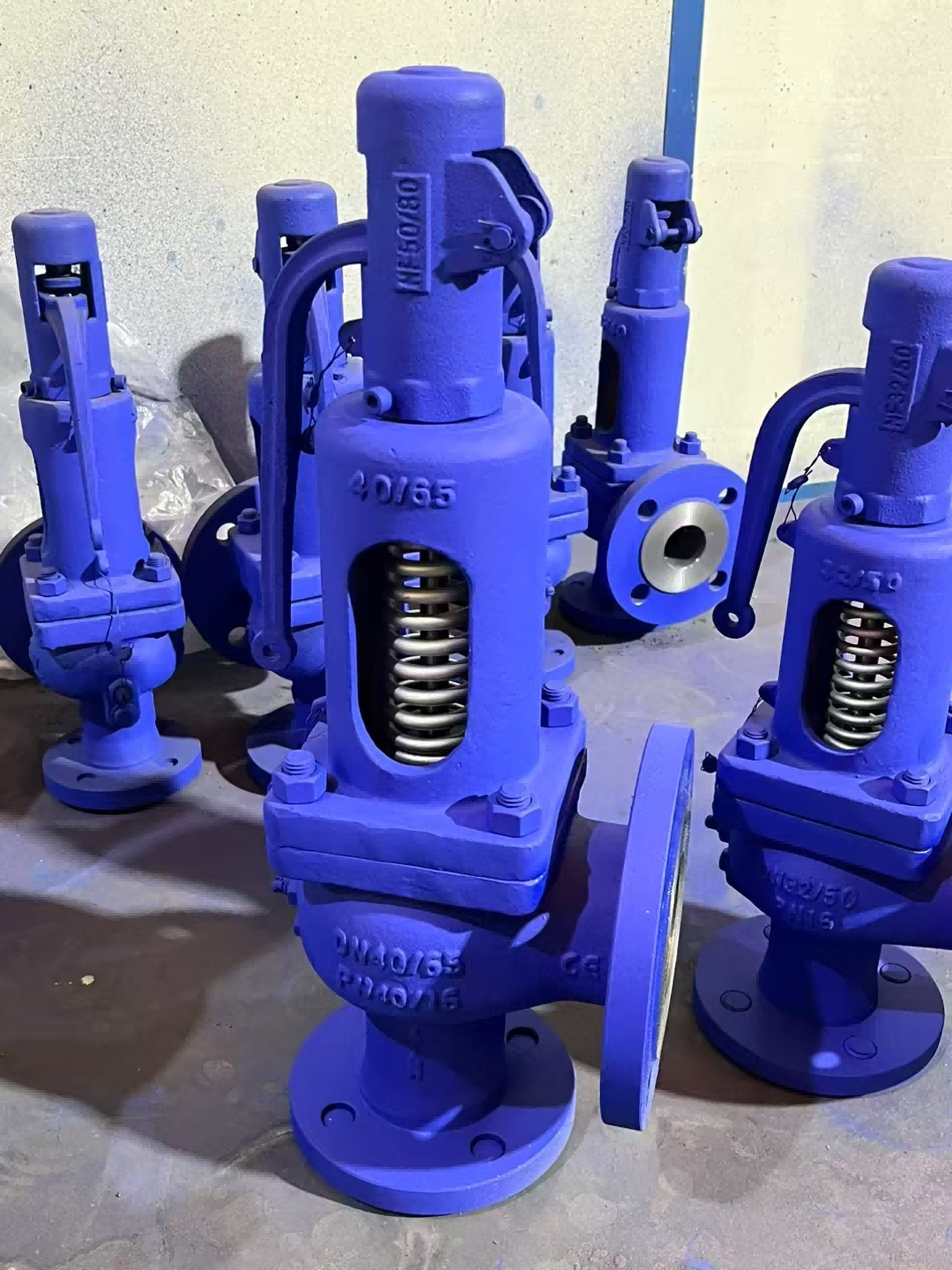


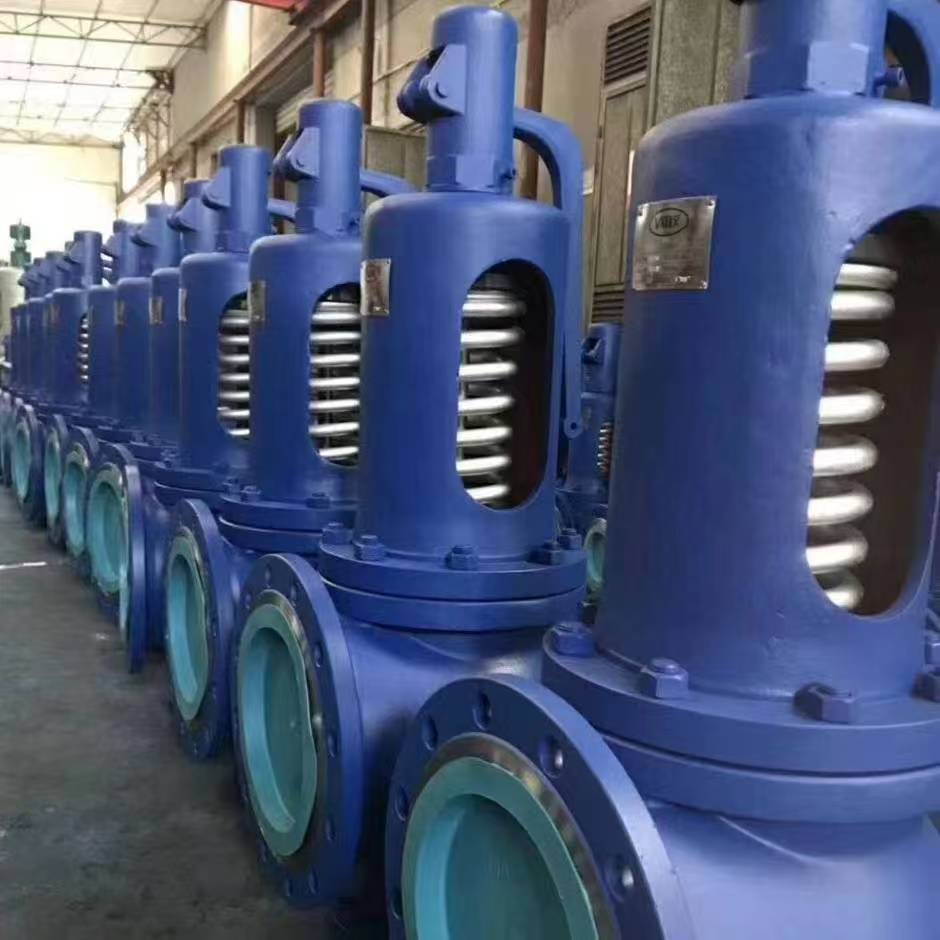
 (Blow is SJ Work shop screen shot of safety valve which for pressure cooker spring-loaded safety valve)
Conclusion
Safety valves are special valves that are normally closed under the action of external forces. When the pressure of the medium in the equipment or pipeline exceeds the specified value, the medium is discharged to the outside of the system to prevent the pressure of the medium in the pipeline or equipment from exceeding the specified value. The control pressure does not exceed the specified value, which plays an important protective role in personal safety and equipment operation. Safety valves are an indispensable "last line of defense" in industrial systems. They protect equipment, personnel and the environment through rapid pressure relief, while reducing production risks and economic losses. They are key components that take into account both safety and efficiency.
Articles you may be interested in
- What is the meaning of safety valve?
Safety Valve (SV): An automated pressure-relief device designed specifically to discharge static pressure in gaseous systems. It typically activates with a rapid full opening, often producing an audible "pop" due to the sudden release of gas.
- What causes safety valve to open?